How to Clean Brass Jewelry: A Practical Care Guide for Gothic Jewellery
Jony ·
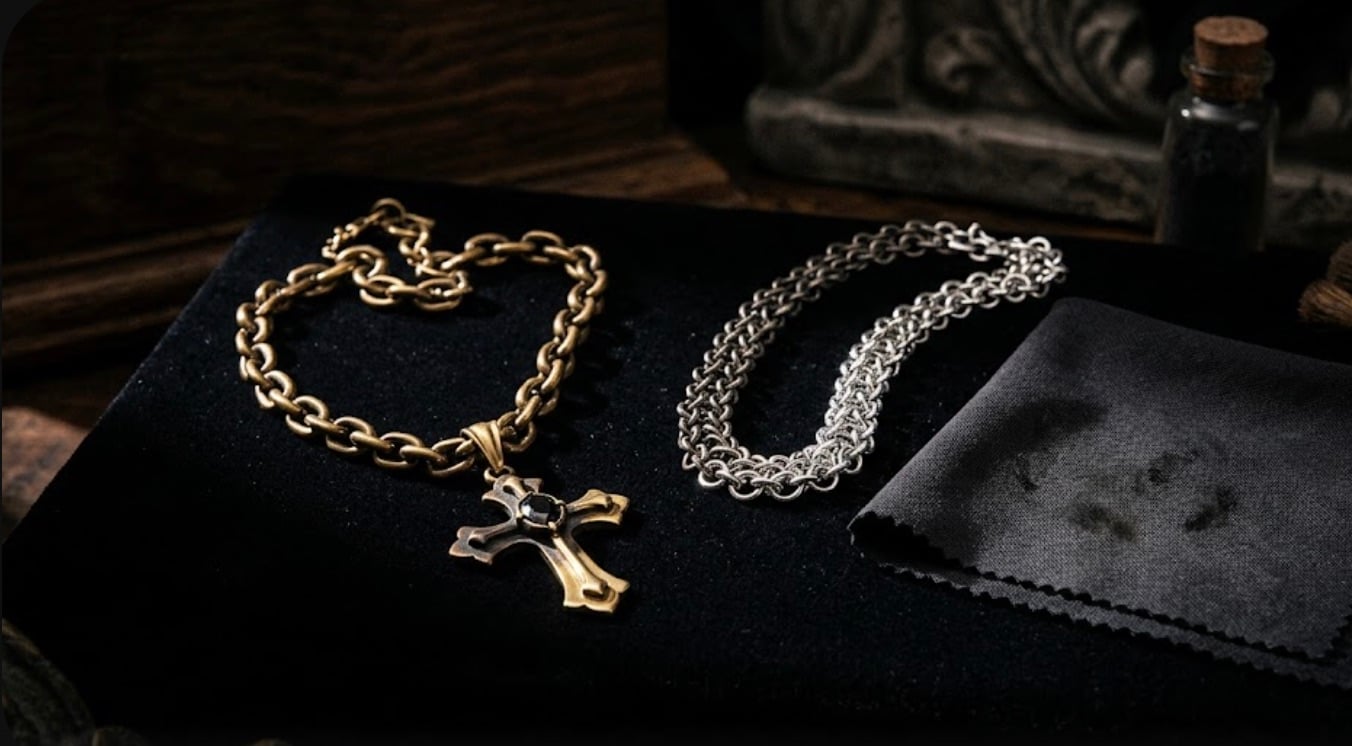
Brass jewellery can look warm, antique and beautiful, but it needs more care than stainless steel. The safest way to clean it is to start gently: a soft cloth, mild soap, water and careful drying before reaching for any stronger tarnish-removal method.
That order matters. Plain solid brass can usually handle a little polishing and some mild household cleaning, but handmade jewellery with stones, pearls, coatings, plating, glued details or chainmail sections needs more caution. The goal is not only to remove tarnish — it is to clean the piece without damaging the finish, loosening details or stripping away an intended patina.
This guide walks through how to clean brass jewelry properly at home, how to deal with tarnish, why brass sometimes turns skin green, and how brass compares to copper and stainless steel for everyday gothic wear.
Does Brass Jewelry Tarnish?
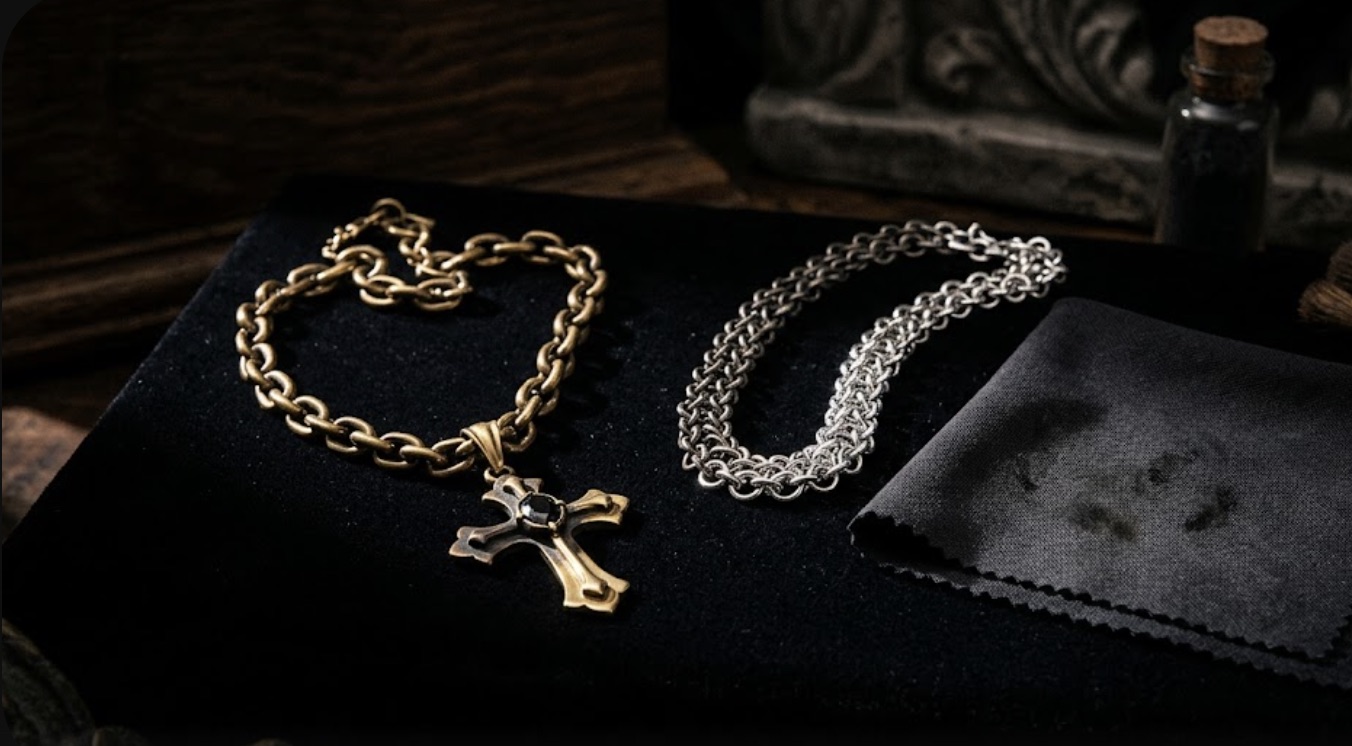
Yes — brass jewellery does tarnish. Brass is an alloy that usually contains copper and zinc, and because of that copper content it reacts with oxygen, moisture, sweat and certain chemicals over time. The surface can become darker, duller or take on a greenish tone.
It helps to keep a few things straight:
- Tarnish is normal surface oxidation. Almost all brass develops it eventually.
- Patina can be intentional and attractive — a darkened, aged look that many gothic and antique-style pieces are designed around.
- Green marks on skin are usually caused by copper reacting with sweat, moisture and skin chemistry, not by the jewellery being faulty.
- Tarnish is not a sign of poor quality. Even well-made solid brass dulls with wear and air exposure.
So if a brass piece looks a little darker than the day you bought it, that is the metal behaving exactly as brass does — and in most cases it can be cleaned back to a warmer shine.
Before You Clean Brass Jewelry: Check the Piece First
This is the step most quick “DIY brass cleaning” guides skip, and it is the most important one for handmade jewellery. The right method depends entirely on what the piece is made of.
Before you clean anything, check:
- Is it solid brass or brass-plated?
- Does it have pearls, crystals, glass, enamel, paint or glued stones?
- Is there a protective coating or lacquer on the surface?
- Is the patina intentional as part of the design?
- Is it a chainmail piece with moving rings and closures?
- Is it antique, sentimental or expensive?
If the answer to any of these is yes — plated, coated, antique or mixed-material — avoid harsh scrubbing and acidic soaking. The material matters more than the method, and a gentle cloth is almost always the safer choice for delicate or gemstone-set jewellery.
The Safest Way to Clean Brass Jewelry
For everyday cleaning, this gentle four-step routine is suitable for most brass jewellery, including more delicate handmade pieces.
Step 1: Wipe with a soft dry cloth
Start by removing surface oils, dust and fingerprints. A microfibre cloth or a dedicated jewellery polishing cloth is ideal. For many pieces, this alone restores a surprising amount of warmth.
Step 2: Use mild soapy water
Mix lukewarm water with a small amount of mild dish soap. Dip a soft cloth into the water, wring it out, and gently wipe the brass. Do not soak handmade mixed-material jewellery unless the maker has confirmed it is safe to do so.
Step 3: Rinse carefully
If the piece is plain solid brass, you can rinse it briefly under lukewarm water. If it has stones, pearls, glue, a coating or chainmail sections, skip the rinse — wipe with a clean damp cloth instead so water does not seep into settings or behind charms.
Step 4: Dry completely
This step is critical. Moisture left on brass speeds up tarnish, so dry the piece thoroughly with a soft cloth and let it air dry fully before storing. Trapped damp around clasps, links and stone settings is one of the most common reasons brass dulls quickly.
How to Clean Tarnished Brass Jewelry
For light tarnish, a polishing cloth is usually enough:
- Buff gently along the surface.
- Avoid pressing hard on delicate or raised parts.
- On chainmail sections, work carefully so the cloth does not catch and twist the rings.
For heavier tarnish on plain solid brass only, you will often see stronger home methods suggested — a lemon juice and baking soda paste, a short vinegar soak, the ketchup method or a little non-gel toothpaste. These can work on bare, undecorated brass.
For handmade gothic jewellery, though, the advice should stay cautious. These acidic and abrasive methods are not suitable for every piece. Avoid them on plated jewellery, pearls, soft stones, coatings, painted details, glued elements or anywhere the darkened patina is part of the intended design. When in doubt, treat them as a last resort for solid brass — never as a first step for a delicate handmade piece.
Cleaning Methods to Avoid on Delicate Brass Jewellery
A few methods do more harm than good, especially on handmade or mixed-material jewellery. Keep these away from your brass:
- Bleach and harsh household cleaners
- Alcohol-based cleaners
- Long soaking in water or any solution
- Ultrasonic cleaners (unless the maker confirms the piece can handle them)
- Abrasive scrubbing pads or stiff brushes
- Acidic DIY mixtures on plated or coated jewellery
- Toothpaste on delicate or lacquered finishes
- Vinegar or lemon on pearls, soft stones or glued details
As a general rule, the more decorative and delicate a piece is, the gentler the cleaning should be. Harsh chemicals and questionable DIY shortcuts are exactly what damages plated, antique and gemstone jewellery beyond repair.
How to Prevent Brass Jewelry from Tarnishing
Cleaning is easier when there is less tarnish to begin with. A little prevention keeps brass looking warmer for longer.
Keep it dry
Take brass jewellery off before showering, swimming, exercising or sleeping. Water and humidity are its main enemies.
Avoid perfume, lotion and sunscreen
Apply your products first, let them dry, then put your jewellery on last. Hand creams and sprays can sit on the metal and accelerate oxidation.
Wipe it after wearing
A quick wipe with a soft cloth removes the sweat and skin oils that build up over a day of wear.
Store it in a pouch or sealed bag
Dry, enclosed storage slows tarnish considerably compared with leaving pieces out in the open air.
Use anti-tarnish strips or silica packets
If you live somewhere humid, tucking an anti-tarnish strip or a silica gel packet in with your jewellery helps absorb the moisture that causes oxidation.
Keep pieces separate
Storing each piece on its own prevents scratches and stops chains and chainmail from tangling.
Why Does Brass Jewelry Turn Skin Green?
Brass turns skin green because it contains copper. When copper reacts with sweat, moisture, salts, acids or lotions, it forms greenish copper compounds that can transfer onto the skin.
It is worth setting realistic expectations here: green marks are usually temporary surface staining and can normally be washed straight off. They do not mean the jewellery is unsafe or fake, and they happen more readily in warm weather or with certain skin chemistry. That said, if your skin becomes irritated, itchy or uncomfortable, stop wearing the piece and choose a different material — comfort always comes first.
Brass vs Copper vs Stainless Steel Jewelry
If you are deciding what to wear day to day — or what to buy next — it helps to see how these three metals compare.
| Feature | Brass Jewellery | Copper Jewellery | Stainless Steel Jewellery |
|---|---|---|---|
| Colour | Warm gold tone | Warm reddish tone | Cool silver tone |
| Tarnish | Yes | Yes, often stronger | More resistant |
| Skin staining | Possible | Possible | Less likely under normal wear |
| Maintenance | Medium–high | High | Lower |
| Gothic mood | Antique, vintage, warm | Relic-like, fantasy, rustic | Industrial, cold, armour-like |
| Best for | Vintage / gold-tone designs | Patina lovers | Everyday gothic chainmail |
Brass is beautiful when a design needs warmth, age and antique character. Copper feels even warmer and more organic, and develops a relic-like patina that some collectors love. Stainless steel feels colder, sharper and more architectural. For gothic chainmail jewellery in particular, stainless steel often suits the armour-inspired look better — it holds a clean silver-tone structure with far less maintenance than brass or copper.
Is Brass Good for Gothic Jewellery?
Yes — brass can be excellent for certain gothic styles. It comes into its own for:
- Antique and Victorian-inspired looks
- Warm gold-tone statement pieces
- Dark fantasy and steampunk styling
- Relic-like, aged accessories
- Occult-inspired design motifs where a worn, ancient feel is the point
Brass may be less ideal, however, if you want:
- Low-maintenance daily wear
- A bright, cool silver tone
- A cold, industrial look
- Minimal tarnish to manage
- Jewellery that stays visually consistent with little upkeep
In other words, it is not about brass being “better” or “worse” — it is about matching the metal to how you actually wear it.
Jewellery Care Tips for Handmade Chainmail Pieces
Caring for handmade chainmail is a little different from cleaning a plain brass ring or bangle. Chainmail has moving rings, closures, charms and sometimes crystals or pearls, which means aggressive cleaning can affect the movement or the finish.
- Wipe with a soft cloth after wearing.
- Keep it away from perfume and lotions.
- Store it flat or hanging to prevent tangling.
- Avoid harsh chemicals entirely.
- Do not soak mixed-material chainmail pieces.
- Never pull twisted rings forcefully — ease them apart gently.
- Clean around charms and stones with care.
- Always follow the most delicate material in the piece.
For more on living with and styling chainmail, see our guides on whether copper jewellery tarnishes, chainmail jewellery as a gothic fashion statement, the chainmail necklace as a statement piece, and the gothic chainmail choker.
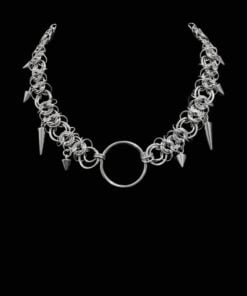
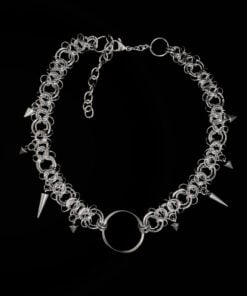
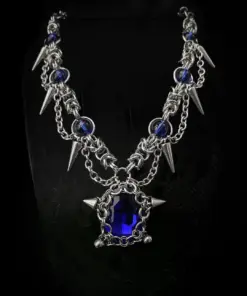
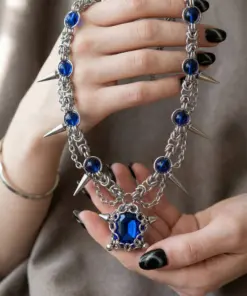
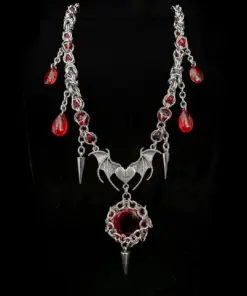
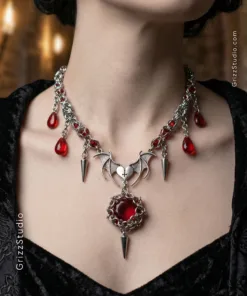
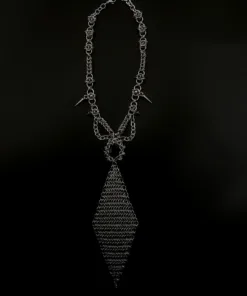

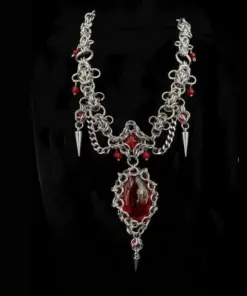
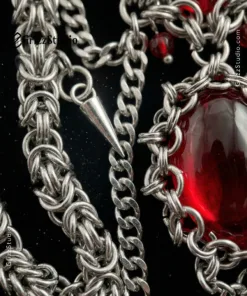
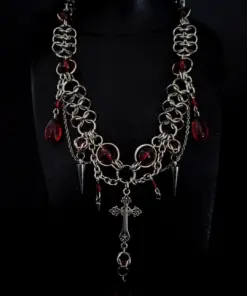
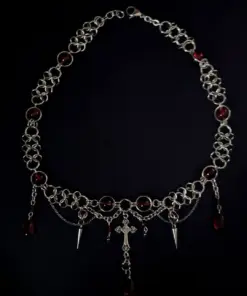


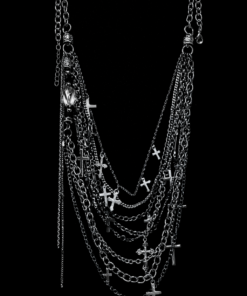

Recommended Grizz Studio Pieces If You Prefer Low-Maintenance Gothic Metal Jewellery
If you love the warm look of brass but would rather have a colder, more armour-inspired finish you can wear every day, silver-tone chainmail jewellery may suit you better. These Grizz Studio pieces are built around structure, movement and dark metal texture — with far less upkeep than brass or copper.
Statement chainmail necklaces
Chainmail chokers
Chainmail bracelets
Chainmail earrings
Final Thoughts: Clean Brass Gently, Then Store It Properly
Brass jewellery can be genuinely beautiful, but it asks for a little care. Start with the gentlest method every time — a soft cloth, mild soapy water and complete drying. Save stronger tarnish-removal methods for plain solid brass, and keep harsh cleaning well away from plated, coated, antique or mixed-material pieces.
And when you are choosing what to wear, remember that material is part of the decision. Brass brings warmth and antique character; stainless steel and silver-tone chainmail bring a colder, sharper, armour-inspired look with much lower maintenance.
Explore handmade gothic chainmail jewellery from Grizz Studio — small-batch necklaces, chokers, bracelets and accessories designed for dark styling, structure and everyday presence.
Frequently Asked Questions
How do you clean brass jewelry?
Start with a soft cloth. For basic cleaning, use lukewarm water with a little mild soap, wipe gently, rinse carefully if the piece is plain solid brass, and then dry it completely.
How do you clean tarnished brass jewelry?
Use a polishing cloth for light tarnish. For plain solid brass, lemon and baking soda or vinegar methods may help, but avoid these on plated, coated, antique or mixed-material jewellery.
Does brass jewelry tarnish?
Yes. Brass naturally tarnishes when exposed to air, moisture, sweat, oils, perfume, lotions and chemicals, because of the copper it contains.
Why does brass jewelry turn skin green?
Brass contains copper, and copper can react with sweat, moisture and skin chemistry to form greenish compounds that transfer onto the skin. It is usually harmless and washes off.
Can you shower with brass jewelry?
It is better not to. Water, soap and humidity can speed up tarnish and may affect coatings, stones or glued details.
Is brass better than stainless steel for jewellery?
Not better — just different. Brass has a warm, antique tone and tarnishes more readily, while stainless steel has a cooler silver tone and is usually lower maintenance, which makes it well suited to everyday gothic chainmail jewellery.