Stainless Steel vs Sterling Silver Jewellery: Which Is Better for Gothic Chainmail Pieces?
Jony ·
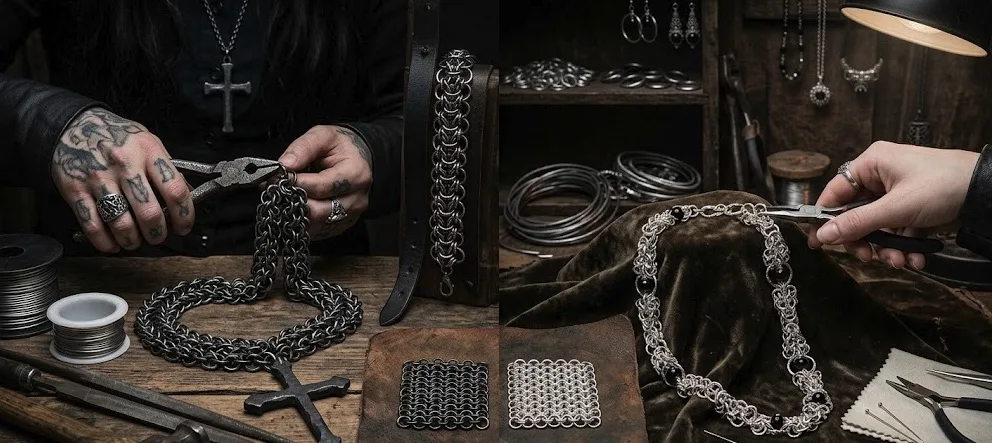
If you are choosing gothic jewellery, the metal matters as much as the design. A chainmail necklace, bracelet, or keychain is not only decorative — it has weight, movement, texture, and everyday contact with clothing, skin, bags, and hands. That makes the choice between stainless steel and sterling silver especially important, particularly when the piece is built from dozens or hundreds of interlocking rings rather than a single cast pendant.
Most jewellery comparisons treat this as a generic luxury-versus-practicality question. For chainmail it is more specific than that. Chainmail jewellery puts unusual mechanical demands on the metal: every ring is a tiny hinge, every connection is a wear point, and every movement of the wearer is transferred through the structure. The right metal does not just look right on a gothic outfit. It survives being worn like one.
This guide breaks down the differences between stainless steel and sterling silver specifically for gothic chainmail pieces — necklaces, bracelets, keychains, and lighter cases — so you can choose with the structure of the piece in mind, not just the look in a product photo.
You can browse Grizz Studio’s full range here while you read:
Gothic chainmail necklaces · Gothic chainmail bracelets · Gothic chainmail keychains
Quick Answer: Stainless Steel or Sterling Silver?
If you want the short version before the deep dive:
- Choose stainless steel if your priority is everyday durability, low maintenance, strong tarnish resistance, and a darker, more industrial gothic look. This is usually the better answer for chainmail jewellery you actually wear regularly.
- Choose sterling silver if your priority is precious-metal value, a brighter polished shine, and a more traditional fine-jewellery feel. It is more delicate and asks more of you in care.
- For Grizz Studio’s gothic chainmail pieces, stainless steel and strong silver-tone construction tend to suit the work better. Chainmail relies on structure, weight, and the ability to be worn often — qualities that line up with steel’s strengths.
Here is a side-by-side view of the practical trade-offs:
| Feature | Stainless Steel | Sterling Silver |
|---|---|---|
| Everyday durability | Stronger | Softer |
| Tarnish resistance | Better | Can tarnish over time |
| Maintenance | Low | Needs regular polishing |
| Suitability for chainmail structure | Very suitable, holds form well | Softer, more delicate |
| Precious metal value | Lower | Higher |
| Visual tone | Darker, industrial | Brighter, classic |
| Best fit | Everyday gothic / industrial | Romantic / Victorian gothic |
The rest of this guide explains why the table looks the way it does, and where each metal genuinely wins.
Why Chainmail Jewellery Needs a Stronger Material
Most necklaces are a single chain plus a pendant. The metal only really has one job: hang straight and stay shiny. Chainmail is structurally different. A chainmail necklace, bracelet, or keychain is built from dozens — sometimes hundreds — of small rings, each one threaded through several others to form a flexible mesh. That changes what you should ask of the metal.
Three things happen in a chainmail piece that do not happen in a simple chain:
- Every ring is a wear point. Each ring rubs lightly against its neighbours every time you move. Multiply that across an entire weave, and a softer metal slowly deforms or wears thin at the contact points.
- The structure has to hold its shape. Part of the appeal of chainmail is that it drapes and flexes but still reads as armour. If the rings spread open under their own weight, the weave loses its character and starts to feel limp instead of structured.
- The piece moves with you. Necklaces brush against jackets and hair. Bracelets get caught on cuffs and bag straps. Keychains slam into other keys, zippers, and table edges. None of this is gentle.
A softer metal can absolutely be made into chainmail — but it has to be handled more carefully, sized differently, and rebuilt or polished more often. A harder metal lets the design language of chainmail come through: heavy, structured, armour-inspired, tactile.
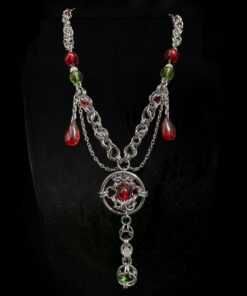
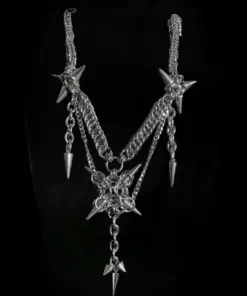
For pieces built around visible structure and movement, explore our handmade gothic chainmail necklaces and gothic chainmail bracelets.
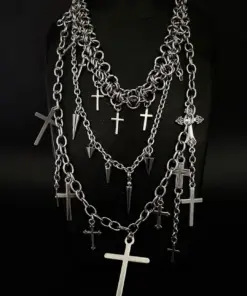

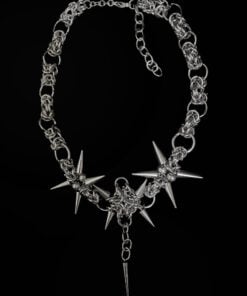
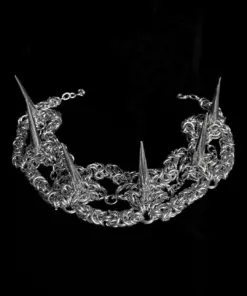
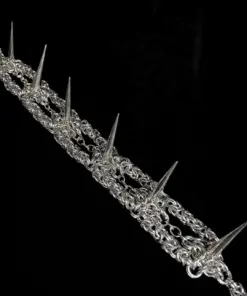
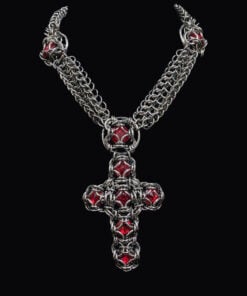
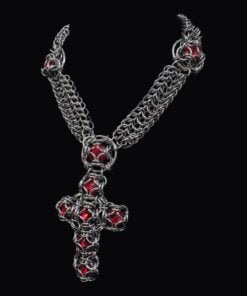

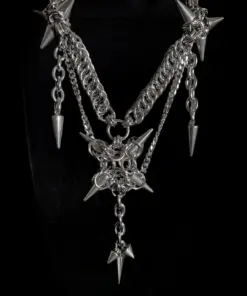
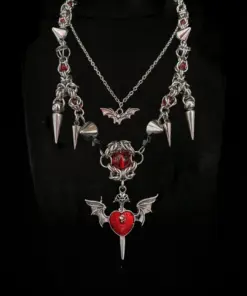
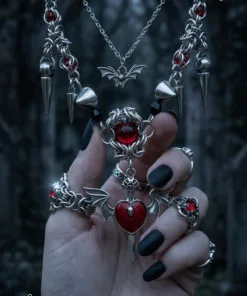
Stainless Steel Jewellery: Best for Everyday Gothic Wear
Stainless steel earns its reputation in jewellery for one main reason: it is unusually forgiving for something you wear every day. The chromium content in jewellery-grade stainless steel forms a thin protective layer on the surface that resists rust, corrosion, and tarnish far better than most precious metals. In practical terms, that means you can wear a stainless steel chainmail necklace through humid days, cold weather, and the occasional accidental shower without watching it dull.
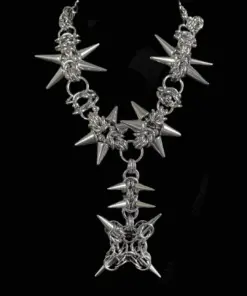
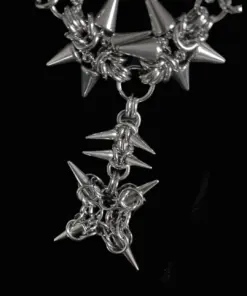
For gothic, punk, industrial, and dark-streetwear styling, stainless steel also has the right visual temperature. The colour is cooler and slightly more muted than polished silver. It reads as hardware rather than as jewellery, which is exactly what works under leather, denim, and heavier silhouettes. Chainmail in stainless steel doesn’t shimmer — it has weight and presence. That is the look most people are actually after when they search for gothic chainmail jewellery.
Stainless steel also handles the specific stress points of chainmail well:
- Necklaces keep their drape and weave shape rather than sagging.
- Bracelets survive constant contact with desks, sleeves, and door handles.
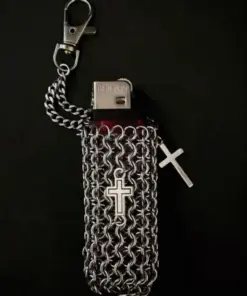
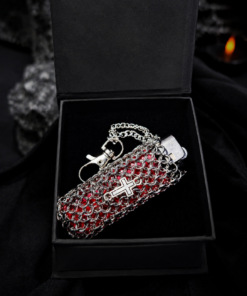
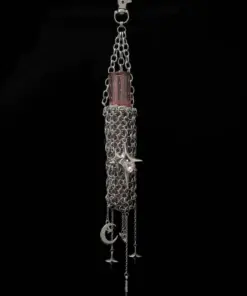
- Lighter cases and keychains can be carried in a pocket or bag without deforming.
A note on skin sensitivity: many stainless steel jewellery pieces are suitable for everyday wear, but stainless steel is an alloy, and some grades contain small amounts of nickel. People with known nickel sensitivity should always check the specific material details of any piece — stainless or otherwise — before buying. The fact that a metal is “stainless” does not automatically make it nickel-free.
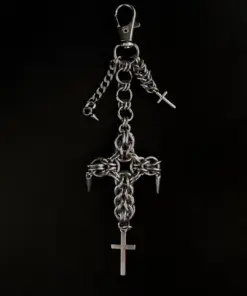
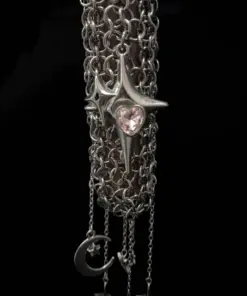
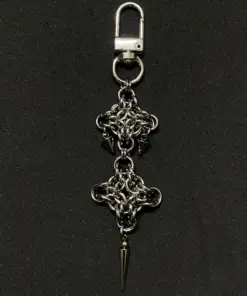
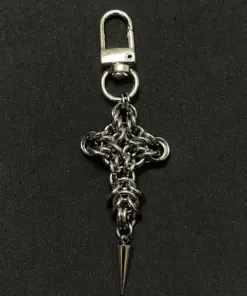
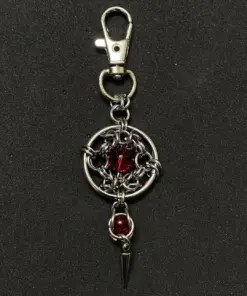
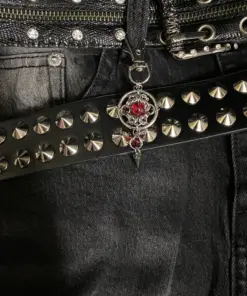
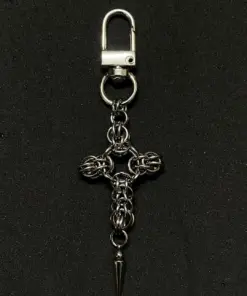
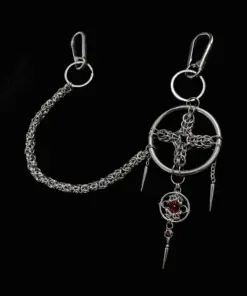
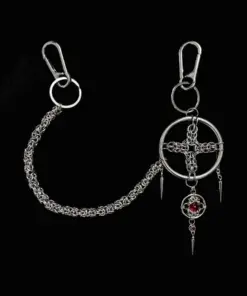
If you prefer accessories that feel more practical than delicate, our gothic chainmail keychains and Chainmail Lighter Armour Collection are designed around that everyday-carry feeling — pieces meant to live in your pocket and on your bag, not in a jewellery box.
Sterling Silver Jewellery: Better for Classic Shine and Precious-Metal Value
It would be unfair to frame this as a contest stainless steel always wins. Sterling silver has genuine advantages, and for the right buyer they matter.
Sterling silver — typically 92.5% silver alloyed with copper or other metals — has a brightness and warmth that stainless steel cannot quite replicate. When freshly polished, it has a softer, more luminous glow rather than a flat industrial sheen. For people who associate jewellery with jewellery — pieces that feel precious, heirloom-like, hand-finished — sterling silver delivers something steel doesn’t.
Sterling silver also has real material value. It is a precious metal with a recognised market price, can be hallmarked, and tends to hold value over time in a way alloy metals don’t. For gift pieces, anniversary purchases, or collectors who care about the metal itself as much as the design, that’s a meaningful difference.
Where sterling silver is genuinely weaker is in the everyday demands chainmail puts on a metal:
- It is softer, so it scratches and dents more easily than stainless steel of comparable thickness.
- It tarnishes. Exposure to air, sulfur compounds, perfume, sweat, and humidity gradually darkens the surface. This isn’t damage in the strict sense — it can be polished off — but it is ongoing maintenance.
- The rings in a sterling silver chainmail piece have to be thicker, or the weave tighter, to compensate for the softer metal. That changes the feel of the finished piece.
None of this disqualifies sterling silver. For a delicate pendant, a thin chain, or a more romantic and Victorian-inspired gothic piece, it can be the right call. For a heavy chainmail necklace meant to be worn three days a week under a jacket, it asks more of the wearer.
Which Metal Looks Better with Gothic Fashion?
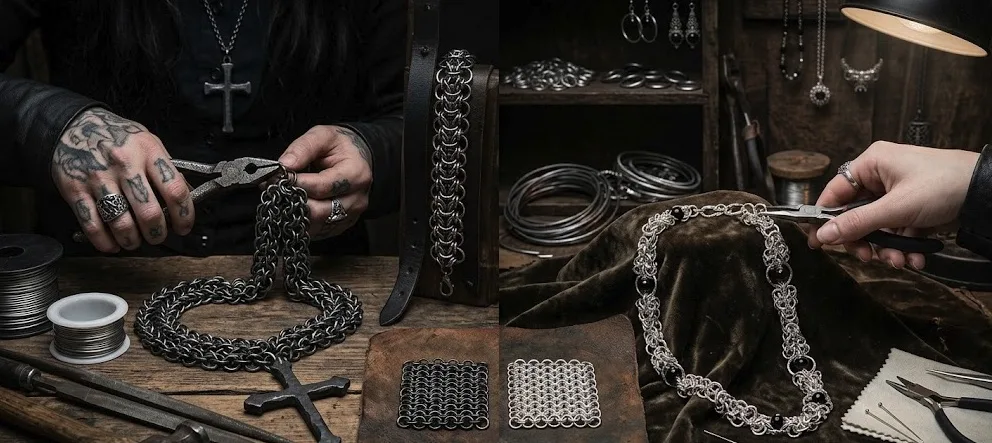
“Gothic” isn’t a single aesthetic, and that’s where the metal choice gets interesting. The same piece can read as armour, as cathedral, or as costume depending on the metal and the rest of the outfit.
Stainless steel works better for:
- Industrial goth and cyber goth, where hardware-grade metals are part of the visual language.
- Punk and dark streetwear, which tend to lean on heavier, colder, more structural pieces.
- Chainmail statement pieces designed to be seen against leather, canvas, and denim.
- Heavier silhouettes — oversized jackets, layered black, utility-influenced fits — that would visually swallow a delicate piece.
Sterling silver works better for:
- Romantic goth, where the jewellery is part of a softer, more lyrical aesthetic.
- Victorian-inspired or trad-goth outfits built around lace, velvet, and detailed silhouettes.
- Symbolic, religious-influenced, or sigil-based jewellery where fine engraving matters.
- Polished, classical looks where the jewellery is the focal point rather than part of an armour-like layer.
For Grizz Studio’s current chainmail direction, stainless steel and silver-tone metalwork fit the brand’s armour-inspired, dark architectural look better than delicate fine jewellery styling. The pieces are designed to feel built, not arranged.
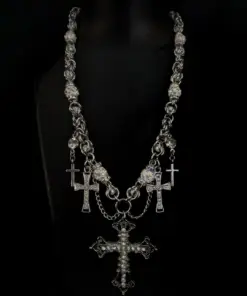
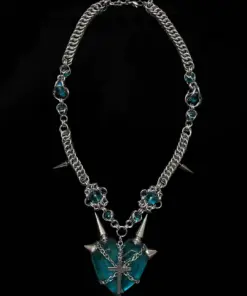
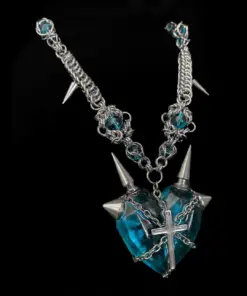
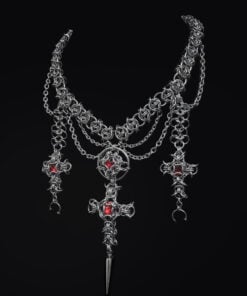
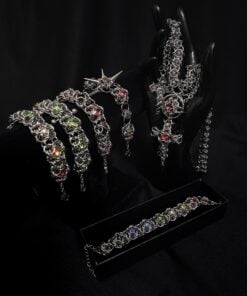
Which Is Better for Chainmail Necklaces?
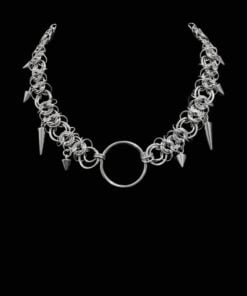
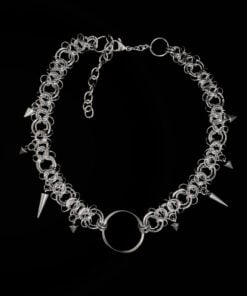
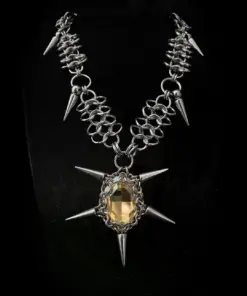
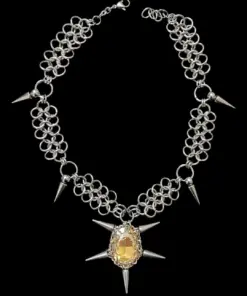
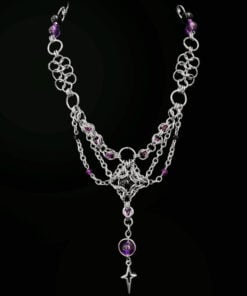
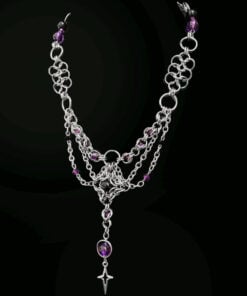
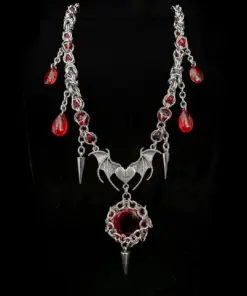
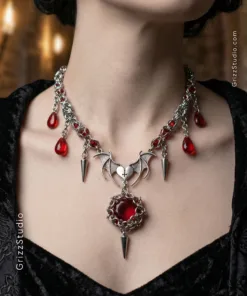
For gothic chainmail necklaces, stainless steel is usually the more practical choice.
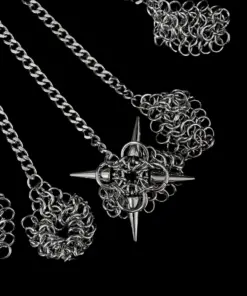
A chainmail necklace sits across one of the highest-movement zones on the body. It moves every time you turn your head, brushes the inside of every collar and hood, and catches on hair and earrings more often than people expect. On top of that, the visual identity of a chainmail necklace depends on it staying a defined shape — a panel, a bib, a thick collar — rather than collapsing into a tangled rope around your neck.
Stainless steel gives you three things this design needs:
- Form retention. The weave drapes without spreading or sagging.
- Surface durability. Friction against fabric and skin doesn’t quickly dull the rings.
- Weight that reads right. Steel has the heft that makes a chainmail necklace feel like the statement piece it is meant to be, instead of feeling weightless and costume-like.
Sterling silver chainmail necklaces certainly exist and can be beautiful, but they tend to work best as occasion pieces rather than daily wear, and they typically need thicker ring stock or a tighter weave to stay structurally honest.
Start with our Gothic Chainmail Necklaces if you want a structured statement piece rather than a delicate pendant chain.

Which Is Better for Bracelets and Keychains?
If necklaces are demanding, bracelets and keychains are brutal on jewellery.
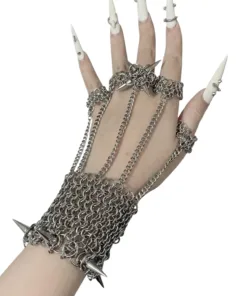
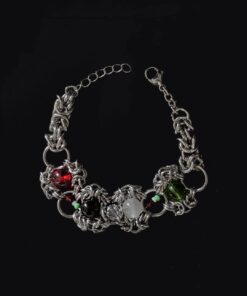
A bracelet sits on one of the busiest parts of the body. Wrists hit desks, pockets, sleeves, steering wheels, gym equipment, and bags hundreds of times a day. The friction is constant and uneven. Keychains have it even worse — they ride alongside actual metal keys, get jammed into pockets and bags, dropped on hard floors, and yanked around at lock-height every time you come home.
For both of these accessory types, stainless steel and similarly hard, strong metals are the more honest material choice for chainmail construction. Specifically:
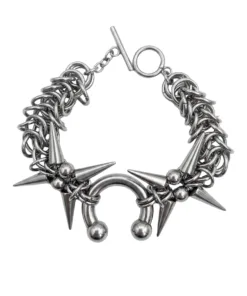
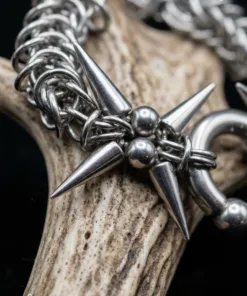
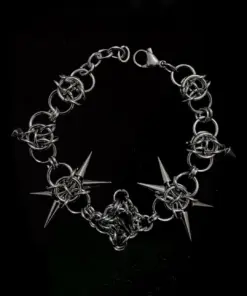
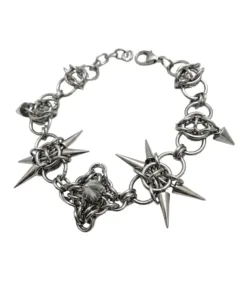
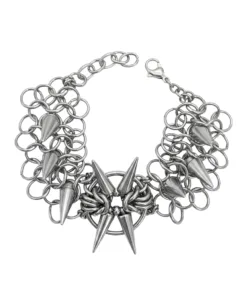
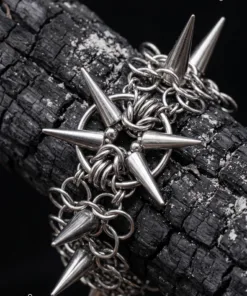
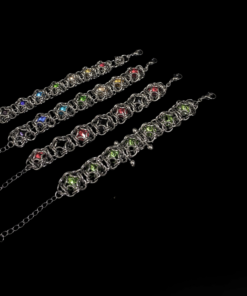
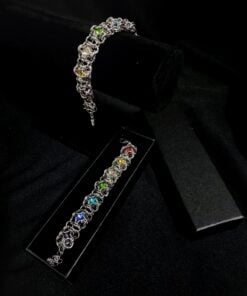
- Bracelets in stainless steel keep their weave structure even after months of contact with sleeves and surfaces. The rings don’t open up under tension, and the surface doesn’t quickly dull from rubbing against fabric.
- Keychains in stainless steel can take being thrown into a bag and pulled out twenty times a day without distorting. A chainmail keychain in a softer precious metal would gradually deform and need re-tightening.
Sterling silver, by contrast, is best reserved for bracelets and keychain charms that are more decorative than functional — pieces taken out for occasions rather than carried as everyday objects.
For wristwear, browse our gothic chainmail bracelets. For practical dark accessories, explore our handmade gothic keychains.

Care and Maintenance: Which Is Easier?
The maintenance gap between these two metals is real, and worth knowing before you buy.
Stainless steel asks for very little. Wipe it down with a soft cloth after sweaty or wet wear, occasionally clean it with mild soap and warm water, dry it properly before storing, and don’t leave it sitting in a damp pocket or bag for days. That’s most of it. Stainless steel doesn’t tarnish in any normal sense, so you don’t need polishing cloths, anti-tarnish strips, or airtight pouches.
Sterling silver is more involved. It tarnishes naturally as it reacts with sulfur and moisture in the air. Keeping it bright takes regular polishing with a silver cloth, careful storage in airtight or anti-tarnish pouches, and avoiding contact with perfume, lotion, chlorinated water, and household chemicals. Heavily oxidised silver can usually be brought back, but it’s an ongoing project rather than a one-off.
For a step-by-step care routine on the steel side, read our guide on how to clean and care for stainless steel chainmail jewellery.
Final Verdict: What Should You Choose?
There is no universal winner here. There is a winner for your use case.
Choose stainless steel if you want:
- Jewellery you can wear every day without thinking about it.
- A gothic chainmail piece that holds its structure under regular use.
- Lower maintenance — no polishing routines, no anti-tarnish storage.
- An industrial, hardware-leaning visual tone that pairs with heavy outfits.
- Stronger accessories for bracelets, keychains, and lighter cases.
Choose sterling silver if you want:
- A precious metal with recognised material value.
- A brighter, more polished shine for fine-jewellery styling.
- A lighter, more delicate feel against the skin.
- A more traditional, romantic, or Victorian-inspired gothic aesthetic.
- A piece that lives mostly in a jewellery box and comes out for occasions.
For Grizz Studio’s gothic chainmail pieces, stainless steel and strong silver-tone construction make the most sense because the design language is not delicate minimal jewellery. It is structured, dark, tactile, and made to be worn as a statement — chainmail that behaves like chainmail, not like a costume version of it.
Explore handmade gothic chainmail jewellery from Grizz Studio: necklaces, bracelets, keychains, and chainmail lighter cases.
Frequently Asked Questions
Is stainless steel better than sterling silver for everyday jewellery?
For everyday wear, stainless steel is usually more practical because it is harder, more resistant to tarnish, and lower maintenance than sterling silver. Sterling silver still has the edge for precious-metal value and classic shine, but it asks for more care to keep it looking its best.
Does stainless steel jewellery tarnish?
Stainless steel is highly resistant to tarnish and corrosion, especially compared with sterling silver. The chromium in the alloy forms a protective surface layer that keeps the metal stable in normal wear. It should still be dried properly after water exposure and stored somewhere dry to keep it at its best.
Is sterling silver more valuable than stainless steel?
Yes. Sterling silver is a precious metal and generally has higher material value than stainless steel. That value is in the metal itself — for the same handmade design, a sterling silver version will almost always cost more than a stainless steel one because of the raw material.
Is stainless steel good for gothic jewellery?
Yes. Stainless steel suits gothic jewellery well because it has a strong, industrial look and works well with chainmail, spikes, dark outfits, and armour-inspired designs. The slightly cooler, more muted tone reads as hardware rather than fine jewellery, which is usually what gothic and dark streetwear styling is going for.
Which metal is better for chainmail necklaces?
For chainmail necklaces designed for regular wear, stainless steel is usually more practical because the linked structure benefits from strength and durability. The weave keeps its shape, the rings resist deformation, and the necklace handles daily contact with clothing and skin without quickly losing its look.