Byzantine Chain: Why This Ancient-Looking Weave Still Feels Modern
Jony ·
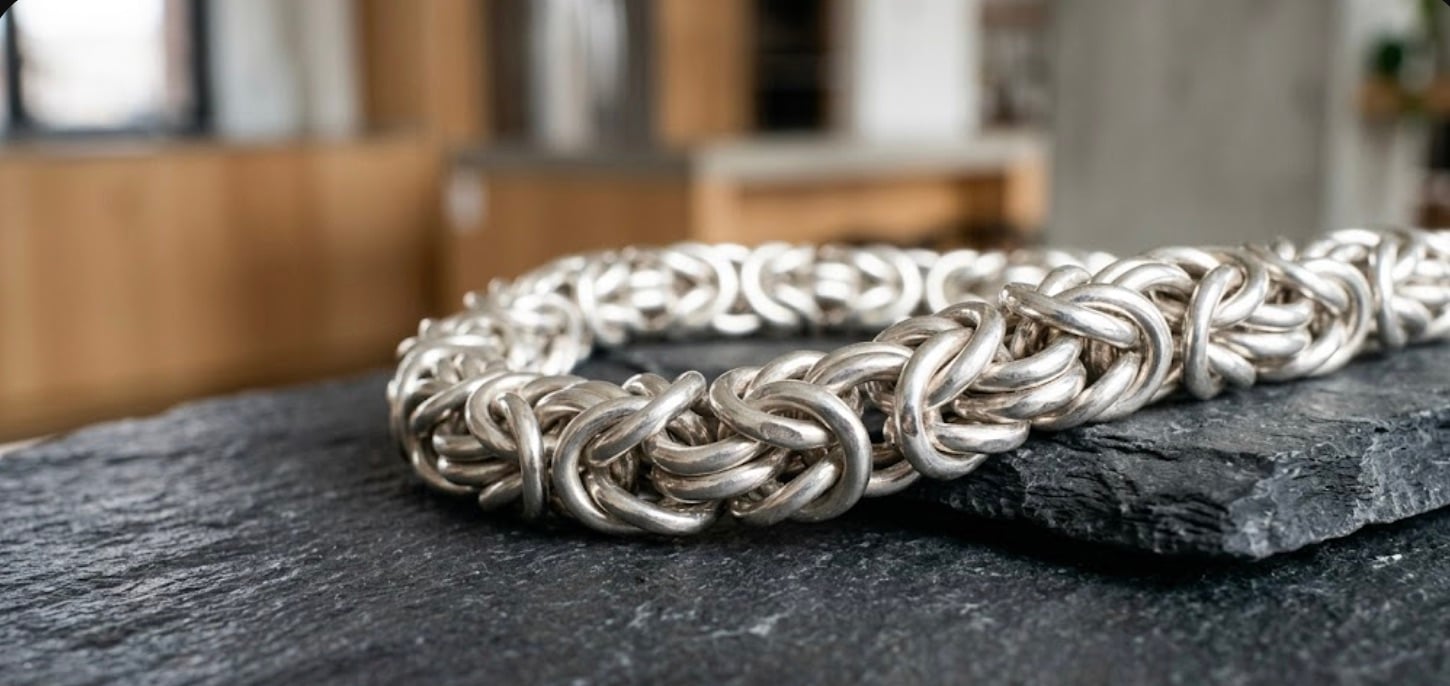
A Byzantine chain has a different presence from an ordinary chain necklace. It does not rely on a single flat row of links sitting in a line. Instead, it is built from repeating rings that fold, interlock and double back on themselves, creating a textured, almost architectural surface that catches the light from several angles at once.
That is why the byzantine chain still feels relevant in modern jewellery. It carries the visual memory of chainmail, armour and historical metalwork, yet it can also look clean, sculptural and entirely wearable in a contemporary necklace. It is one of the few chain styles that works as decoration in its own right — no large pendant required.
What Is a Byzantine Chain?
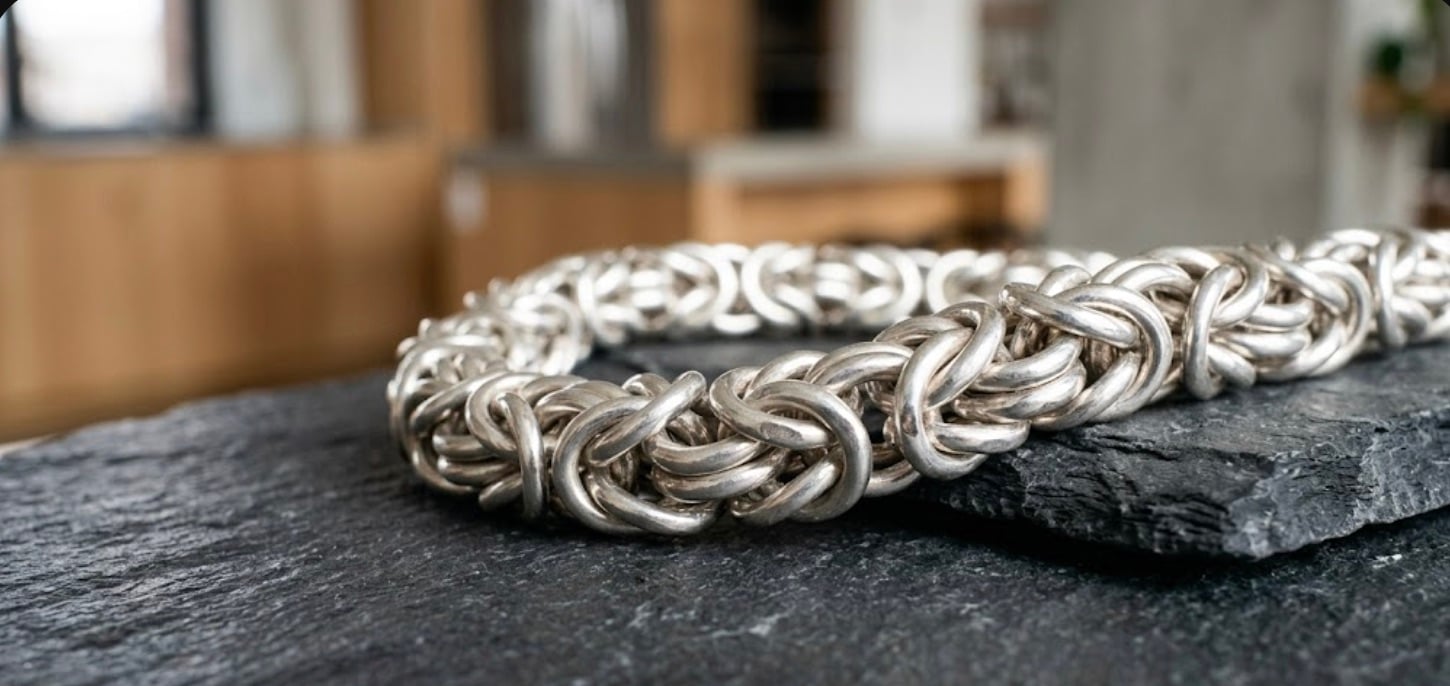
A Byzantine chain is an intricate jewellery chain made from interlocking metal links arranged in a repeating pattern. It is most often described as a 4-in-1 weave, meaning each link passes through four others, which is what gives the chain its dense, flexible, rope-like body.
Unlike a simple cable or curb chain, a byzantine chain necklace is genuinely woven rather than merely linked together. The rings alternate direction as the pattern builds up, so the finished chain has a supple drape and a tubular, organic texture instead of a flat profile. It is this construction — closer to chainmail than to a standard fashion chain — that puts byzantine chain jewellery in a category of its own.
Why Is It Called a Byzantine Chain?
The name lends the chain an ancient, ornamental feeling, even though the exact origin of the term is not entirely settled. Some jewellery references connect the style to the richness and metalwork of the Byzantine era, while the same weave has also been known over the years by other names, including birdcage, Etruscan and bird’s nest.
Rather than treating “Byzantine” as a precise historical guarantee, it is more accurate to think of it as a chain with a historical and architectural mood. That is exactly why it matters for a studio like ours: Grizz Studio jewellery draws on the same kind of historical-feeling metalwork without ever tipping over into costume. The reference lives in the construction, not in a literal symbol.
Byzantine Chain vs Regular Chain Necklace
| Chain type | Structure | Visual effect | Best for |
|---|---|---|---|
| Cable chain | Simple oval links | Classic, minimal | Everyday pendants |
| Curb chain | Flattened interlocking links | Clean, strong | Streetwear, layering |
| Rope chain | Twisted chain pattern | Bright, reflective | Classic silver and gold looks |
| Byzantine chain | Interlocking 4-in-1 style | Textured, woven, architectural | Statement chains, gothic styling |
| Chainmail necklace | Ring-based woven construction | Armour-like, handmade, textural | Gothic, industrial, alternative jewellery |
The simplest way to put it: a regular chain creates a line. A Byzantine chain creates a surface.
Why Byzantine Chain Feels Close to Chainmail
Byzantine chain is so often discussed alongside chainmail because the two share the same underlying logic: interlocking rings, repeated structure, and strength that comes from linking rather than from a single solid form. A byzantine weave is, in many ways, a refined, rope-like relative of chainmail, and ring size and proportion shape the finished look in exactly the same way.
- Both are built from repeated metal rings.
- Both gain their flexibility from the way those rings interlink.
- Both have texture rather than flatness.
- Both can feel historical, protective or armour-like.
- Both sit naturally within gothic and alternative jewellery.
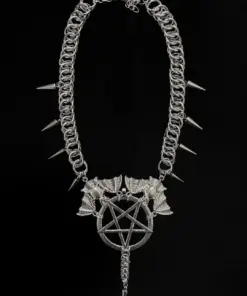
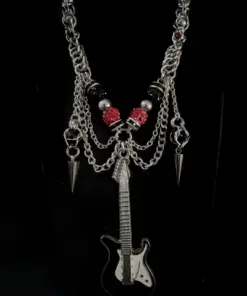
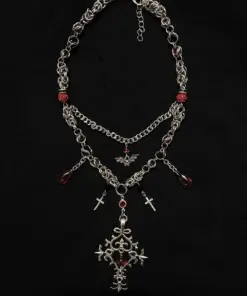
For Grizz Studio, this is precisely why chainmail texture matters. It gives a piece a built quality rather than a printed or purely decorative surface — jewellery that looks made, link by link.
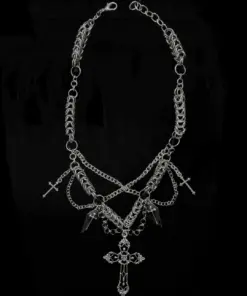
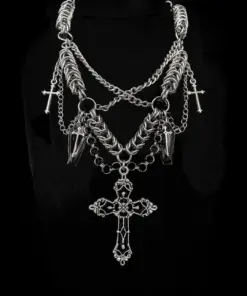
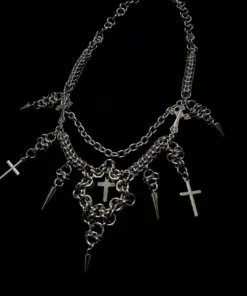
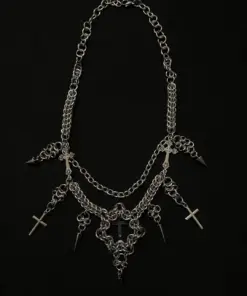
Explore handmade gothic necklaces with chainmail texture, silver-tone detail and darker statement styling.
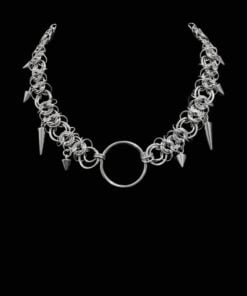
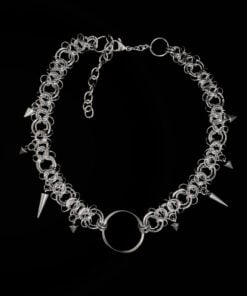
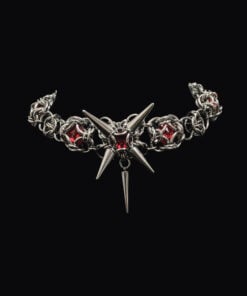
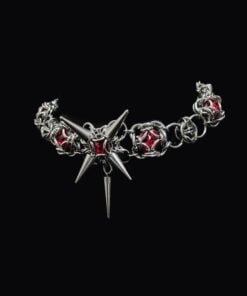
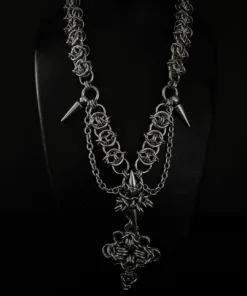
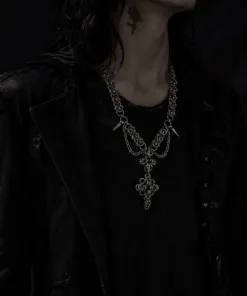
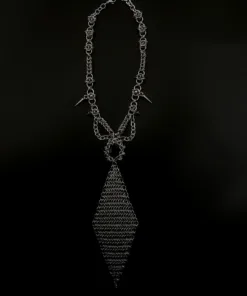
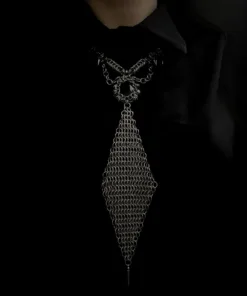



The Design Appeal: Texture, Weight and Movement
A byzantine chain works because it has far more visual depth than a flat chain. Look at one closely and it offers:
- texture from every angle
- a flexible, fluid drape
- reflective silver-tone surfaces
- a compact, tightly woven look
- enough structure to feel substantial on the skin
- enough movement to stay comfortable and wearable
- a historical, armour-like mood without needing a literal symbol
From a design point of view, this is what makes the byzantine chain so powerful: it turns the chain itself into the decoration. It does not need a large pendant to feel interesting, because the weave is already doing the work.
Byzantine Chain Necklace: When Should You Wear One?
A byzantine chain necklace earns its place when you want jewellery that feels:
- more detailed than a plain chain
- stronger than a delicate pendant
- more textural than a flat curb chain
- suited to dark outfits
- historical without being costume-like
- handmade and craft-led
- gothic, industrial or alternative in character
Styling it is refreshingly easy. A byzantine chain looks at home:
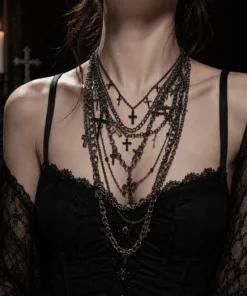
- over a plain black top, where the silver weave does all the talking
- against a crisp white shirt for contrast
- with a leather jacket for an industrial edge
- with a dark dress for evening
- layered with other silver-tone jewellery
- as the anchor of a gothic or alternative outfit
Silver Byzantine Chain: Why the Metal Finish Matters
Silver-tone byzantine chains are particularly effective because the weave creates dozens of small reflective surfaces. The light does not land on one flat pendant and stop — it travels across the rings, giving the whole necklace depth and a quiet sense of movement.
- silver catches the light beautifully against black clothing
- the textured links stop the necklace ever looking flat or cheap
- stainless steel and silver-tone metal support a sharper, more gothic look
- darker outfits genuinely benefit from that metal contrast
- silver byzantine-style chains pair effortlessly with rings, earrings, buckles and other chain details
This connects naturally to Grizz Studio’s silver-tone chainmail pieces, especially those built in stainless steel with darker, gothic styling.
Byzantine Chain for Gothic and Alternative Jewellery
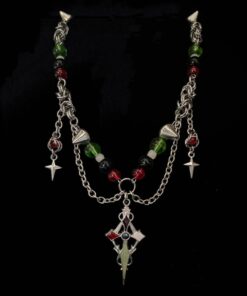
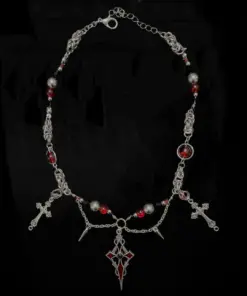
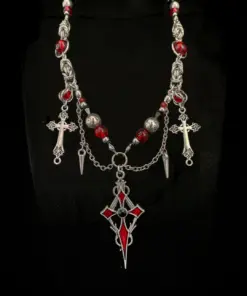
A byzantine chain belongs in gothic and alternative jewellery because it already has structure and texture built into it. It does not need to be covered in symbols to read as dark — the weave itself carries the mood.
The strongest gothic designs tend to lean on cues like:
- silver-tone metal
- black-and-silver contrast
- chainmail texture
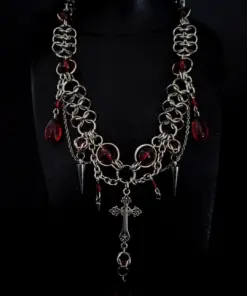
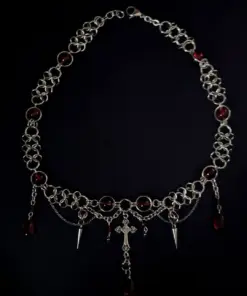
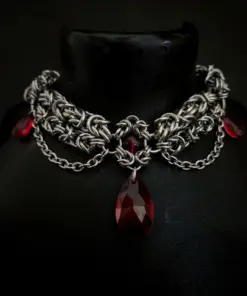
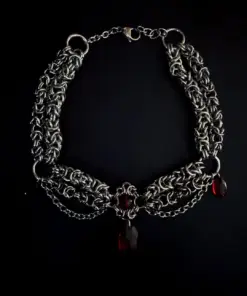
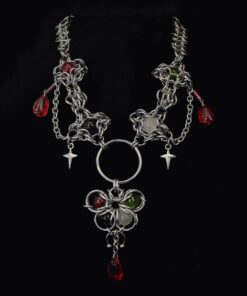
- red crystal or dark gemstone accents
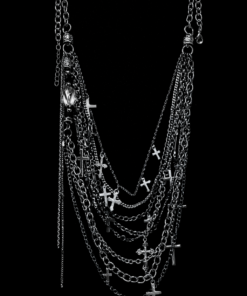
- heart, wing, bat, lock or cross elements used sparingly
- layered chain construction
- an industrial hardware influence
- visible, handmade finishing
The principle underneath all of it is simple: for gothic jewellery, the best chain designs usually feel built rather than decorated.
For a darker take on woven chain jewellery, start with a handmade chainmail necklace and keep the rest of the outfit clean.


Byzantine Chain vs Chainmail Necklace: Which Is Better?
| Feature | Byzantine chain | Chainmail necklace |
|---|---|---|
| Main structure | Repeating interlocked chain pattern | Woven ring-based construction |
| Visual mood | Textured, compact, ornamental | Armour-like, gothic, handmade |
| Best for | Classic chain lovers wanting more texture | Alternative wearers wanting stronger identity |
| Pendant needed? | Not always | Not always |
| Gothic potential | Strong | Very strong |
| Handmade appeal | Good | Very strong when visibly constructed |
Choose a byzantine chain if you want a textured chain that still feels classic. Choose a chainmail necklace if you want the jewellery to feel more gothic, sculptural and distinctly its own.
What to Look For Before Buying a Byzantine Chain
1. Link structure
The beauty of the chain lives in the weave, so look for clear, even, consistently interlocking links. Uneven or loose rings are the first sign of a rushed piece.
2. Width
Slim byzantine chains feel subtle and refined, while wider chains read as more of a statement. Decide which role you want the necklace to play before you buy.
3. Metal
Check whether the chain is sterling silver, stainless steel, plated metal, alloy or another material. For darker, gothic styling, stainless steel and solid silver-tone finishes tend to hold up best.
4. Flexibility
A well-made woven chain should move comfortably and drape against the body rather than feeling stiff or brittle.
5. Clasp quality
A textured chain deserves a clasp that feels secure and properly proportioned. The fastening should match the weight and presence of the weave.
6. Styling purpose
Decide up front whether you want classic, gothic, industrial, masculine, feminine, minimal or full statement styling — it changes the width, finish and length that will work best for you.
The Brand View: Why Grizz Studio Values Woven Metalwork
At Grizz Studio, woven metalwork matters because it changes the role of jewellery entirely. A necklace is not just a pendant hung from a chain. The chain itself can become the design — link by link, ring by ring, texture by texture.
That is what sets chainmail-inspired pieces apart from ordinary fashion jewellery. They have rhythm, weight and genuine construction. They look made, not merely assembled. Each piece is handmade gothic jewellery, produced in small batches using chainmail techniques, stainless steel and silver-tone detail — textured metalwork for people who want alternative jewellery that is never mass-produced.
Final Thoughts: Byzantine Chain Is About Construction, Not Decoration
A byzantine chain stays interesting because it turns repeated links into texture. It manages to feel historical, structured and modern all at the same time.
For gothic and alternative jewellery, that is the whole point. The best necklaces do not always need oversized pendants or obvious symbols. Sometimes the strongest detail of all is the construction itself.
Explore handmade gothic and chainmail-inspired statement necklaces from Grizz Studio.
Frequently Asked Questions
What is a Byzantine chain?
A Byzantine chain is an intricate jewellery chain made from interlocking metal links. It is commonly described as a 4-in-1 chain, where each link passes through four others, creating a textured, rope-like structure.
Is Byzantine chain the same as chainmail?
Not exactly. Byzantine chain is a jewellery chain pattern, while chainmail is a broader woven ring construction. However, the two are closely related, because both rely on interlocking rings and repeated link structures.
Is a Byzantine chain good for necklaces?
Yes. A byzantine chain works well for necklaces because it has texture, flexibility and enough visual detail to stand alone — it does not always need a pendant to look complete.
Why is it called a Byzantine chain?
The name gives the chain a historical and ornamental association, although its exact origin is not fully settled. The same weave has also been known by other names, including birdcage, Etruscan and bird’s nest.
Is Byzantine chain good for gothic jewellery?
Yes. Byzantine chain suits gothic jewellery well because it has texture, weight and an armour-like feel, without needing to rely only on dark symbols to create its mood.
What is the difference between a Byzantine chain and a curb chain?
A curb chain uses flattened interlocking links for a cleaner, simpler look. A Byzantine chain uses a more complex interlocking weave, which creates a textured, rope-like surface with far more visual depth.