Titanium Chainmail: Is It Worth It for Jewellery?
Jony ·
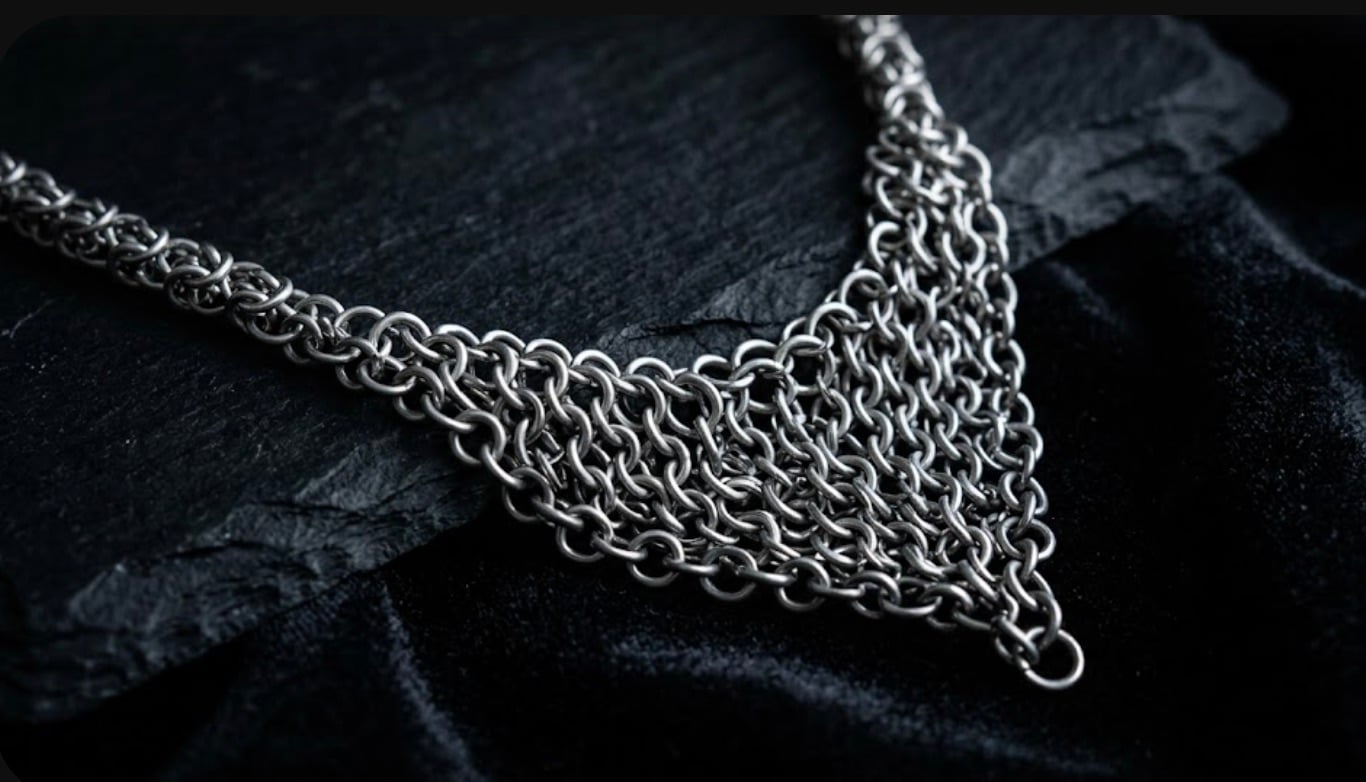
Titanium chainmail sits at the premium end of chainmail jewellery materials. It is prized for being strong, lightweight, corrosion-resistant and — for many wearers — kinder to sensitive skin than lower-grade metals.
For chainmail in particular, the choice of metal matters more than it first appears. A necklace, choker or bracelet is built from many individual rings linked by hand, so the material shapes not only the colour of the finished piece, but its weight, the way it moves, how comfortable it feels against the skin and, ultimately, its price.
Titanium is not essential for every chainmail design. Stainless steel, aluminium and other metals each have their place. But when the goal is lightweight strength, titanium becomes one of the most interesting materials a maker can reach for. Specialist ring suppliers such as The Ring Lord describe titanium as strong, corrosion-resistant and hypoallergenic, while the chainmaille resource Maille Artisans notes that titanium weighs only around 60% of plain steel — one of its biggest advantages for maille work.
What Is Titanium Chainmail?
Titanium chainmail is chainmail made from titanium or titanium-alloy rings. In jewellery, those rings are opened, woven together into a chosen pattern and closed by hand to form a finished piece. Because the structure is built ring by ring rather than cast or stamped, the metal you start with defines everything that follows.
In practice, titanium can be used for almost any chainmail format, including:
- Chainmail necklaces
- Chainmail chokers
- Chainmail bracelets
- Chainmail earrings
- Chainmail collars
- Decorative chainmail panels and accessories
It is worth saying clearly: titanium is just one possible premium chainmail material. Many gothic chainmail pieces are made instead from stainless steel, which gives strength, structure and a cold silver-tone finish that suits armour-inspired design. The right metal depends on the look and feel a piece is trying to achieve.
Why Titanium Is Interesting for Chainmail Jewellery
It is lightweight
Because chainmail uses so many rings, weight adds up quickly — a larger weave can carry a surprising amount of metal. Titanium’s lower density means a comparable piece feels noticeably lighter. Maille Artisans puts titanium at roughly 60% the weight of plain steel, which is precisely why makers reach for it on bigger, fuller designs that would otherwise feel heavy.
It is strong
Titanium is valued for its strength-to-weight ratio, which is among the highest of any commonly available metal. For chainmail this matters: every ring needs to hold its shape and resist springing open under normal wear, and a strong metal keeps the weave secure over time.
It resists corrosion
Titanium has excellent corrosion resistance, which makes it well suited to jewellery exposed to sweat, humidity and everyday handling. It will not rust, and it shrugs off conditions that would tarnish softer metals — one reason it is so often chosen for low-maintenance pieces.
It is often used for sensitive-skin jewellery
Titanium is widely described in jewellery and chainmail supply sources as hypoallergenic or skin-friendly, and medical-grade titanium alloys are trusted for surgical implants for exactly that reason. The honest caveat is that skin sensitivity depends on the exact alloy, the finish and the individual wearer, so titanium should be treated as a strong option rather than a blanket guarantee.
It can be anodised
One of titanium’s most distinctive tricks is colour without paint or dye. Anodising builds up a thin oxide layer on the surface, and the thickness of that layer produces the colour — golds, blues, violets and greens among them. It is a genuinely different finish from coated metals. The trade-off is that anodised colour is a surface effect: it can shift between batches and may fade over time with wear, showering, spa water or swimming.
Titanium Chainmail vs Stainless Steel Chainmail
For most gothic chainmail jewellery, the real decision is titanium versus stainless steel. Here is how they compare:
| Feature | Titanium Chainmail | Stainless Steel Chainmail |
|---|---|---|
| Weight | Lighter than steel | Heavier, more substantial |
| Strength | Strong and premium | Strong and practical |
| Corrosion resistance | Very strong | Strong, depending on grade |
| Colour | Grey/silver, can be anodised | Cool silver tone |
| Cost | Usually higher | Usually more accessible |
| Workability | Harder to bend and work | Easier than titanium for many makers |
| Gothic feel | Lightweight, technical, premium | Cold, industrial, armour-like |
| Best for | Premium lightweight pieces | Everyday gothic chainmail jewellery |
Titanium wins when reducing weight is the priority. Stainless steel wins when the design calls for a stronger, colder, more industrial look at a more accessible price. For many gothic chainmail necklaces and chokers, stainless steel actually gives the visual weight people expect from armour-inspired jewellery, while titanium remains the more specialist, premium route.
There is a making-side reason for the price gap too. The Ring Lord notes that its titanium is mostly Grade 5 alloy with a hard temper comparable to spring stainless, and that it is much harder to bend than softer metals — so titanium is strong, but demanding to work cleanly.
Titanium Chainmail vs Aluminium Chainmail
| Feature | Titanium Chainmail | Aluminium Chainmail |
|---|---|---|
| Weight | Lightweight | Very lightweight |
| Strength | Stronger and more premium | Softer, easier to work |
| Feel | Technical, durable | Lighter, sometimes less substantial |
| Price | Higher | Lower |
| Colour options | Anodised colours possible | Many anodised colours available |
| Best for | Premium, durable lightweight pieces | Costume, colourful, larger lightweight pieces |
Aluminium is popular in chainmail because it is light and comes in a wide range of anodised colours, which makes it ideal for bright, costume-style and large statement pieces. Titanium is the more premium choice: it offers greater strength and a more technical, durable feel. Which one suits a project comes down to whether the maker is chasing maximum lightness, vivid colour, strength, a tighter price or a more substantial finish.
Is Titanium Chainmail Comfortable?
Yes — titanium chainmail can be very comfortable, but comfort is never down to material alone. It depends on ring size, ring thickness, how densely the weave is packed, the total weight, clasp placement, edge finishing, and the length and fit of the piece, as well as whether it is a necklace, choker or bracelet.
Titanium helps by reducing weight, which is a real advantage on larger designs. But a poorly balanced titanium necklace can still feel awkward if the clasp sits badly or the weight is not distributed well. Put simply: material helps, but design decides comfort. A good titanium chainmail necklace should feel stable, flexible and balanced — not just light.
Does Titanium Chainmail Tarnish?
Titanium is highly resistant to tarnish and corrosion, far more so than copper, brass and many fashion metals. That low-maintenance quality is a big part of its appeal. A few honest points are worth keeping in mind, though:
- The titanium itself is corrosion-resistant and will not rust.
- Anodised titanium colour is a surface oxide effect and can fade or wear over time, including with showering, spa use or swimming.
- Surface oils, residue and everyday dirt can still leave a piece looking dull until it is cleaned.
- Mixed-material pieces may include components that need different, gentler care.
Is Titanium Chainmail Good for Sensitive Skin?
Titanium is often chosen for sensitive-skin jewellery because it is generally considered skin-friendly and corrosion-resistant, and higher-grade alloys are even used for medical implants. The safest way to put it is this: titanium is frequently a good option for people who avoid nickel-heavy or reactive metals, but sensitivity always depends on the exact alloy, finish and individual reaction.
The more useful habit for shoppers is to check the actual metal, not just the colour. “Silver tone” does not automatically mean titanium or stainless steel — it can also mean plated base metal underneath. Clear, honest material information is what builds trust, which is why a good maker will tell you exactly what a piece is made from.
Why Titanium Chainmail Costs More
If titanium pieces look expensive next to other chainmail, there are concrete reasons:
- Titanium rings usually cost more to buy in the first place.
- The metal is harder to work with.
- It is harder to bend and close neatly, ring by ring.
- It often demands better tools.
- Anodised titanium needs careful colour control across a piece.
- Mistakes are more costly when the raw material is premium.
- The finished result offers lightweight strength and strong corrosion resistance.
With chainmail, material cost multiplies fast, because a single necklace can use a large number of rings. A small difference in the price per ring becomes a large difference in the cost of the finished piece.
The Designer’s View: When Titanium Is Worth It
Titanium is most worth considering when a design needs large chainmail coverage without too much weight, a premium technical material feel, strong corrosion resistance, sensitive-skin positioning, anodised colour effects, or a high-end lightweight statement.
It is less necessary when the piece is small, when the design actually benefits from heavier visual weight, when the price needs to stay accessible, when stainless steel already delivers the intended look, or when the brand wants a colder, industrial, substantial feel.
For Grizz Studio specifically, titanium is an interesting future direction for premium lightweight editions. But stainless steel remains highly suitable for gothic chainmail jewellery, because it supports the dark, structured, armour-inspired look the brand is built around.
Titanium Chainmail Necklace, Choker or Bracelet: Which Works Best?
| Piece type | Titanium advantage | Notes |
|---|---|---|
| Necklace | Reduces neck weight | Good for larger statement pieces |
| Choker | Can improve comfort | Fit and clasp still matter most |
| Bracelet | Durable and wearable | Less weight-sensitive than necklaces |
| Earrings | Very useful, as low weight matters | Great for larger chainmail earring designs |
| Accessories | Strong and corrosion-resistant | Cost can be harder to justify |
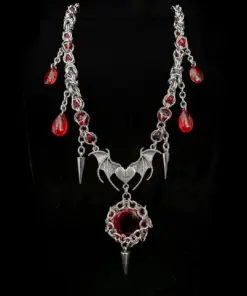
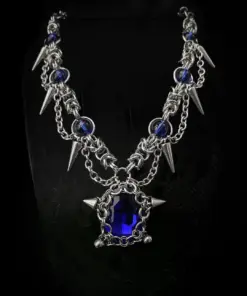
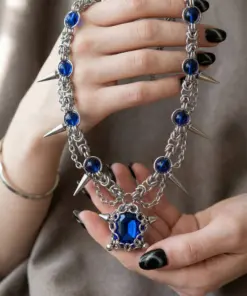
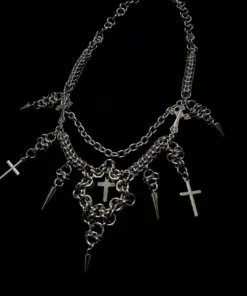
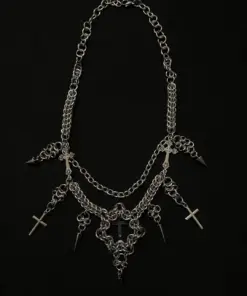
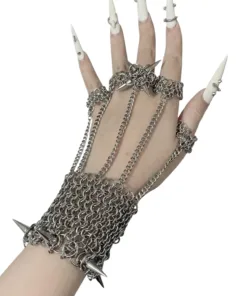
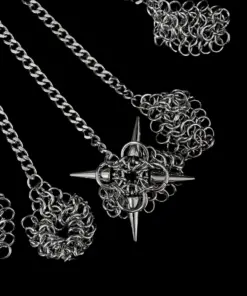
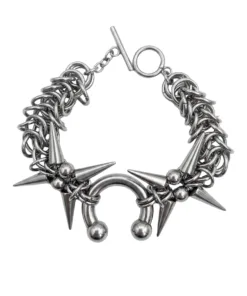
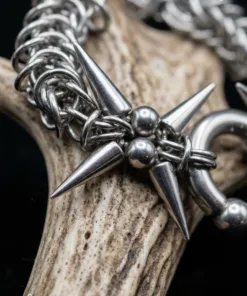
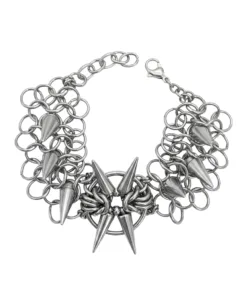
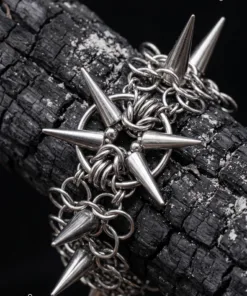
If you like the technical, lightweight idea behind titanium, here is the same gothic chainmail attitude across Grizz Studio’s silver-tone pieces:
Necklaces:
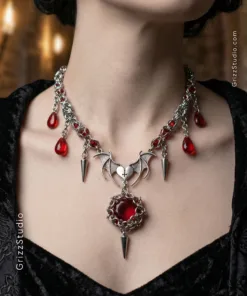
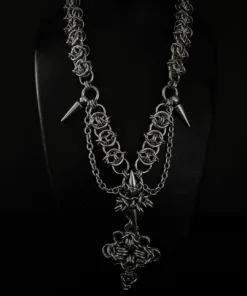
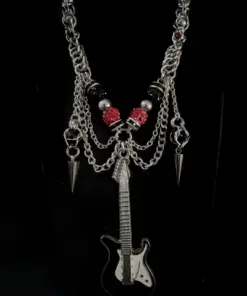

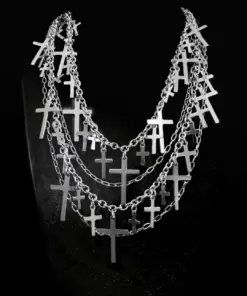
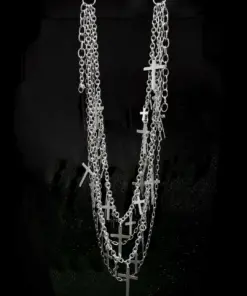
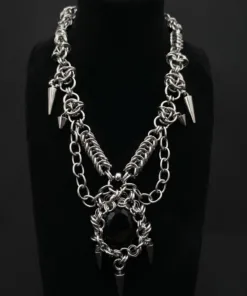

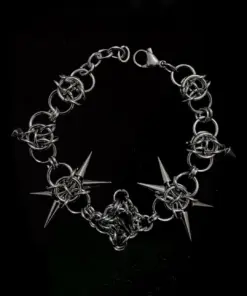
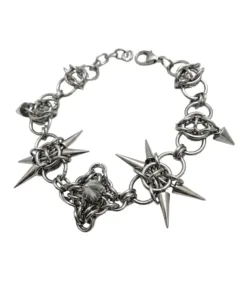
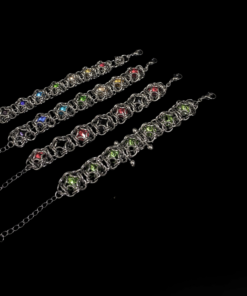
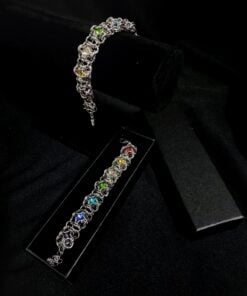
Bracelets:
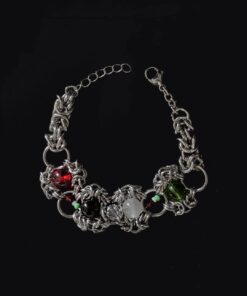

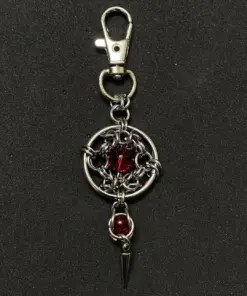
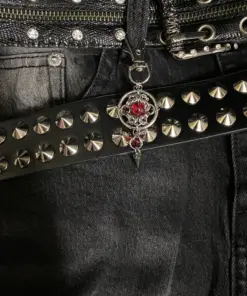
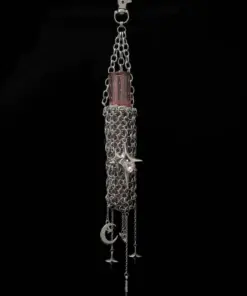
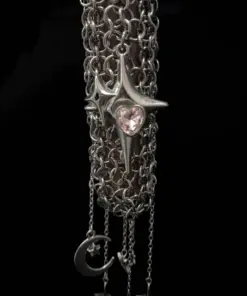
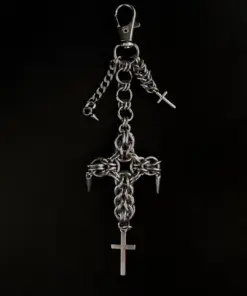
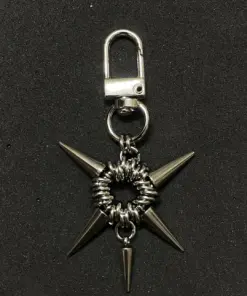
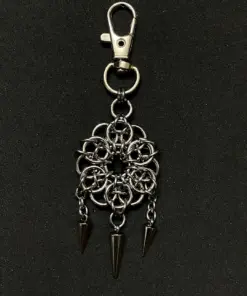
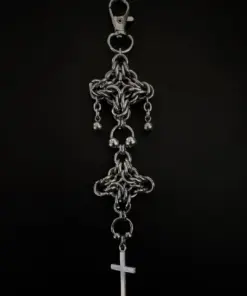
Keychains & accessories:
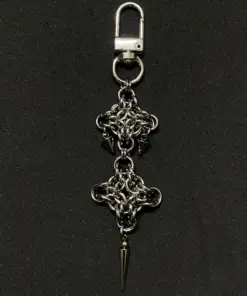
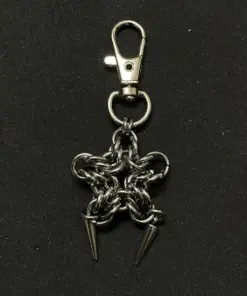
How to Care for Titanium Chainmail Jewellery
Titanium is low-maintenance, but a little care keeps it looking its best:
- Wipe the piece with a soft cloth after wearing.
- Use mild soap and water for basic cleaning if the piece is plain titanium.
- Dry it completely before storing.
- Avoid harsh abrasives that can scratch the surface.
- Keep it away from strong chemicals.
- Be gentle with anodised colours, which are a surface effect.
- Do not soak mixed-material pieces that include pearls, crystals, glue or coatings.
- Store pieces separately to avoid scratches.
One simple rule covers most situations: if a chainmail piece uses mixed materials, follow the care guidance for its most delicate component, not just the titanium rings.
Recommended Grizz Studio Pieces If You Like the Titanium Chainmail Look
Current Grizz Studio pieces are not titanium, but if titanium appeals to you because it feels technical, strong and armour-inspired, these designs carry the same gothic metal attitude through silver-tone chainmail, structured rings and dark statement styling.
Statement chainmail necklaces
Chainmail chokers
Chainmail bracelets
Chainmail earrings
Final Thoughts: Titanium Is Premium, but Design Still Matters
Titanium chainmail is well worth considering when weight, strength and corrosion resistance are the things that matter most. It is lighter than steel, genuinely strong, and frequently chosen for skin-friendly jewellery. But it is not automatically better for every piece. A well-designed stainless steel chainmail necklace can still be the smarter choice when the goal is visual weight, cold gothic structure and a more accessible price.
So the most useful question is not simply “Is titanium good?” It is: which material best suits this design, this weight, this budget, and the way you actually plan to wear the piece?
Explore handmade gothic chainmail jewellery from Grizz Studio — small-batch necklaces, chokers, bracelets and accessories designed for dark styling, structure and metal texture.
Frequently Asked Questions
What is titanium chainmail?
Titanium chainmail is chainmail made from titanium or titanium-alloy rings. In jewellery, it can be woven into necklaces, chokers, bracelets, earrings and accessories, all built ring by ring.
Is titanium chainmail lighter than steel?
Yes. Titanium is significantly lighter than steel — Maille Artisans puts it at around 60% the weight of plain steel for chainmail purposes — which is one of its main advantages on larger pieces.
Does titanium chainmail tarnish?
Titanium itself is highly resistant to tarnish and corrosion and will not rust. Anodised titanium colours can fade with wear over time, and any mixed-material jewellery may still need gentler, specific care.
Is titanium chainmail hypoallergenic?
Titanium is commonly described as hypoallergenic or skin-friendly, and suppliers such as The Ring Lord describe their titanium rings that way. Even so, anyone with sensitive skin should check the exact alloy and finish, as reactions depend on the individual.
Is titanium better than stainless steel for chainmail jewellery?
Not always. Titanium is lighter and more premium, while stainless steel is strong, practical, colder in tone and usually more accessible. The better choice depends on the design and how the piece will be worn.
Why is titanium chainmail expensive?
Titanium rings usually cost more, are harder to work with, and demand more precision to close neatly. Because a single chainmail piece uses many rings, that higher material and labour cost adds up quickly in the finished price.