Eye of Horus and Eye of Ra Gothic Symbols: Meanings, Origins, Tattoo Ideas, and Left vs Right Explained
Jony ·
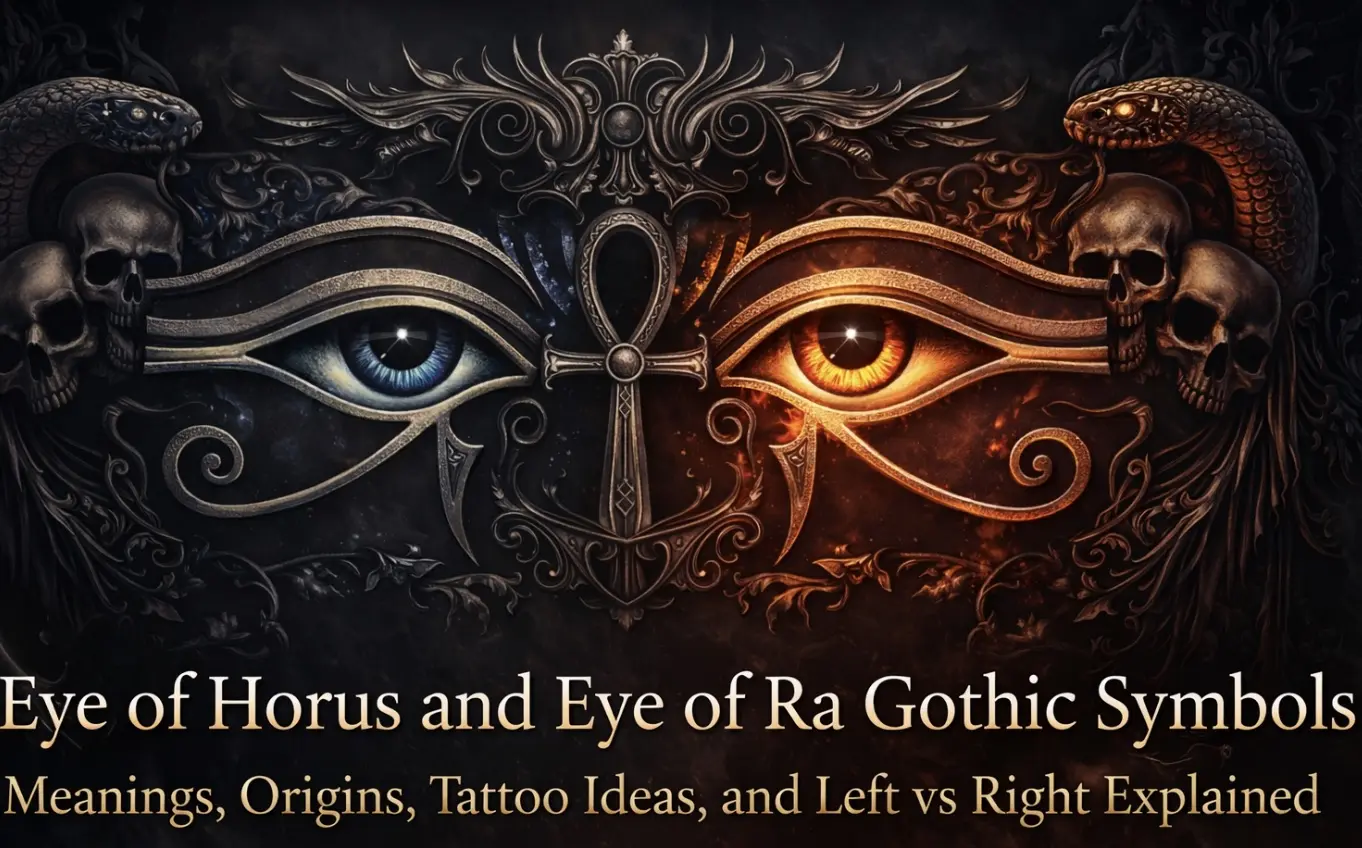
Few ancient symbols have travelled into modern gothic aesthetics as powerfully as the Eye of Horus and the Eye of Ra. These striking Egyptian motifs now appear in tattoos, jewellery, alternative fashion, and dark visual culture-symbols that resonate with anyone drawn to mystery and spiritual depth. Yet although they are often grouped together in contemporary design, they are far from identical. One is typically linked with healing and restoration, while the other connects to solar force, vigilance, and divine wrath. Understanding the distinction between them unlocks not only their mythological power but also why they continue to inspire gothic symbolism today. This guide explores their meanings, origins, differences, and the magnetic pull they hold for modern spiritual and aesthetic seekers.
What Are the Eye of Horus and Eye of Ra?
Both the Eye of Horus and the Eye of Ra originate from ancient Egyptian religion and mythology, yet each carries its own distinct character. The Eye of Horus is a symbol commonly associated with protection, health, restoration, and wholeness. Often depicted with precise geometric lines and sacred proportions, it represents the restoration of what was broken a promise of healing and spiritual completion.
The Eye of Ra, by contrast, functions as a solar symbol connected with Ra’s divine power, cosmic authority, and protective aggression. Where Horus’s eye suggests gentle restoration, Ra’s eye radiates force and uncompromising protection. Modern audiences frequently confuse the two because their visual forms share similar features, yet their mythological roots and symbolic weight differ significantly. Keeping them distinct allows for more intentional, meaningful use in contemporary design and spiritual practice.
The Mythological Origins Behind Each Eye
Understanding why these symbols still feel so powerful requires knowing the stories behind them.
Eye of Horus Origin
In Egyptian mythology, Horus, the falcon-headed son of Osiris and Isis, entered into a fierce conflict with his uncle Seth over the throne of Egypt. During their brutal struggle, Horus lost his left eye a devastating wound in the cosmic battle for divine order. Yet the eye was miraculously restored, either by the goddess Hathor or through magical intervention. This restoration transformed the symbol into something far more than a mere image: it became a testament to healing, wholeness, and the triumph of restoration over loss. The restored eye represented not weakness overcome, but spiritual and physical renewal made complete.
Eye of Ra Origin
The Eye of Ra functions differently in mythology not as something lost and regained, but as an extension of Ra’s omnipotent power. As the sun god, Ra employs his eye as a force that simultaneously watches over creation and punishes those who threaten divine order. The eye is an instrument of Ra’s will, capable of defending cosmic balance and destroying chaos. It represents unwavering vigilance and the fierce protection that comes from absolute power. Rather than healing through restoration, it protects through strength and, when necessary, through righteous destruction.
Eye of Horus Symbol Meaning
The Eye of Horus carries meanings that resonate deeply with those seeking protection and renewal:
Protection from harm – Historically, Egyptians wore Eye of Horus amulets as talismans against danger and evil intent. This protective quality remains central to its appeal in modern spiritual practice and gothic aesthetics.
Healing and restoration – The symbol speaks directly to recovery from illness, injury, and emotional trauma. It represents the journey from brokenness to wholeness.
Good health and wholeness – Beyond abstract healing, the symbol promises physical vitality and complete wellness across body and spirit.
Spiritual resilience after conflict – Like Horus himself, wearers invoke the symbol’s capacity to emerge stronger from struggle and loss.
Historical use in amulets and funerary settings – Ancient Egyptians placed Eye of Horus symbols in tombs and wore them as protective charms, embedding the symbol with millennia of spiritual intention.
The Eye of Horus became powerful not merely through mythology, but because ancient Egyptians used it in amulets and sacred objects meant to guard both the living and the dead. This historical depth makes it especially compelling in today’s gothic jewellery and tattoo culture, where symbolism carries as much weight as visual appearance.
Eye of Ra Symbol Meaning
The Eye of Ra represents the darker, more forceful dimensions of Egyptian sacred symbolism:
Solar energy and divine power – As an extension of the sun god’s essence, the symbol channels raw cosmic force and divine authority.
Protection through strength – Unlike Horus’s gentler restoration, Ra’s protection comes through overwhelming power and absolute control.
Wrath, destruction, and the punishment of chaos – The symbol embodies Ra’s capacity for righteous anger, representing the necessary destruction of disorder and evil.
Watchfulness and authority – The symbol radiates the all-seeing gaze of divine omniscience, missing nothing and tolerating no transgression.
The image of a force that sees and acts – Ra’s eye is not passive; it actively enforces order through both observation and intervention.
The Eye of Ra serves as the darker, more forceful counterpart in this symbolic pair, making it ideal for readers drawn to occult interests, dark aesthetics, and tattoo symbolism that speaks to inner strength and protective intensity.
Eye of Ra vs Eye of Horus – Left or Right?
The distinction between these two symbols extends beyond meaning into visual representation itself.
The Eye of Horus is commonly associated with the left eye, often called the “Moon eye” in some traditions. The Eye of Ra is commonly presented as the right eye, frequently called the “Sun eye.” This left-right differentiation has roots in Egyptian cosmology, where opposing forces maintain universal balance.
In terms of character, Horus remains more closely tied to healing, restoration, and nurturing protection. Ra embodies the sun, forceful authority, and destructive protection when necessary. However, it’s important to note that both symbols overlap considerably in their protective and amuletic uses ancient Egyptians did not maintain rigid boundaries between them. Modern sources commonly associate each with its traditional eye and meaning, though the tradition itself contained considerable flexibility and regional variation.
Why the Eye of Horus and Eye of Ra Fit Gothic Symbolism
Gothic aesthetics deliberately favour symbols that carry mystery, engage with mortality, project power, and radiate spiritual intensity. The Eye of Horus and Eye of Ra meet all these criteria in striking ways.
Both symbols possess a strong visual identity: bold geometric lines, perfect symmetry, and immediate recognisability. They work beautifully in the visual vocabulary of gothic fashion they are neither decorative afterthoughts nor frivolous ornaments. Their meanings translate naturally into gothic culture because they combine beauty with protective force, darkness with wisdom, and elegance with danger.
Importantly, these are not originally gothic symbols they predate European gothic by millennia. Yet their adoption into contemporary gothic styling feels organic and authentic, rooted in genuine spiritual symbolism rather than aesthetic appropriation. This authenticity appeals to thoughtful practitioners of gothic culture who seek symbols with real depth and historical weight.
Eye of Horus and Eye of Ra in Tattoos, Jewellery, and Modern Design
In contemporary design, both symbols thrive because they work beautifully across multiple mediums and styles.
Tattoo wearers choose the Eye of Horus for designs centring on healing, personal transformation, protection, and renewal. The symbol’s geometric precision translates perfectly into blackwork and fine-line tattoo styles, and it pairs elegantly with complementary imagery: wings suggesting spiritual ascension, serpents representing transformation, or the ankh symbolising eternal life.
The Eye of Ra appeals to those seeking to express strength, intensity, solar energy, or a darker interpretation of protective force. It commands attention in statement jewellery, works powerfully in ornamental tattoo designs, and carries particular resonance for those drawn to solar symbolism and fierce protection. Modern designers often pair it with complementary elements – flames suggesting solar power, serpents indicating cosmic knowledge, or crowns emphasising divine authority.
Both symbols integrate beautifully into contemporary design language while maintaining their ancient spiritual roots.
Frequently Asked Questions
What is the Eye of Horus symbol? The Eye of Horus is an ancient Egyptian symbol representing protection, healing, restoration, and wholeness. Often associated with the left eye, it commemorates Horus’s restored eye after his conflict with Seth, and serves as a powerful symbol of renewal and spiritual resilience.
What is the symbol of the Eye of Ra? The Eye of Ra is a solar symbol connected to Ra’s divine power, authority, and protective force. Associated with the right eye, it represents watchfulness, strength, and the capacity to defend cosmic order through power and, when necessary, destruction.
Eye of Ra vs Eye of Horus: which is left and which is right? The Eye of Horus is commonly presented as the left eye, while the Eye of Ra is commonly associated with the right eye. This reflects Egyptian cosmological balance and their distinct symbolic roles.
Are the Eye of Horus and Eye of Ra the same symbol? While visually similar and both protective in nature, they are distinct symbols with different mythological origins and emphases. Horus emphasises healing and restoration; Ra emphasises solar force and fierce protection.
Why are the Eye of Horus and Eye of Ra popular in gothic tattoos? Both symbols carry visual power, deep spiritual meaning, and a sense of mystery and protection that resonates with gothic aesthetics. They offer authentic ancient symbolism rather than purely decorative imagery.
What does an Ankh with the Eye of Horus mean in modern design? This pairing combines the Eye of Horus’s healing and protective properties with the ankh’s symbolism of eternal life, creating a design that speaks to healing, spiritual continuity, and timeless protection.
The Eye of Horus and Eye of Ra remain two of the most compelling ancient Egyptian symbols in use today. One speaks more clearly to healing, restoration, and gentle protection; the other radiates solar force and fierce, unwavering defence. Together, they offer ideal symbols for anyone drawn to mythology, dark beauty, layered meaning, and the intersection of ancient wisdom with contemporary spiritual practice. Whether worn as tattoos, jewellery, or incorporated into personal altars and art, these eyes continue watching – protecting, guiding, and inspiring those who understand their power.

Custom Father’s Day Gifts That Feel Personal Without Being Predictable
Custom Father’s Day gifts are popular because they feel more personal than something picked from
Jun

Father’s Day Jewellery Gifts: Bracelets, Necklaces and Accessories for Dads
Father’s Day jewellery gifts can feel personal, lasting and more considered than another mug or
Jun

Father’s Day Gift Basket Ideas for Dads Who Like Practical Gifts
A Father’s Day gift basket is a good choice when one gift does not feel
Jun

Last-Minute Father’s Day Gifts That Still Feel Thoughtful
Left Father’s Day a little too late? You are not the only one. The good
Jun

Best Father’s Day Gifts for Dads Who Like Something Different
Finding the right Father’s Day gift can be harder than it looks. Most dads already
Jun
Gothic Earrings 2026: Dark & Dramatic Styles for Every Goth Aesthetic
Gothic earrings are one of the easiest ways to add darkness, movement and personality to
Jun
Gothic Choker Necklace: The Ultimate Style & Buying Guide 2026
A gothic choker necklace is one of the fastest ways to make a dark outfit
Jun
What Is Gothic Chainmail Jewelry? A Complete Guide to Dark Handmade Jewellery
Gothic chainmail jewelry is dark, handcrafted jewellery made from interlinked metal rings, inspired by armour,
Jun