Sigil of Lilith Meaning: Gothic Symbols, Myth, and Modern Interpretation
Jony ·
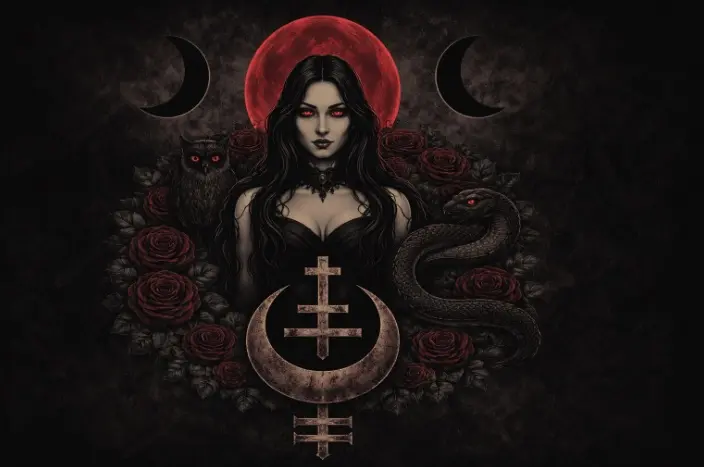
The Sigil of Lilith has captivated imaginations across gothic fashion, occult design, jewellery, and tattoo culture. Walk through any alternative fashion space, and you’re likely to encounter this symbol adorning necklaces, woven into tattoo designs, or displayed as altar art. Yet Lilith herself remains enigmatic—a figure whose meaning has shifted dramatically across centuries and traditions. Once feared as a demonic force in religious texts, Lilith has been reimagined in modern consciousness as a powerful emblem of independence, shadow work, and feminine autonomy. This article explores the Sigil of Lilith meaning, examines the broader universe of Lilith symbols, and reveals how this compelling motif connects with wider gothic symbols that saturate contemporary art and alternative fashion.
Who Is Lilith in Myth and Modern Culture?
Lilith’s origins are complex and contested. She appears primarily in later Jewish theological texts and mystical traditions, where she was cast as a figure of refusal and transgression. Traditional accounts describe her as Adam’s first wife who rejected submission and left the Garden of Eden—a narrative that positioned her as dangerous, rebellious, and fundamentally threatening to patriarchal order.
However, modern interpretations have radically reclaimed Lilith’s story. Contemporary occultists, feminist scholars, and spiritual practitioners see her as a symbol of autonomy, sensuality, and self-sovereignty rather than mere demonic corruption. In modern occult and symbolic writing, Lilith represents refusal of control, the embrace of desire and sexuality, and the power that emerges from the shadow—the parts of ourselves society tells us to hide. She embodies forbidden knowledge, nocturnal wisdom, and the fierce independence of those who choose their own path over conformity.
This shift from demonized figure to empowered symbol makes Lilith exceptionally compelling in contemporary gothic and occult aesthetics. She appears frequently in alternative communities precisely because her mythology speaks to themes of rebellion, hidden knowledge, and the reclamation of “dark” or suppressed aspects of identity and power.
Dark Feminine Symbolism in Gothic Jewellery
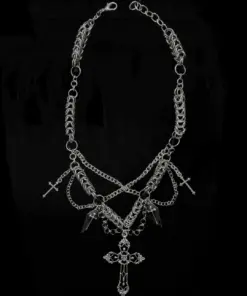
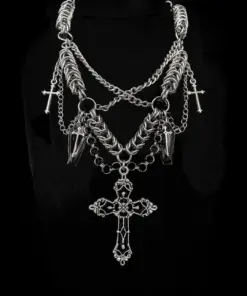
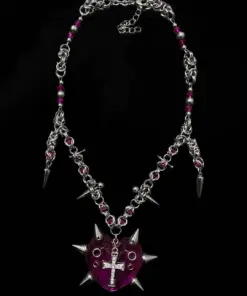
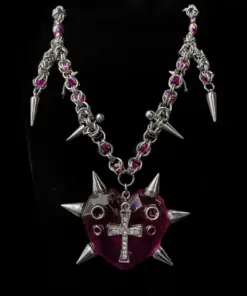
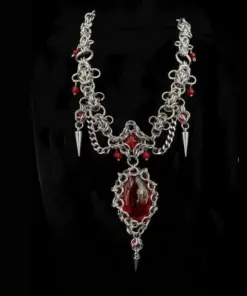
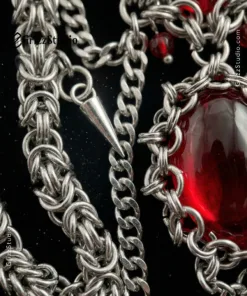
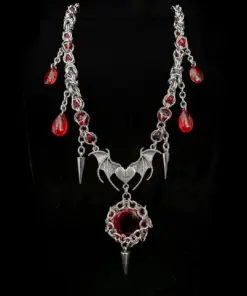
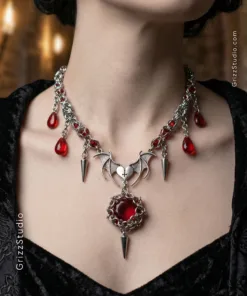
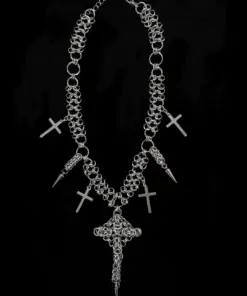
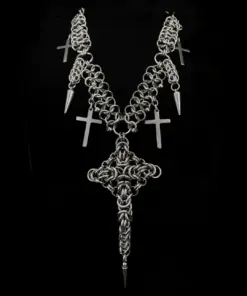
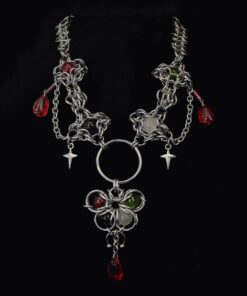
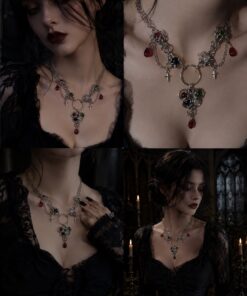
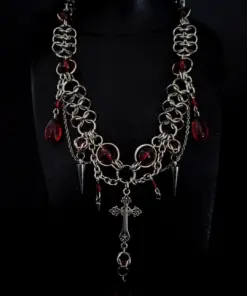
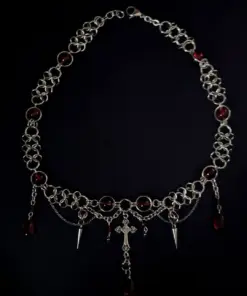
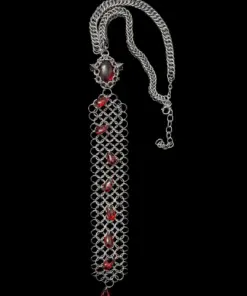
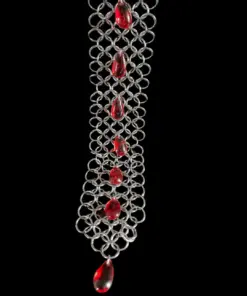
The Lilith symbol is often associated with independence, shadow work, feminine power and personal identity. In gothic styling, these ideas often appear through dark metal textures, chain details, spike accents and handmade statement jewellery.
What Is the Sigil of Lilith?
A sigil is a symbolic sign or seal used in spiritual, magical, or esoteric practice to represent a specific force, deity, idea, or energy. Sigils function as visual anchors—concentrated symbols that contain layers of meaning within a single design.
The Sigil of Lilith is commonly understood as a symbolic mark or glyph associated with Lilith in occult and modern esoteric traditions. In many modern depictions, the sigil features a central emblem—often incorporating geometric patterns, planetary symbols, or letters—arranged within a circle or surrounded by mystical markings. It’s worth noting that astrology employs a different but related symbol called the Black Moon Lilith glyph, which represents the lunar point used in astrological calculations.
An important clarification: there is no single, universally standardized Lilith sigil fixed across all traditions. Modern usage includes several forms and adaptations, reflecting the symbol’s evolution across different occult schools, contemporary reinterpretations, and artistic expressions. Some versions emphasize geometric precision, while others incorporate flowing, lunar imagery. This multiplicity reflects how living symbols grow and transform as different communities engage with them.
What Does the Sigil of Lilith Mean?
The meanings woven into the Sigil of Lilith are rich and multifaceted. Several core symbolic themes consistently emerge:
Feminine Independence — The sigil represents the refusal to be controlled or confined, the assertion of one’s own will and desires regardless of external expectations or pressure.
Rebellion Against Control — It embodies the spirit of transgression, the courage to challenge authority and step outside prescribed boundaries.
Mystery and Night — The sigil carries associations with darkness, the unseen, the nocturnal, and hidden knowledge that exists beyond daylight certainty.
Desire and Self-Possession — It symbolizes the reclamation of sexuality, sensuality, and personal power, particularly the feminine pleasure and agency that patriarchal systems have long sought to suppress.
Shadow Work and Inner Truth — The sigil connects to the Jungian concept of shadow—the disowned or repressed aspects of self—and the spiritual work of integrating these dimensions into wholeness.
Importantly, different communities interpret these meanings through varying frameworks. Some approach it as a spiritual or magical symbol with genuine energetic significance. Others engage it primarily as artistic or aesthetic expression. Many see it as a symbol of personal empowerment or identity affirmation. The beauty and power of the Sigil of Lilith lies partly in this interpretive flexibility—it speaks across mythological, occult, astrological, and purely aesthetic registers, meeting people where they are.
What Symbols Are Associated with Lilith?
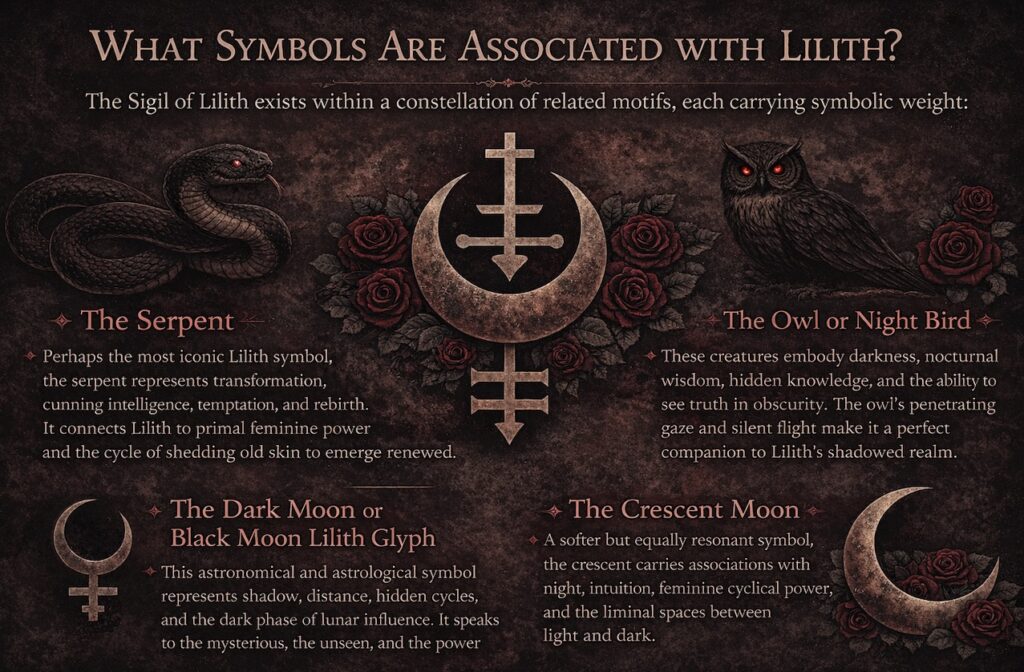
The Sigil of Lilith exists within a constellation of related motifs, each carrying symbolic weight:
The Serpent — Perhaps the most iconic Lilith symbol, the serpent represents transformation, cunning intelligence, temptation, and rebirth. It connects Lilith to primal feminine power and the cycle of shedding old skin to emerge renewed.
The Owl or Night Bird — These creatures embody darkness, nocturnal wisdom, hidden knowledge, and the ability to see truth in obscurity. The owl’s penetrating gaze and silent flight make it a perfect companion to Lilith’s shadowed realm.
The Dark Moon or Black Moon Lilith Glyph — This astronomical and astrological symbol represents shadow, distance, hidden cycles, and the dark phase of lunar influence. It speaks to the mysterious, the unseen, and the power found in absence.
The Crescent Moon — A softer but equally resonant symbol, the crescent carries associations with night, intuition, feminine cyclical power, and the liminal spaces between light and dark.
These motifs frequently overlap with broader gothic symbols, particularly where darkness, mystery, forbidden femininity, and hidden knowledge form the visual language. This convergence—between Lilith symbolism and gothic aesthetics—explains why the sigil has become so central to alternative fashion and occult jewellery design.
Is There More Than One Lilith Sigil?
Yes. Modern sources reference multiple sigils and seals associated with Lilith, reflecting both historical diversity and contemporary reinterpretation.
Some occult texts reference a Grand Seal of Lilith, suggesting a more elaborate or formal version of the sigil. Different modern traditions have developed their own variations, incorporating different symbols, letter arrangements, and geometric patterns based on their particular magical philosophy or aesthetic preference.
Because these symbols emerge from diverse traditions—ancient mysticism, medieval grimoire practice, modern witchcraft, and artistic innovation—readers should avoid assuming a single, historically “correct” design exists. Instead, the multiple sigil forms reflect how living symbols evolve as they pass through different hands and communities. What matters is understanding the intention and meaning behind the specific version you encounter or choose to work with.
Why the Sigil of Lilith Fits Gothic Symbols and Fashion
The Sigil of Lilith has found a powerful home in gothic fashion, alternative jewellery, and occult aesthetics. This alignment isn’t accidental—it emerges from deep symbolic resonance.
Visually and conceptually, the sigil works beautifully within gothic design language. Gothic aesthetics prize dark elegance—beauty found in shadow, complexity, and darkness. They embrace occult mystique—the allure of hidden knowledge and esoteric practice. They celebrate feminine force—particularly the power that emerges from transgression, sexuality, and refusal. And they demand symbolic depth—layered meanings that reward deeper investigation.
The Sigil of Lilith embodies all these values. Its intricate geometric or organic forms photograph beautifully in black metal, silver, or stone. It carries immediate visual impact while promising layers of meaning to those who study it. It appeals simultaneously to those deeply versed in mythology and those simply drawn to its aesthetic power.
You’ll find the sigil across multiple formats:
- Necklaces and pendants that serve as statement pieces or spiritual talismans
- Tattoo art, from minimalist interpretations to elaborate compositions incorporating moons, serpents, or floral elements
- Altar-inspired accessories for spiritual practitioners
- Rings, bracelets, and body jewellery integrating the symbol into daily wear
The sigil appeals to people for varied reasons—some approach it as a religious or magical emblem, others purely as a striking gothic aesthetic. This multiplicity of engagement is part of its cultural power.
Sigil of Lilith Tattoo Ideas and Symbol Use
The Sigil of Lilith has become increasingly popular in tattoo culture, where its visual impact and symbolic depth translate beautifully to body art.
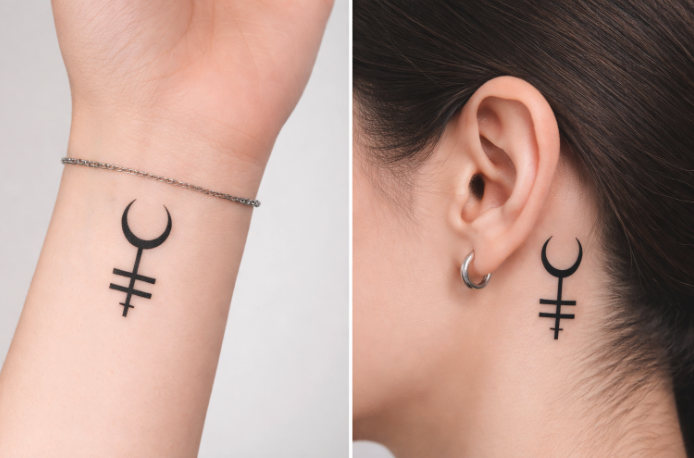
Minimalist sigil tattoo — A clean, simple rendering of the core sigil, often placed on the wrist, behind the ear, or on the forearm. This approach emphasizes the geometric elegance of the design itself.
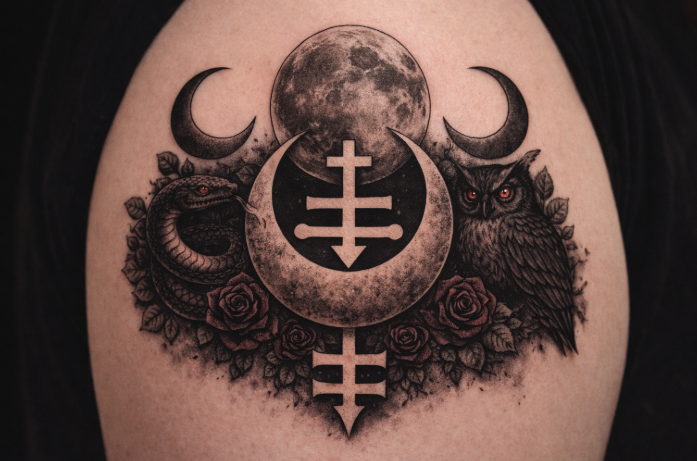
Moon-and-sigil composition — Combining the sigil with crescent moons, full moons, or the Black Moon Lilith glyph creates a more elaborate piece that layers multiple Lilith symbols into a cohesive design.
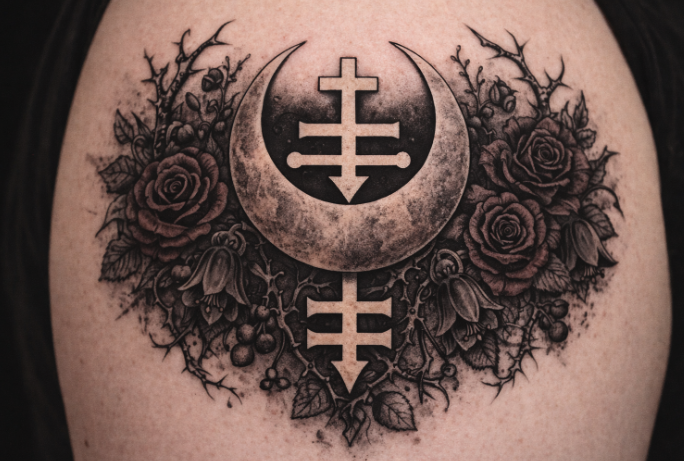
Floral gothic tattoo style — Incorporating the sigil within or alongside gothic florals—roses, nightshade, thorns—creating a design that merges botanical beauty with occult symbolism.
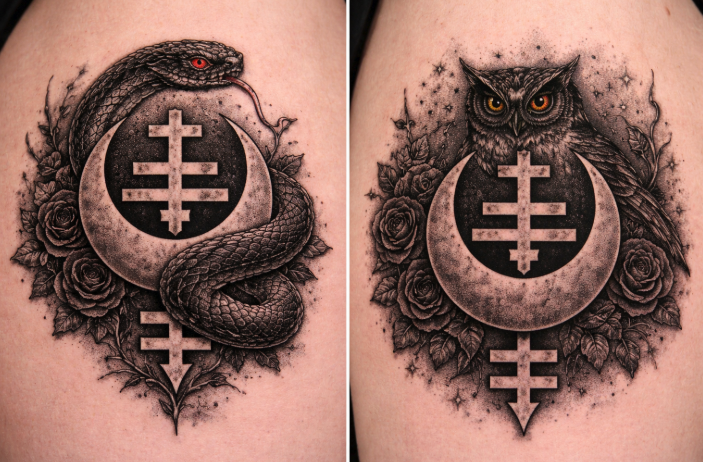
Paired symbols — Combining the sigil with a serpent, owl, or other Lilith-associated motif for a richer narrative composition.
One crucial point: because this symbol draws from occult traditions, it’s important to approach it with intention and understanding. Taking time to research Lilith’s mythology, explore what the symbol means to you personally, and understand the traditions from which it emerges deepens the significance of wearing or tattooing it. Respectful engagement with borrowed symbolic systems matters, particularly when drawing from cultures and traditions outside one’s own.
FAQ: Common Questions About the Sigil of Lilith
What are Lilith’s associated symbols?
Lilith connects to the serpent (transformation and primal power), the owl (wisdom and darkness), the crescent moon (feminine cycles and intuition), and the Black Moon Lilith glyph (astrological shadow). Each carries distinct but complementary meanings within Lilith’s broader symbolic ecosystem.
What is this symbol?
The Sigil of Lilith is a symbolic mark representing the figure of Lilith from mythology and occult tradition. It typically features geometric or organic designs arranged in a circle or seal format, used in occult practice, spiritual work, and increasingly, in fashion and body art.
What does the Lilith symbol mean?
The Lilith symbol primarily represents feminine independence, rebellion against control, hidden knowledge, desire, self-sovereignty, and shadow work. Its meaning shifts based on context—mythological, astrological, occult, or purely aesthetic.
What flower represents Lilith?
While Lilith doesn’t have a single canonical flower, dark roses (particularly black or deep red), nightshade, and thorned plants are frequently associated with her in modern occult aesthetics, reflecting themes of beauty, danger, and transgression.
What does Lilith’s sigil represent?
Lilith’s sigil represents the concentrated essence of her symbolic power: autonomy, occult knowledge, feminine strength, and the integration of shadow. It functions as a visual anchor for these concepts in spiritual practice and aesthetic expression.
Does Lilith have a sigil?
Yes. While there is no single historically standardized sigil, Lilith is associated with multiple sigil forms used across occult traditions and modern practice. The existence of multiple versions reflects how living symbols evolve across different communities and eras.
What is another name for the key sigil of Lilith?
Some traditions reference the Grand Seal of Lilith or simply the Lilith seal, though terminology varies across different occult schools and modern practitioners.
What does a goth sigil symbolise?
In gothic contexts, a sigil—including the Sigil of Lilith—symbolizes mystery, occult knowledge, transgressive beauty, and the reclamation of power from darkness. Goth sigils merge spiritual and aesthetic dimensions, functioning simultaneously as visual statements and symbolic repositories of meaning.
Conclusion
The Sigil of Lilith endures as a compelling symbol precisely because it occupies the intersection of myth, personal meaning, feminine power, and gothic aesthetics. Its appeal spans those deeply engaged with occult practice, mythology enthusiasts, fashion-forward alternative communities, and spiritual seekers exploring shadow work and self-sovereignty.
What the symbol means depends entirely on context and personal engagement. For some, it carries magical significance within occult practice. For others, it functions primarily as an aesthetic statement within gothic fashion. For many, it represents a personal affirmation of independence and power. All these interpretations are valid.
The Sigil of Lilith stands among the most recognizable and layered motifs within modern Lilith symbolism and gothic culture—a symbol that continues to evolve as new communities discover it, interpret it, and make it their own. Whether encountered in occult texts, jewellery design, tattoo art, or fashion, the sigil invites deeper reflection on the power found in darkness, the wisdom in refusal, and the fierce beauty of those who chart their own course.

Custom Father’s Day Gifts That Feel Personal Without Being Predictable
Custom Father’s Day gifts are popular because they feel more personal than something picked from
Jun

Father’s Day Jewellery Gifts: Bracelets, Necklaces and Accessories for Dads
Father’s Day jewellery gifts can feel personal, lasting and more considered than another mug or
Jun

Father’s Day Gift Basket Ideas for Dads Who Like Practical Gifts
A Father’s Day gift basket is a good choice when one gift does not feel
Jun

Last-Minute Father’s Day Gifts That Still Feel Thoughtful
Left Father’s Day a little too late? You are not the only one. The good
Jun

Best Father’s Day Gifts for Dads Who Like Something Different
Finding the right Father’s Day gift can be harder than it looks. Most dads already
Jun

Gothic Earrings 2026: Dark & Dramatic Styles for Every Goth Aesthetic
Gothic earrings are one of the easiest ways to add darkness, movement and personality to
Jun
Gothic Choker Necklace: The Ultimate Style & Buying Guide 2026
A gothic choker necklace is one of the fastest ways to make a dark outfit
Jun
What Is Gothic Chainmail Jewelry? A Complete Guide to Dark Handmade Jewellery
Gothic chainmail jewelry is dark, handcrafted jewellery made from interlinked metal rings, inspired by armour,
Jun