How to Build a Small Gothic Jewellery Collection That You Will Actually Wear
Jony ·
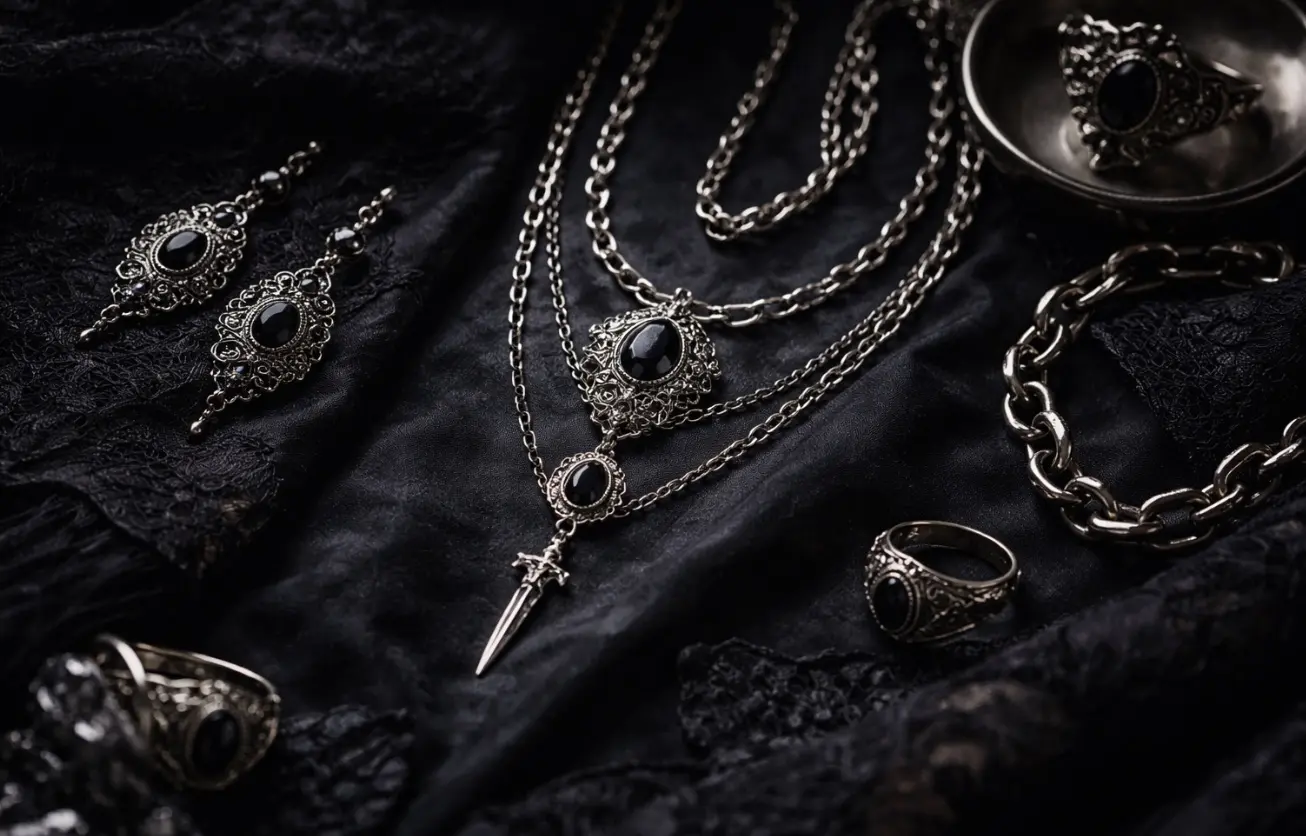
A gothic jewellery collection does not need to be large to feel expressive. Yet many people fall into one of two traps: either they impulse-buy a drawer full of dramatic pieces they rarely wear, or they feel so overwhelmed by options that they never start at all.
The strongest collections aren’t built through volume. They’re built through intention—choosing pieces that work across different moods and outfits, that reflect your real style, and that maintain a sense of belonging together. A carefully curated handful of pieces often feels more stylish and wearable than a scattered collection of statement items.
This guide is for anyone who loves gothic aesthetics but wants to build a collection that’s both expressive and genuinely wearable. It’s for people who don’t want to buy on impulse, and who understand that the best accessories are the ones you actually reach for.
Start With the Pieces You Would Realistically Wear
Before you think about aesthetic ideals or that stunning dramatic piece you saw on Instagram, think about your actual life.
What do you wear most weeks? What’s your baseline outfit? If you spend most of your time in dark denim, basic tops, and layers, then your first gothic jewellery piece should work with that, not against it. The goal isn’t to buy the most beautiful piece in isolation—it’s to buy something beautiful that you’ll reach for because it works.
Real wardrobe first. Scroll through your closet mentally. Which colors do you return to? Which silhouettes? What’s the vibe of your everyday styling?
Repeat wear matters. A piece that looks gorgeous on a lookbook but feels wrong with 80% of your actual clothes is not a good investment. The best first pieces are ones that feel inevitable—like they were waiting in your closet all along.
Style identity over impulse buying. Don’t buy because it’s trendy in the gothic jewellery world. Buy because it fits into your life and reflects how you actually want to present yourself.
The First Three Types of Gothic Jewellery Worth Buying
Instead of thinking about individual pieces, think in categories. Most balanced collections have these three foundations:
A. One Versatile Necklace
Your necklace is the most visible piece you wear. It sets the tone. It’s the first thing people notice when you enter a room.
A strong opening necklace should be:
- Visible enough to matter. Not hidden under layers most of the time.
- Flexible in how you wear it. Does it work solo? Layered with other chains? Against bare skin or over a high neck?
- Textured enough to be interesting. Gothic jewellery shines when it has depth—not just a silhouette, but surface detail.
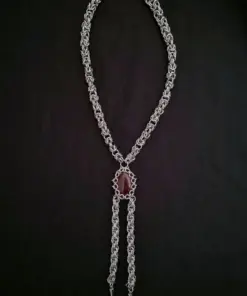
This might be a simple pendant with attitude, a delicate chain with a subtle centerpiece, or even a statement chain that reads as an anchor piece. The key is that you’re drawn to reach for it regularly, not just on “gothic days.”
B. One Smaller Everyday Piece
This is your workhorse. It might be earrings, a ring, a bracelet, or a smaller pendant that works as a secondary layer.
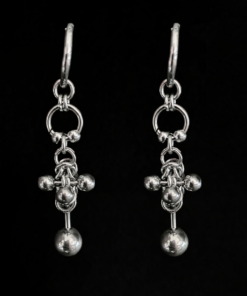
The purpose of this piece is to let you maintain the aesthetic without wearing your main statement every single day. Some days you want to feel gothic but you’re not in the mood for a necklace. Enter: the everyday piece. A pair of understated earrings with a small dangly element. A ring with character. A bracelet that reads as intentional without demanding attention.
These pieces often go unnoticed by others, but you feel them. They’re the pieces that make you feel like yourself.
C. One Expressive Piece for Stronger Styling Days
This is permission to have something dramatic. But here’s the twist: it should still be something you wear, not something you own to admire from a distance.
The expressive piece is for days when you’re building an outfit with intention. When you’re making a statement. It might be a larger pendant, a standout pair of earrings, a bold ring, or a textured bracelet. It should feel distinct from your anchor pieces—a different energy, perhaps a different mood.
The reason you need this is simple: a collection made entirely of “safe” pieces starts to feel boring. You need something that makes you feel the difference between a regular day and a day where you’re showing up as a stronger version of yourself.
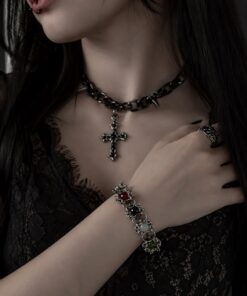
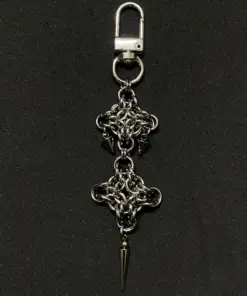
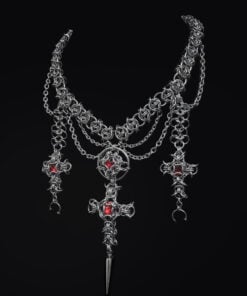
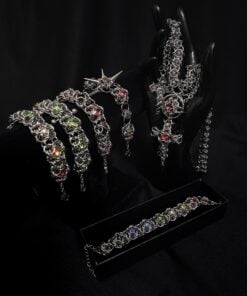
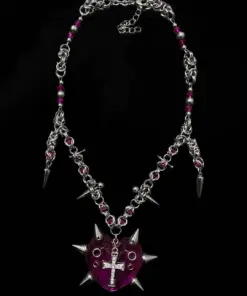
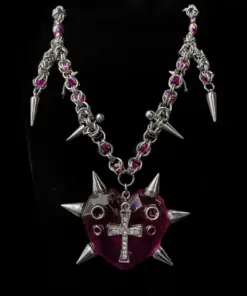
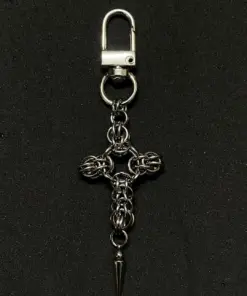
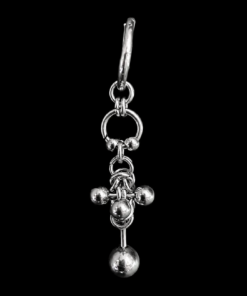
Choose a Direction Before You Buy More
Here’s where many collections go wrong: people buy in many different aesthetic directions, and suddenly their accessories drawer feels scattered instead of cohesive.
Before your second round of purchases, identify your primary direction. This doesn’t mean you can never deviate, but it gives you a north star.
A. Soft Gothic
Soft gothic jewellery is subtle, refined, wearable every day. It whispers rather than shouts. Think delicate chains, small symbolic elements, minimalist silhouettes with just enough darkness to feel intentional. It’s for people who like the aesthetic but want it integrated into their life, not separated from it.
Works best if: You prefer understated elegance, like minimal styling, and want your jewellery to enhance rather than dominate.
B. Romantic Dark
Romantic dark is atmospheric and feminine, even when it’s edgy. It might include antique-inspired pieces, ornate details, vintage-leaning designs, or pieces with softness despite their dark aesthetic. There’s texture and history here.
Works best if: You like layering, appreciate ornate details, and enjoy pieces that tell a story.
C. Modern Dark
Modern dark is structured, clean, and precise. Think geometric shapes, architectural silhouettes, contemporary finishes, and intentional negative space. It’s dark but streamlined. It often pairs beautifully with minimalist outfits.
Works best if: You prefer clean lines, like your jewellery modern and intentional, and enjoy pieces that feel currently relevant rather than historically inspired.
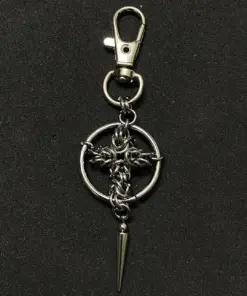
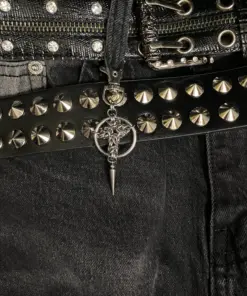
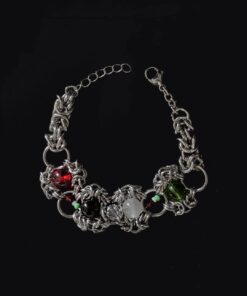
D. Industrial / Chain-Inspired
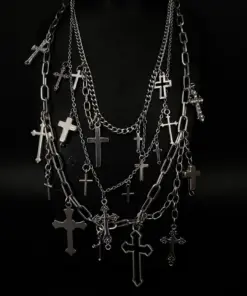
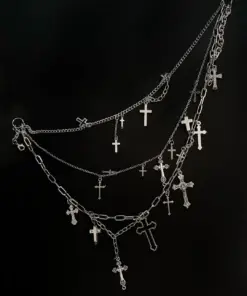
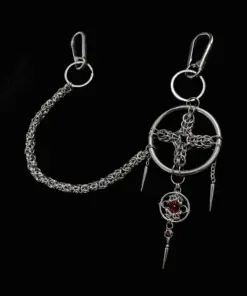
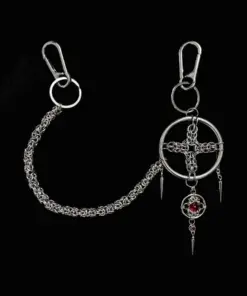
Industrial is edgy, textured, and bold. Chains, mixed metals, substantial weight, visible hardware, and an attitude of “I’m not trying to blend in.” It’s for people who want their jewellery to feel powerful.
Works best if: You like statement pieces, enjoy visual texture, and wear dark or edgy clothing regularly.
Identify which direction resonates with you most. This becomes your framework. It doesn’t mean every single piece follows it perfectly, but it means your collection reads as intentional rather than scattered.
Why Texture Matters More Than Quantity
Here’s a secret that separates beautiful collections from chaotic ones: texture is more important than quantity.
A drawer full of flat, simple dark pendants will feel boring. A small collection of pieces with varying finishes, surface details, and visual interest will feel luxurious.
Think about texture in these ways:
Surface texture: Smooth vs. hammered vs. oxidized finishes. Polished vs. matte. The way light hits the piece is part of the design.
Structural texture: How the piece is built. Does it have layers? Movement? Multiple elements that create visual depth?
Material texture: Silver, oxidized silver, blackened steel, dark gemstones, mixed metals. The actual material choices create texture.
A small collection with strong texture and clear identity often feels more stylish than a drawer full of random statement pieces. You’re curating for depth, not breadth.
Avoid Buying Pieces That Only Work Once
This is perhaps the most common mistake in building a jewellery collection: buying something so theatrical, so specific, so dramatic that you can almost predict exactly when you’ll wear it.
You wear it once. It’s stunning. And then it sits.
Maybe it’s a huge sculptural pendant that only works with certain necklines. Maybe it’s a pair of elaborate earrings that require a specific vibe to pull off. Maybe it’s so statement-heavy that pairing it with anything else feels wrong.
These pieces do belong in collections—eventually. But they belong after you have a strong foundation of wearable pieces. Your pyramid should look like this:
Bottom (largest section): Pieces you wear regularly, that work with multiple outfits.
Middle: Pieces that are expressive but still accessible, still wearable, still feel like a choice you make multiple times a month.
Top (smallest section): The one or two truly dramatic pieces you reach for for specific occasions or moods.
Building from the bottom up means your collection actually serves your life. You’re not collecting drama—you’re collecting pieces that make you feel like yourself.
Why Handmade Pieces Help Build a Better Collection
There’s a difference between buying mass-market gothic jewellery and buying handmade pieces.
Mass-market pieces are often designed to appeal broadly. They’re beautiful, but they’re also designed to have broad appeal. They sit in that middle ground where they offend no one and excite no one intensely.
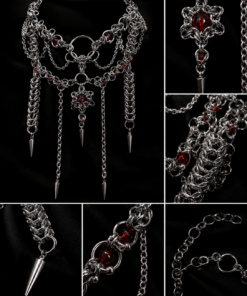
Handmade pieces are different. Each piece has character. The maker’s hand is visible in the work. There are subtle variations that give each piece a personality. When you’re building a small collection intentionally, handmade pieces are often the better investment because each one needs to earn its place.
When you’re buying only a few pieces, you can’t afford for any of them to be “fine.” They need to be right. Handmade pieces—pieces made with intention and crafted with detail—are more likely to be right because they’re created with the understanding that someone is choosing them specifically, not just grabbing them from a shelf.
Additionally, handmade pieces tend to have stronger character and texture. They’re not optimized for mass production—they’re optimized for beauty and intention. That aligns perfectly with what makes a small collection feel cohesive.
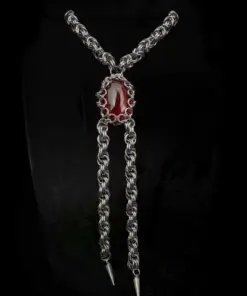
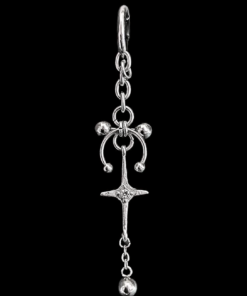
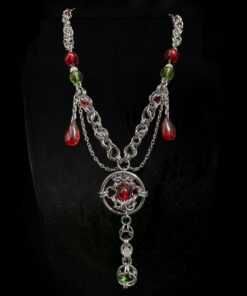
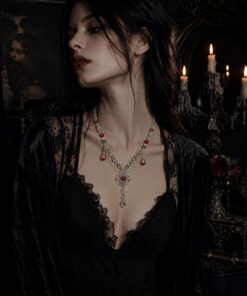
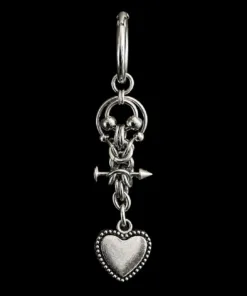
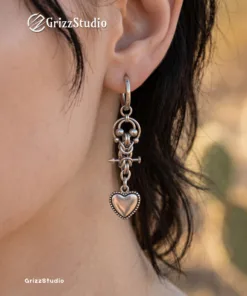
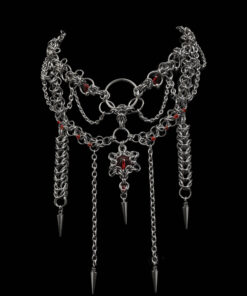
A Simple Formula for Building a Wearable Gothic Jewellery Collection
If all of this feels abstract, here’s something concrete:
1 Anchor Piece + 1 Everyday Piece + 1 Mood Piece = A Complete Foundation
Your Anchor Piece
This is typically your necklace—the most visible, most intentional piece. It should be something you identify with. Something that feels like it represents your relationship with gothic jewellery. It doesn’t need to be the most dramatic, but it should be the most you.
When you look at it, you should feel a small spark of recognition. “Yes, this is mine.”
Your Everyday Piece
This is the piece you don’t overthink. Earrings, a ring, a delicate secondary chain, a subtle bracelet—whatever feels wearable when you’re not actively styling an outfit. This piece is permission to maintain the aesthetic without performing.
Your Mood Piece
This is the piece that changes things. It’s not everyday, but it’s not reserved for special occasions either. It’s for when you want to feel more yourself, more expressive, more intentional. This piece often shifts how you carry yourself.
Why this works:
- You’re not buying aimlessly. You have a framework.
- You’re not overspending. You’re choosing three pieces intentionally.
- You’re not bored. The three pieces work together but feel distinct.
- You have room to expand. Once these three are in place, you know how to add more without losing coherence.
How to Know When Your Collection Is Balanced
Once you’ve started accumulating pieces, how do you know if you’re building well?
Ask yourself these questions:
Do your pieces work with more than one outfit? If a piece only works with one specific aesthetic or silhouette, it’s not earning its place in a small collection.
Do they reflect your real style? Not the style you aspire to. Your actual style. The way you dress when no one’s looking, when you’re just living your life.
Are they distinct without feeling disconnected? Each piece should feel like itself, but the collection should read as intentional—like you chose these pieces together, even if they weren’t purchased at the same time.
Do you wear them often enough to justify keeping them? If a piece has been sitting unworn for six months, it’s not part of your collection. It’s decor. Remove it and make space for something you’ll actually reach for.
Is your collection balanced across visibility and wearability? Do you have everyday pieces? Do you have something for stronger styling days? Is there enough variety that you don’t feel bored?
If you can answer yes to most of these, you’re building well.
Where to Start If You’re Building Your First Small Collection
Let’s make this practical. If you’re starting from zero:
Month 1: Find your anchor necklace. This is the piece that makes you feel gothic. It could be delicate, it could be bold, but it should feel like the piece you’ve been looking for. Wear it with everything for a while. Get to know it. Does it feel right? Does it work with your real wardrobe?
Month 2: Add one everyday piece. Once your necklace feels integrated, add something smaller that you don’t have to think about. This is the piece that makes you feel intentional without the commitment of your anchor piece.
Month 3+: Add with intention, not impulse. Before you add a fourth piece, decide your aesthetic direction. Soft gothic? Modern dark? Industrial? Choose pieces that expand what you can do with your existing pieces rather than introducing new energies.
As you continue building, prioritize:
- Wearability over drama (initially)
- Texture over quantity
- Character over trends
- Real-life integration over aesthetic fantasy
Conclusion
The gothic jewellery collections worth having aren’t the biggest ones. They’re the ones where every piece is there because you wear it, not because you were tempted by it once.
A small collection built carefully—pieces that work together, that reflect your actual style, that have character and texture—will always feel more stylish and more satisfying than a large collection built through impulse.
If you’re starting a gothic jewellery collection, begin with pieces that feel wearable, expressive, and easy to return to. Rather than buying for drama alone, buy for a life. Buy for repetition. Buy for the small moments when you catch your reflection and think, “Yes, this is exactly right.”
That’s when you know your collection is working.
Ready to Start Your Collection?
Building a small, intentional collection starts with finding the right pieces. Look for jewellery that has character, texture, and wearability—pieces that work in your real life, not just in your imagination.
Start with a versatile necklace. Add an everyday piece. Then choose your direction and expand from there. The pieces you choose now become the foundation for everything you add next.
Your collection is a reflection of how you want to move through the world. Make it count.

Custom Father’s Day Gifts That Feel Personal Without Being Predictable
Custom Father’s Day gifts are popular because they feel more personal than something picked from
Jun
Father’s Day Jewellery Gifts: Bracelets, Necklaces and Accessories for Dads
Father’s Day jewellery gifts can feel personal, lasting and more considered than another mug or
Jun

Father’s Day Gift Basket Ideas for Dads Who Like Practical Gifts
A Father’s Day gift basket is a good choice when one gift does not feel
Jun

Last-Minute Father’s Day Gifts That Still Feel Thoughtful
Left Father’s Day a little too late? You are not the only one. The good
Jun
Best Father’s Day Gifts for Dads Who Like Something Different
Finding the right Father’s Day gift can be harder than it looks. Most dads already
Jun
Gothic Earrings 2026: Dark & Dramatic Styles for Every Goth Aesthetic
Gothic earrings are one of the easiest ways to add darkness, movement and personality to
Jun
Gothic Choker Necklace: The Ultimate Style & Buying Guide 2026
A gothic choker necklace is one of the fastest ways to make a dark outfit
Jun
What Is Gothic Chainmail Jewelry? A Complete Guide to Dark Handmade Jewellery
Gothic chainmail jewelry is dark, handcrafted jewellery made from interlinked metal rings, inspired by armour,
Jun