Gothic Rosary Necklace Meaning: What Crosses, Crucifixes and Rosaries Symbolise in Goth Culture
Jony ·
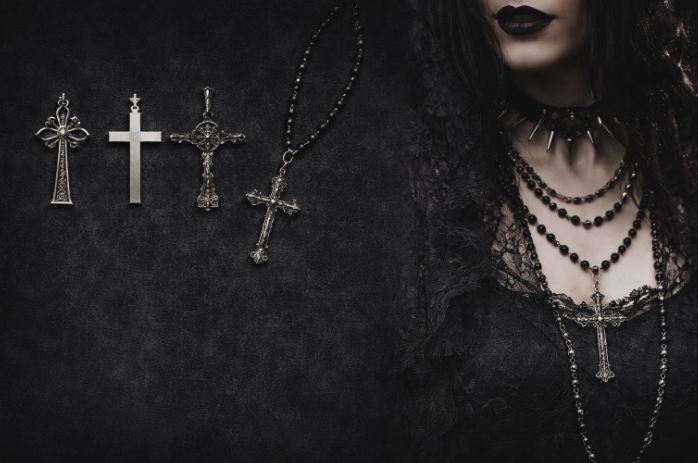
Why Are Rosaries and Crosses So Common in Goth Fashion?
Walk into any goth gathering and you’ll immediately notice a striking pattern: black clothing paired with silver chains, ornate crucifixes, and rosary-style necklaces draped across velvet and lace. This visual contrast isn’t accidental—it’s one of the defining aesthetics of goth culture. These symbols carry religious, historical, and aesthetic meanings simultaneously, creating layers of interpretation that make them endlessly fascinating. In this guide, we’ll explore both the Christian symbolism behind these objects and how goth culture has reinterpreted them, offering a balanced look at why these sacred symbols have become fashion staples.
What Is a Rosary, and What Does the Rosary Symbol Mean?
A rosary is, at its core, a set of prayers recited with the help of beads arranged in a specific pattern on a string or chain. In Roman Catholic practice, the rosary serves as a devotional aid tied to meditation on the life of Christ and the mysteries of faith—the Joyful, Sorrowful, Glorious, and Luminous Mysteries. Each bead represents a prayer, typically the Hail Mary, with larger beads marking the Our Father. The beads aren’t merely decorative in their original religious context; they function as a tactile way to count prayers and maintain focus during meditation. Understanding this original meaning is essential when we later examine how the symbol has been borrowed and recontextualised in fashion, because it helps us appreciate both the depth of the original object and the complexity of its cultural transformation.
What Is the Difference Between a Cross and a Crucifix?
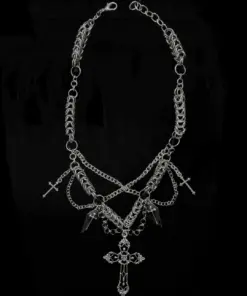
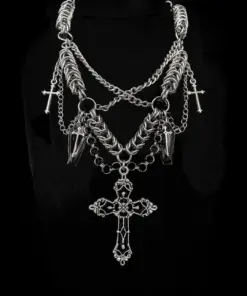
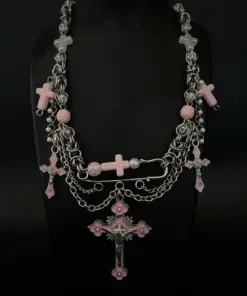
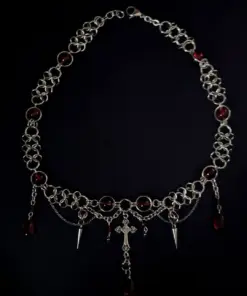
Though often used interchangeably in casual conversation, crosses and crucifixes are distinctly different symbols. A cross refers to the cross shape on its own—two intersecting lines forming the iconic Christian symbol. A crucifix, however, is a cross that bears the figure of Christ, typically depicting the crucifixion. This distinction matters significantly in religious contexts, as different Christian traditions emphasise one over the other. Many Protestant traditions favour the plain cross, symbolising the resurrection, while Catholic and Orthodox traditions often prefer the crucifix, emphasising Christ’s sacrifice. In fashion and jewellery writing, this difference becomes important because the visual impact and symbolic weight of each varies considerably. A plain cross can feel minimalist and abstract, while a crucifix carries more explicit religious imagery and historical gravity.
Why Do Goths Wear Rosaries, Crosses, and Crucifixes?

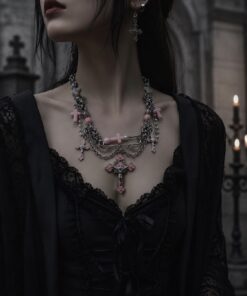
The goth embrace of religious imagery stems from several overlapping cultural influences. First, there’s the aesthetic connection to cemetery and funerary imagery—goths have long been drawn to the visual language of mourning, memorial, and sacred spaces. Gothic architecture, with its soaring crosses and stained glass, provides another touchstone, as does centuries of religious art depicting themes of mortality, suffering, and transcendence. Within goth style, these symbols are often recontextualised as imagery rather than doctrine. They become visual shorthand for exploring themes of mortality, sorrow, beauty, and memory—concepts central to goth philosophy.
Some wearers choose these pieces for their dramatic visual impact, their historical texture, or their personal symbolic resonance. Importantly, not every wearer means the same thing: some goths are genuinely religious and wear these symbols as expressions of faith, while others appreciate them purely as powerful imagery divorced from religious meaning. The diversity of intent is part of what makes this fashion element so rich and complex.
What Do Gothic Crosses and Crucifixes Symbolise in Goth Culture?
Within goth culture, crosses and crucifixes carry several overlapping meanings that extend beyond their religious origins. They symbolise mortality and remembrance, serving as visual reminders of life’s transience. They represent the tension between beauty and suffering—a core goth aesthetic principle that finds both elements equally compelling. For some, wearing these symbols constitutes a form of rebellion against polite mainstream taste, a way of confronting others with imagery society typically reserves for solemn occasions.
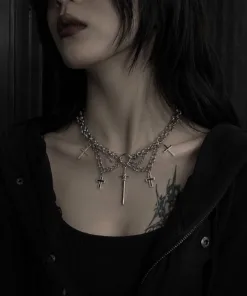
The cross in goth fashion also embodies fascination with the sacred-profane contrast, the boundary between the holy and the forbidden. Depending on styling, a Gothic cross can feel architectural and stately, romantic and mournful, or deliberately confrontational. A delicate silver crucifix on a choker reads differently than an oversized ornate cross on heavy chains. The symbol’s meaning shifts with context, materials, and the overall aesthetic composition, which is part of why it remains such a versatile and enduring element in goth wardrobes.
Are Rosaries in Goth Fashion Purely Aesthetic, or Can They Be Controversial?
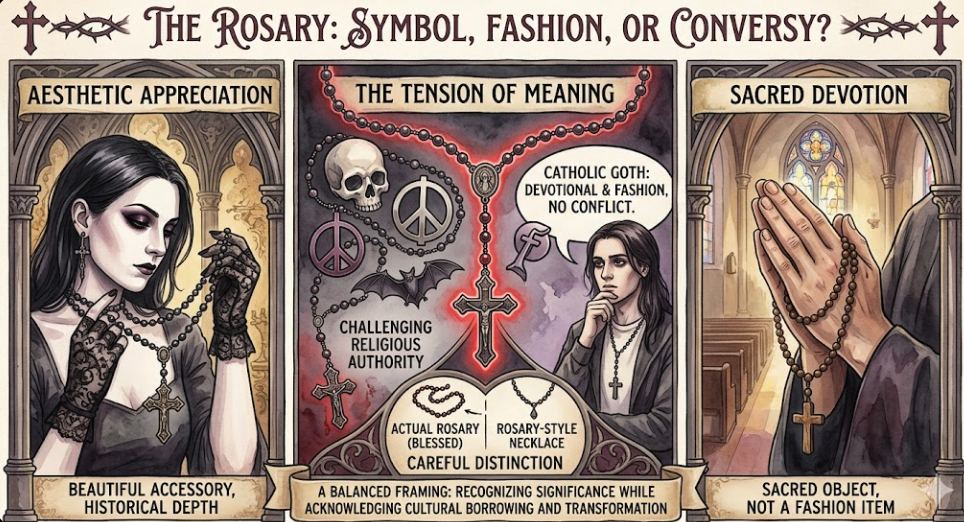
This question touches the most sensitive aspect of the topic. Community opinion varies significantly: some view rosaries as beautiful accessories with compelling visual and historical qualities, while others see them as countercultural symbols that challenge religious authority. Meanwhile, many Catholics and other Christians continue to treat rosaries as sacred devotional objects, not fashion items.
The controversy isn’t universal—perspectives differ by region, religious background, and individual sensibility. Some Catholic goths wear rosaries both as devotional objects and as fashion, seeing no conflict. Others carefully distinguish between wearing a rosary-style necklace (similar in appearance but not blessed or used for prayer) and wearing an actual rosary. A respectful approach recognises the rosary’s religious significance before discussing its use in fashion. This balanced framing acknowledges that while fashion constantly borrows and transforms symbols, those symbols often carry profound meaning for others. Understanding this tension doesn’t require resolving it, but it does enrich our appreciation of why these objects remain so powerful and contested.
Which Cross Variants Appear Most Often in Gothic Jewellery?
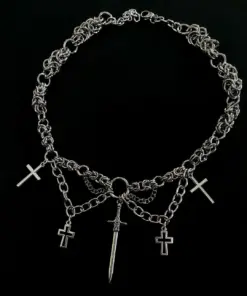
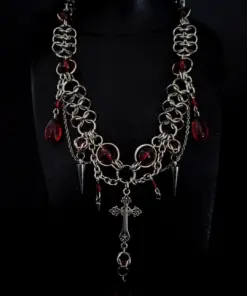
Gothic jewellery draws from a rich tradition of cross designs, each with its own visual character and historical associations. The Latin cross, with its longer lower arm, remains the most recognisable Christian form and appears frequently in both simple and ornate versions. The Greek cross, with four equal arms, offers a more geometric and balanced composition. Celtic crosses, distinguished by their ringed design, evoke medieval European Christianity and carry associations with ancient traditions. The Jerusalem cross, featuring a large central cross surrounded by four smaller crosses, appears in more ornate and heraldic pieces.
The inverted cross, also called St Peter’s cross, has a particularly complex history. Originally a Christian symbol representing St Peter’s crucifixion upside-down, it has been reinterpreted in modern culture with various meanings. In goth fashion, it might appear for its visual drama, its historical complexity, or its confrontational edge, depending on the wearer’s intent. Understanding these variants helps decode the specific visual and symbolic choices in Gothic jewellery design.
How Should You Interpret a Gothic Rosary Necklace Today?
The Gothic rosary necklace exists at the intersection of multiple meanings, and interpreting it requires holding several truths simultaneously. It’s a religious object in origin, carrying centuries of Catholic devotional tradition. It’s also a fashion symbol in many modern contexts, appreciated for its visual drama and historical resonance. The meaning ultimately depends on the wearer, the styling, and the cultural background of both wearer and observer.
The power of the Gothic rosary necklace lies precisely in this blend of history, symbolism, and visual intensity. It’s an object that refuses simple categorisation, carrying weight from its sacred origins while serving new purposes in contemporary fashion. Whether you see it as a devotional aid, a cultural artifact, or a striking piece of jewellery, the Gothic rosary remains a compelling symbol that bridges past and present, sacred and aesthetic, tradition and transformation.

Custom Father’s Day Gifts That Feel Personal Without Being Predictable
Custom Father’s Day gifts are popular because they feel more personal than something picked from
Jun
Father’s Day Jewellery Gifts: Bracelets, Necklaces and Accessories for Dads
Father’s Day jewellery gifts can feel personal, lasting and more considered than another mug or
Jun

Father’s Day Gift Basket Ideas for Dads Who Like Practical Gifts
A Father’s Day gift basket is a good choice when one gift does not feel
Jun

Last-Minute Father’s Day Gifts That Still Feel Thoughtful
Left Father’s Day a little too late? You are not the only one. The good
Jun

Best Father’s Day Gifts for Dads Who Like Something Different
Finding the right Father’s Day gift can be harder than it looks. Most dads already
Jun

Gothic Earrings 2026: Dark & Dramatic Styles for Every Goth Aesthetic
Gothic earrings are one of the easiest ways to add darkness, movement and personality to
Jun
Gothic Choker Necklace: The Ultimate Style & Buying Guide 2026
A gothic choker necklace is one of the fastest ways to make a dark outfit
Jun
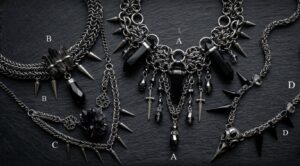
What Is Gothic Chainmail Jewelry? A Complete Guide to Dark Handmade Jewellery
Gothic chainmail jewelry is dark, handcrafted jewellery made from interlinked metal rings, inspired by armour,
Jun