Byzantine Web Triangle (Chainmaille Weave Guide)
Jony ·
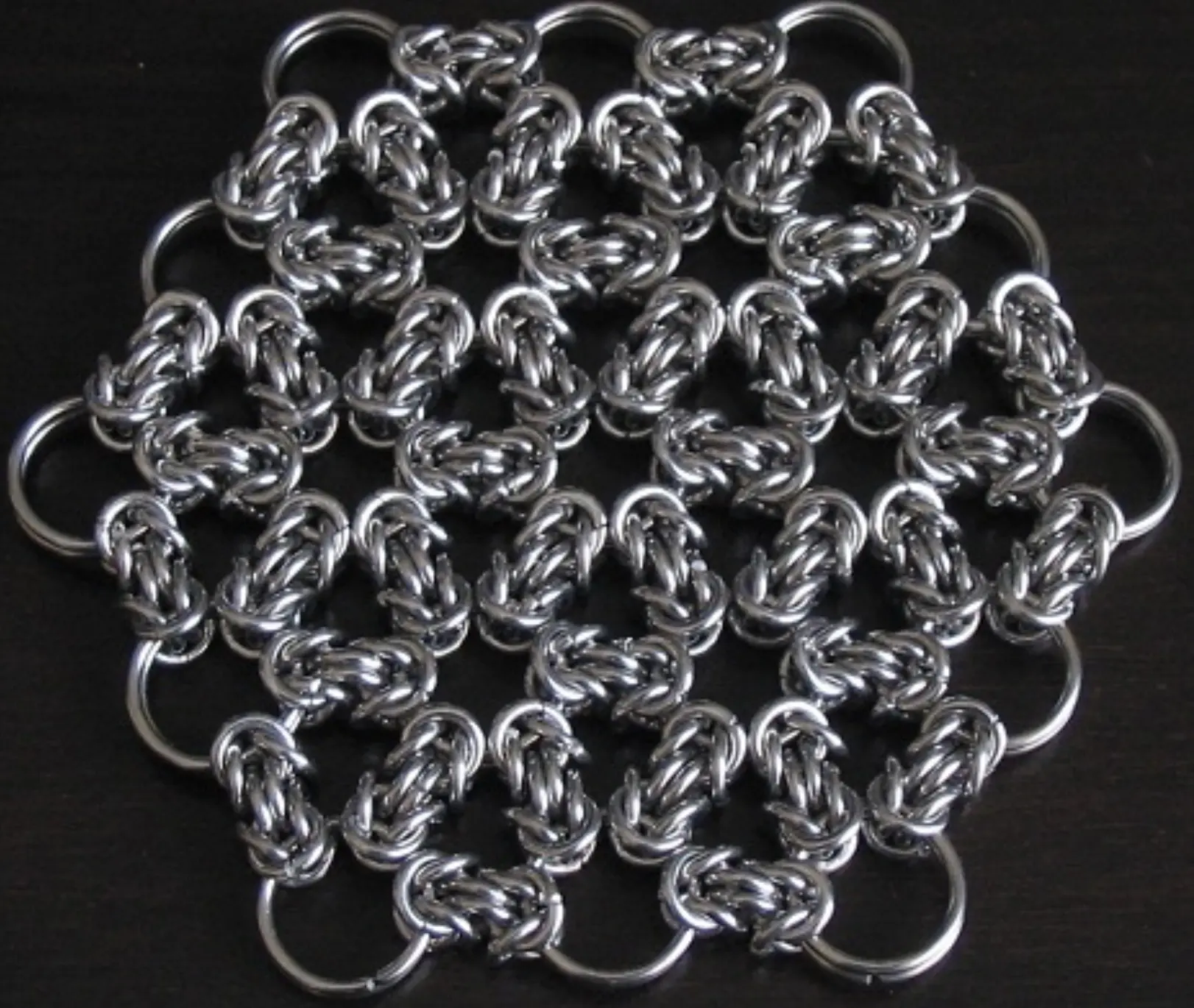
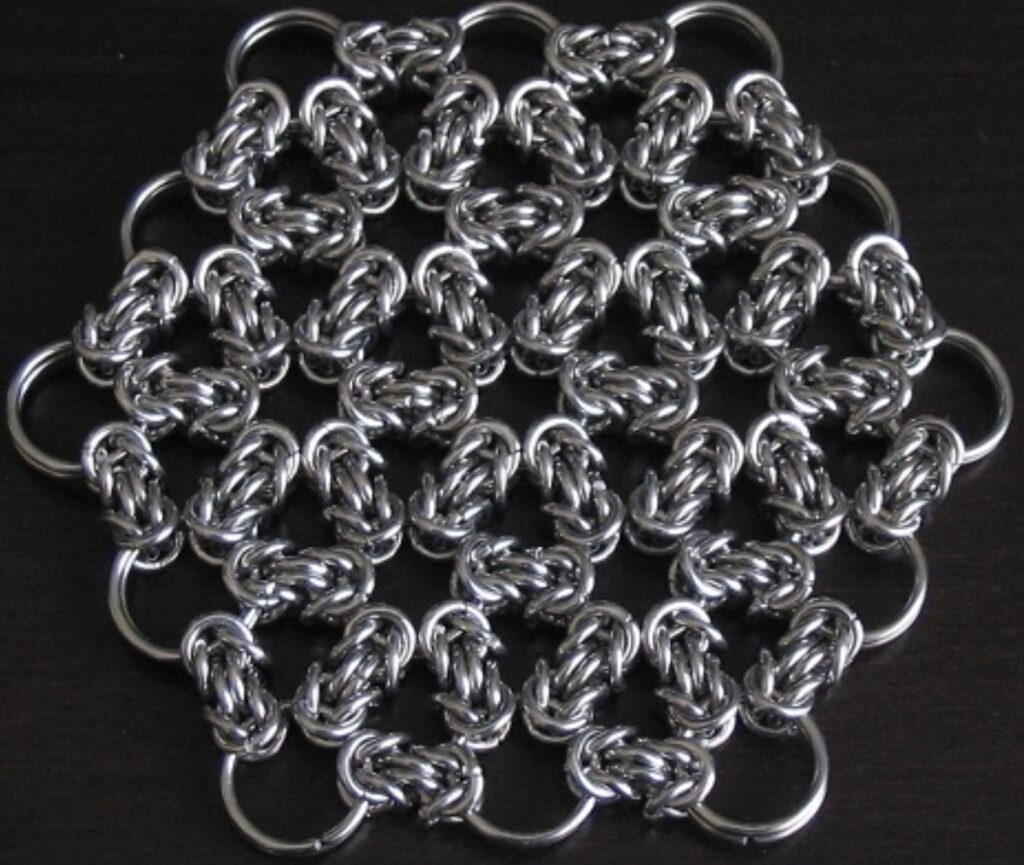
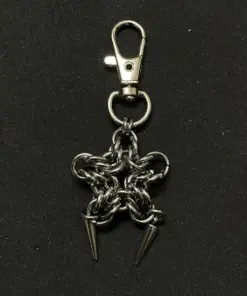
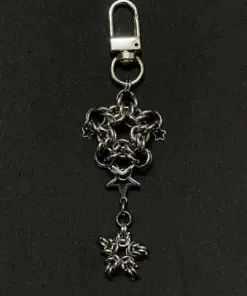
Byzantine Web Triangle is a geometric sheet / expansion built from the classic Byzantine chain structure, arranged into a hexagonally expanding “web” that can be shaped into a triangular panel. On Maille Artisans, it’s described as Byzantine expanded hexagonally as a web, based on a Japanese 6-in-1 tessellation, and it’s characterised by six Byzantine “arms” coming off each pair of large connector rings.
That “six-arm hub” is the key difference versus other related web expansions (which use fewer arms per hub), and it’s also the reason this weave often demands very large connector rings (high Aspect Ratio) to stay clean and flexible.
Where the weave comes from
To understand Byzantine Web Triangle, it helps to know the building blocks:
-
Box Chain 4-in-1: a hollow tube built from European 4-in-1 arranged into a box-like cross section; it’s the structural “cell” behind many 3D/rope-like patterns.
-
Byzantine (chain): on Maille Artisans, Byzantine is described as Box Chain 4-in-1 units separated by connector rings that reverse the direction of the next cell, producing the signature rope texture and high versatility for variants and expansions.
-
Japanese 6-in-1: a classic sheet weave with two ring roles (vertical vs horizontal), often used as a conceptual base for tessellations (repeating grids).
Byzantine Web Triangle essentially borrows the tessellation mindset from Japanese 6-in-1, but replaces the “nodes” with Byzantine-based junctions, creating a decorative lattice that can be grown outward.
Visual identity: what it looks and feels like
-
Surface: a textured, braided look (from Byzantine units) arranged into a repeating web.
-
Geometry: grows naturally into a hexagonal network, which you can “trim” or plan into a triangle by controlling how many units you add per edge.
-
Drape: depends heavily on ring choice. If your connector rings are too tight, it becomes stiff; too loose, it can look messy or collapse unevenly.
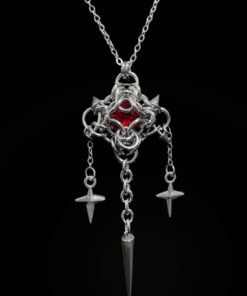
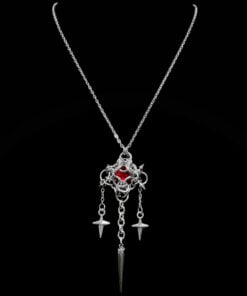
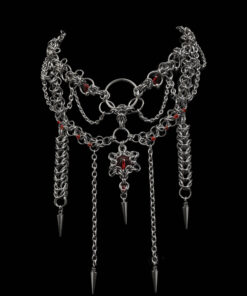
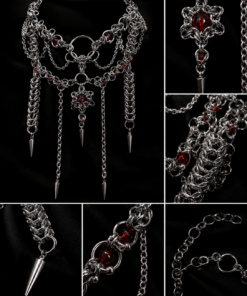
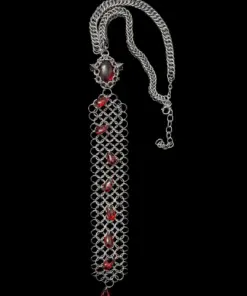
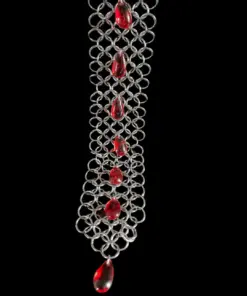
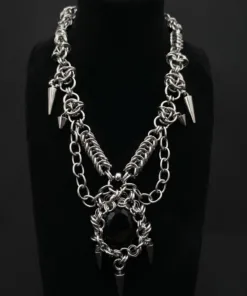
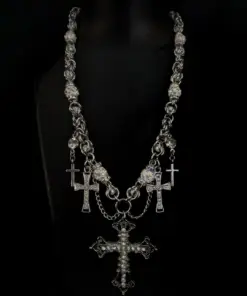
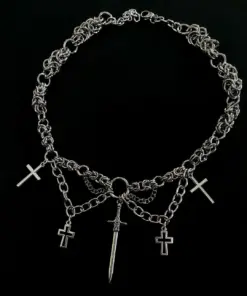
This weave is popular for statement panels: pendants, centrepieces, bag panels, decorative armour accents, or dramatic gothic jewellery components.


Ring size & Aspect Ratio (AR): the critical constraint
Maille Artisans explicitly notes that because each hub sends out six Byzantine chains, large connector rings are required, and using the same wire diameter pushes the large ring AR requirement into the mid-8s (which is high).
They also provide a sample configuration that illustrates the “two-scale” ring strategy:
-
Small rings (for Box Chain segments + small connectors): AR around 3.3 in the sample
-
Large connector rings: AR around 8.7 in the sample
Practical takeaway
You usually need two ring sizes:
-
Smaller rings to keep Byzantine/Box units crisp and detailed
-
Much larger rings to act as hubs that can physically fit six outgoing connections cleanly
Maille Artisans also points out a common workaround: use larger wire diameter for the big rings (and adjust ID accordingly), so the hub rings hold shape better while still meeting fit requirements.
How the structure is organised (conceptually)
Think of the weave as repeating hub modules:
-
A pair of large connector rings forms the hub.
-
From that hub, six Byzantine chain “arms” radiate outward.
-
Each arm is built from Byzantine units, whose logic comes from linked Box Chain cells plus connector rings that flip direction.
-
As you add hubs, the pattern grows like a tessellated sheet (similar in spirit to Japanese 6-in-1 tiling).
To make it a triangle, you plan growth in rows and stop expansion along three boundaries, keeping the edges consistent (edge control is mostly “project planning” rather than a different weave).



Build tips (what usually makes or breaks the result)
1) Prioritise clean hubs
If hubs are too small or too soft:
-
arms won’t sit evenly
-
the sheet will twist
-
triangle edges will “wander”
Aim for hub rings that are:
-
high enough AR to accept the connections
-
stiff enough (material choice matters)
2) Keep the Byzantine arms consistent
Because Byzantine is modular (Box units + connectors), inconsistency in arm length or orientation will show immediately in a web layout.
3) Choose the use-case first
-
Pendant / small panel: you can tolerate a bit more stiffness
-
garment / flexible drape: you’ll want cleaner articulation and often lighter metals
-
high-wear accessory: consider stronger metals and well-closed rings (especially at hubs)
Common problems & fixes
Problem: the web won’t lie flat / buckles
-
Cause: hub AR too low, or hubs too weak to hold geometry
-
Fix: increase hub ID (or adjust WD strategy) so the hub can “breathe”
Problem: arms rotate unpredictably
-
Cause: Byzantine units aren’t seated consistently (direction flips not uniform)
-
Fix: build arms in a consistent orientation and periodically “dress” the units (align them) using the Byzantine/Box logic
Problem: triangle edges look jagged
-
Cause: growth plan doesn’t match the tessellation rhythm
-
Fix: decide your edge rule early (how many hubs per row; where you stop adding arms)
Why makers like Byzantine Web Triangle
-
It’s instantly recognisable: Byzantine texture + geometric web
-
It scales nicely from small focal elements to larger statement pieces
-
It’s a strong platform for mixed metals (dark hubs + bright arms, or the reverse)
-
It’s a gateway into more advanced sheet engineering (tessellations and controlled boundaries)
Maille Artisans notes it’s conceptually old in the web family and was introduced in forum discussion around 2009 (with earlier tagged gallery appearances).

Custom Father’s Day Gifts That Feel Personal Without Being Predictable
Custom Father’s Day gifts are popular because they feel more personal than something picked from
Jun

Father’s Day Jewellery Gifts: Bracelets, Necklaces and Accessories for Dads
Father’s Day jewellery gifts can feel personal, lasting and more considered than another mug or
Jun

Father’s Day Gift Basket Ideas for Dads Who Like Practical Gifts
A Father’s Day gift basket is a good choice when one gift does not feel
Jun

Last-Minute Father’s Day Gifts That Still Feel Thoughtful
Left Father’s Day a little too late? You are not the only one. The good
Jun

Best Father’s Day Gifts for Dads Who Like Something Different
Finding the right Father’s Day gift can be harder than it looks. Most dads already
Jun

Gothic Earrings 2026: Dark & Dramatic Styles for Every Goth Aesthetic
Gothic earrings are one of the easiest ways to add darkness, movement and personality to
Jun
Gothic Choker Necklace: The Ultimate Style & Buying Guide 2026
A gothic choker necklace is one of the fastest ways to make a dark outfit
Jun
What Is Gothic Chainmail Jewelry? A Complete Guide to Dark Handmade Jewellery
Gothic chainmail jewelry is dark, handcrafted jewellery made from interlinked metal rings, inspired by armour,
Jun