

The clinking sound of metal on metal-once a song of war, now a rhythm of rebellious fashion. Long before chainmail adorned runways, subcultures, or underground studios, it echoed across Viking battlefields as the sound of survival. What began as a necessity for protection evolved into a powerful visual language-one that speaks of resilience, craftsmanship, and identity.
This article explores how functional Viking chainmail, known as the hauberk, transformed across centuries into the cornerstone of modern Gothic jewelry. From battlefield armor to symbolic ornament, chainmail has never lost its weight-only its purpose has changed. Today, brands like Grizz Studio bridge this 1,000-year gap, translating ancient techniques into handcrafted Gothic statement pieces that honor history while defying conformity.
The Genesis: Viking Age Maille
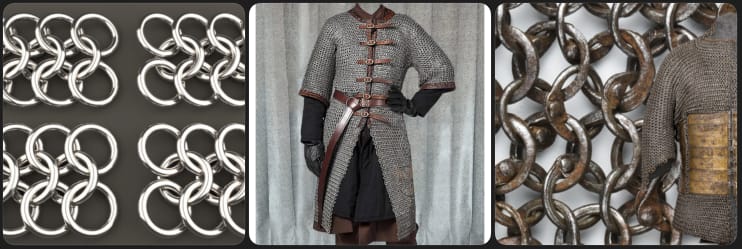
In the Viking Age, chainmail was not decoration-it was survival. The hauberk, an iron shirt composed of thousands of interlinked rings, offered Norse warriors flexible yet formidable protection against blades and arrows. Unlike rigid armor, maille moved with the body, making it ideal for close combat and long campaigns.
The most common construction was the 4-in-1 weave, where each ring connects to four others. This pattern balanced strength, flexibility, and repairability-qualities essential in battle. Every ring was individually formed, riveted, and closed by hand, requiring immense time and skill.
Beyond practicality, chainmail carried symbolism. It was expensive, labor-intensive, and rare. Owning a hauberk marked status and wealth-only elite warriors and chieftains could afford the “iron shirt.” Even in war, maille reflected Norse craftsmanship and Viking heritage, embedding identity directly into armor.
The Medieval Transition: From Armor to Ornament
As plate armor and, later, firearms rendered chainmail obsolete in warfare, the technique refused to disappear. Instead, it shrank-moving from the battlefield to ceremonial and decorative uses. Maille began appearing in smaller forms: reliquaries, ceremonial belts, and symbolic adornments.
This transition marked a shift from pure function to meaning. Metalwork increasingly incorporated religious motifs, talismans, and symbolic geometry. Chainmail became less about stopping blades and more about representing faith, memory, and power. These ritualistic forms laid the foundation for what would later become the emotional depth of Gothic aesthetics-where darkness, devotion, and beauty coexist.
The Gothic Revival: Architecture in Metal
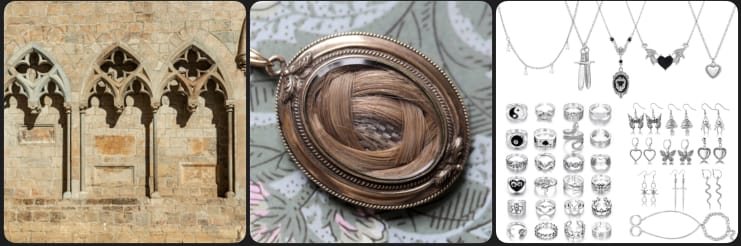
Gothic architecture transformed stone into emotion-sharp arches, heavy shadows, and intricate repetition. Chainmail echoed this language in metal. The repeating links mirrored cathedral vaults, while the weight and density reflected permanence and solemnity.
In the 19th century, Victorian mourning jewelry embraced memento mori-artifacts meant to honor death and memory. Dark metals, somber textures, and symbolic forms became wearable expressions of loss and devotion. This era cemented the emotional and aesthetic foundation of Gothic jewelry: Dark Romanticism forged in iron and steel.
The Modern Evolution: Chainmail in Darkwear & Gothic Fashion
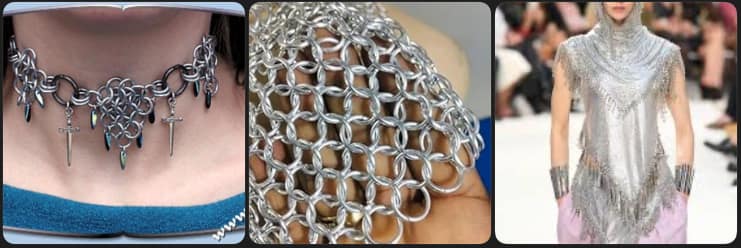
The late 20th century revived chainmail once again-this time through rebellion. Punk and Goth subcultures of the 1980s reclaimed metal as a symbol of strength, resistance, and non-conformity. Chainmail was no longer armor against weapons, but against societal norms.
By 2026, chainmail has entered darkwear and techwear aesthetics. Ancient weaves are now executed in 316L stainless steel-industrial, corrosion-resistant, and skin-safe. The result is jewelry that feels both ancient and futuristic.
Modern enthusiasts choose chainmail for its gender-neutral design, durability, and historical “weight.” Unlike mass-produced accessories, chainmail carries time, labor, and intention-qualities that resonate deeply in alternative fashion culture.
Spotlight: The Grizz Studio Gothic Collection


At Grizz Studio, chainmail is not a trend-it is a discipline. Each piece is handcrafted, whether it’s a heavy Gothic necklace, a bold bracelet, or a signature Chainmail Zippo Case that transforms a daily object into wearable armor.
Only high-grade steel is used-rust-proof, skin-friendly, and engineered to last a lifetime. Every ring is hand-closed, echoing the patience and precision of a Viking blacksmith. This is not fast fashion; it is slow metal.
Each piece carries a soul. The weight you feel is intentional-a reminder of history, craftsmanship, and identity forged link by link.
Conclusion: Wearing Your Armor
Chainmail no longer protects against swords-but it still protects something vital: identity. In a world of disposable trends, wearing chainmail is an act of permanence. It connects the wearer to centuries of craft, rebellion, and resilience.
Step into the legacy. Discover the Gothic Chainmail Collection at Grizz Studio today.

The Steel Thread of History: From Viking Battlefields to Modern Gothic Statement Jewelry
Table of ContentsThe Genesis: Viking Age MailleThe Medieval Transition: From Armor to OrnamentThe Gothic Revival:
Jan

When Every Gift Feels Wrong: The Search for a Valentine’s Piece That Finally Means Something
Table of ContentsThe Genesis: Viking Age MailleThe Medieval Transition: From Armor to OrnamentThe Gothic Revival:
Jan

Valentine Industrial Heart Necklaces – Handmade Gifts for a Love That Dares to Be Different
Table of ContentsThe Genesis: Viking Age MailleThe Medieval Transition: From Armor to OrnamentThe Gothic Revival:
Jan

Introducing the New Gothic Chainmail Keychain Collection – Handmade Relics of Love, Loyalty, and Dark Devotion
Table of ContentsThe Genesis: Viking Age MailleThe Medieval Transition: From Armor to OrnamentThe Gothic Revival:
Jan

Midnight Forge: the new gothic chainmail keychain collection from Grizz Studio
Table of ContentsThe Genesis: Viking Age MailleThe Medieval Transition: From Armor to OrnamentThe Gothic Revival:
Jan

Valentine’s Gifts for Her: When Romance Meets Individual Style
Table of ContentsThe Genesis: Viking Age MailleThe Medieval Transition: From Armor to OrnamentThe Gothic Revival:
Jan

Valentine’s Gifts for Him: Meaningful Ideas That Show Real Character
Table of ContentsThe Genesis: Viking Age MailleThe Medieval Transition: From Armor to OrnamentThe Gothic Revival:
Jan

Zippo Lighter Leash: Why Zippo Users Prefer Metal & Chain Leashes
Table of ContentsThe Genesis: Viking Age MailleThe Medieval Transition: From Armor to OrnamentThe Gothic Revival:
Jan
