How to Layer a Gothic Necklace with a Choker Without Making the Outfit Feel Heavy
Jony ·

A choker and a necklace can look incredible together, but they can also make an outfit feel crowded in seconds. The difference is usually not the jewelry itself—it’s the spacing, the neckline, and whether the two pieces actually give each other room to work.
Layering dark jewelry is one of the easiest ways to tip an outfit from intentional into overdone. A choker sits at the most visible part of your neck, and when you add a second necklace below it, you’re working with limited real estate and maximum visual focus. Get the spacing and hierarchy right, though, and you’ll create a look that feels deliberate, balanced, and genuinely sophisticated.
This guide breaks down exactly how to layer a choker with a necklace so both pieces breathe. We’ll cover which outfit bases support this styling move, which combinations actually work together, and the spacing rules that make all the difference. If you’re working with chainmail chokers and structured necklaces—or any heavy, textured pieces—these principles apply directly to your wardrobe.
For a deeper dive into necklace lengths and how they work together, our necklace length guide for layered gothic jewelry walks through the math. We also have dedicated guides on how to style a chainmail choker without overdoing it and how to style gothic jewellery without looking overdone that complement this article.
Browse our chainmail choker collection and gothic chainmail necklace collection to see pieces that work for this styling approach.



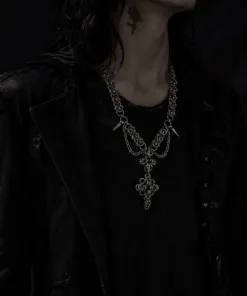
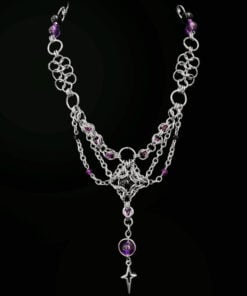
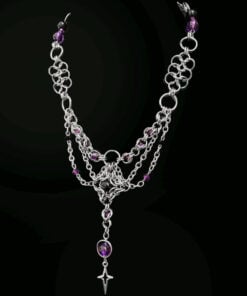
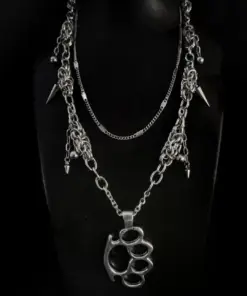

Why Choker-and-Necklace Layering Goes Wrong So Easily

The neckline gets crowded fast
Your neck is a small canvas. A choker already fills the upper-neck space, and the moment you add a second necklace, you’re competing for attention in an area that’s already visually prominent. If both pieces sit too close together or have similar weights, the eye doesn’t know where to focus—and the result feels chaotic rather than curated.
Heavy chain texture needs more spacing
Chainmail and other textured gothic pieces have inherent visual weight. They’re not delicate or dainty—they’re meant to make a statement. When you layer two pieces with high visual weight, even small spacing mistakes become obvious. The heavier the materials, the more breathing room they need between each other.
Two strong focal points can fight each other
A choker is a focal point by design. It draws the eye directly to your neck and collarbone area. If your second necklace is equally bold—say, another choker-style piece or a necklace with a large pendant—you’re creating competing focal points. Instead of creating hierarchy, you’re creating visual noise.
The fix isn’t to avoid layering chokers and necklaces together. It’s to understand what makes layering work: one piece leads, the other supports. One sits at a different height. One has more visual weight than the other. Refer to our necklace length guide for layered gothic jewelry to see exactly how drop length changes the entire effect.
The Best Outfit Bases for Layering a Choker and Necklace
Before you layer jewelry, look at your clothing. The simpler the outfit base, the more complex your jewelry can be.
Open necklines
V-necks, scoop necks, and open crews give your layered jewelry room to display without fighting the neckline itself. There’s clear space between the fabric and your jewelry—and that space is where your styling magic happens. If you’re wearing a piece that shows cleavage or draws attention downward, layered necklaces have natural room to sit and be noticed.
Plain black tops
A simple black tee, turtleneck, or long-sleeve is the perfect canvas. It doesn’t compete with your jewelry. Your choker and necklace become the primary visual interest, and the simplicity of the fabric makes the layering feel intentional rather than accidental.
Simple dresses with room at the collar
Slip dresses, A-line dresses with clean necklines, and minimalist shifts all work beautifully. A busy pattern, ruffles, or a high neckline can muddy the effect immediately. Stick with dresses where the neckline itself is a secondary detail, not the main event.
Blazers or structured jackets with clean inner layers
A blazer over a simple tee or dress gives you a formal frame for layered jewelry. The structured shoulder and lapel create visual weight lower on the body, which actually helps your necklaces feel proportional rather than top-heavy. Make sure the inner layer is clean and simple—no busy patterns or competing textures at the neck.
The rule here is simple: if your neckline is already busy, do not force the choker-and-necklace combo. Sometimes one piece is enough. A single statement necklace on a detailed or patterned top is often more effective than trying to layer two pieces on an already-crowded neckline.
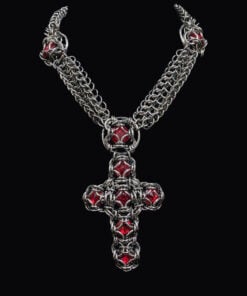
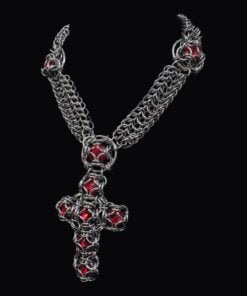
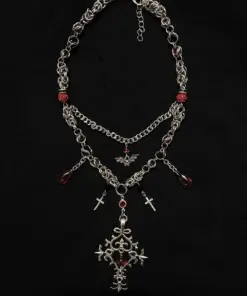

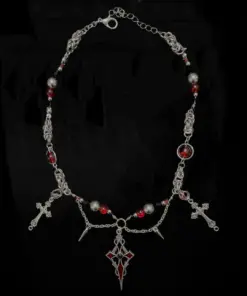
The Best Layering Combinations
Not every choker-and-necklace pairing works. Here are the combinations that consistently create balanced, intentional looks.
Close-fit choker + structured mid-length necklace
Best for: Safest everyday gothic layering, cleaner dark outfits, sharper silhouettes
This is the foundational combination. A close-fitting choker (sitting right at your collarbone) pairs with a necklace that has a clear structure—usually a single pendant or a defined chain, with a drop that reaches mid-chest or slightly lower.
The choker acts as a frame for your neck. The necklace below it becomes the focal point. Your eye naturally reads them as a set, but they feel separate rather than crowded. This combination works with almost any black outfit and requires minimal styling thought.
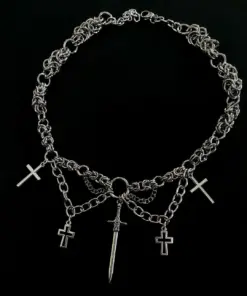
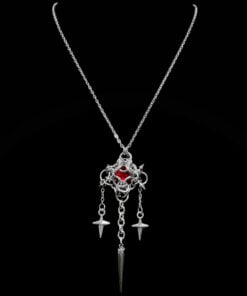
Start with our chainmail choker collection paired with something like our gothic cross chainmail necklace with medieval sword pendant—it’s a pairing that has inherent balance.
Close-fit choker + richer layered necklace
Best for: Dressier dark looks, stronger statement styling, simple tops and dresses
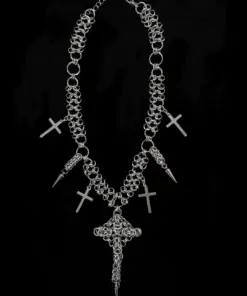
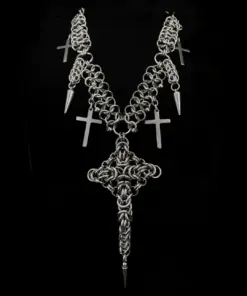
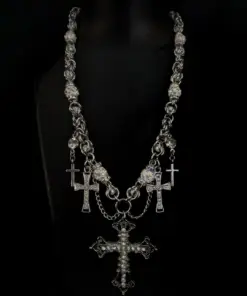
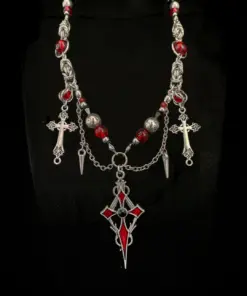
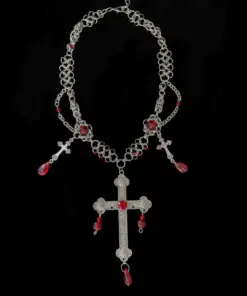
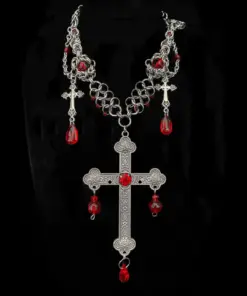
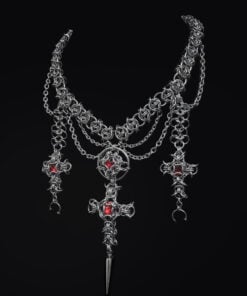
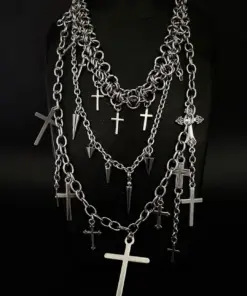
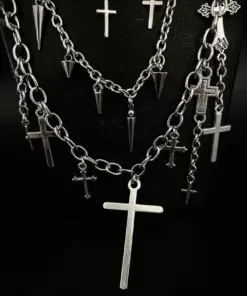
If your outfit base is very simple—say, a plain black slip dress or a turtleneck—you can go richer with your necklace layers. This is where pieces like our cathedral relic layered chainmail necklace or gothic layered chain necklace with cross charms shine.
The choker still acts as the frame, but the necklace beneath it has internal complexity—multiple chains, multiple pendants, or a more elaborate structure. This works because your outfit is a neutral canvas; all the visual interest is in the jewelry, and the two pieces feel designed to work together.
This combination does more visual work, so save it for moments when your outfit is genuinely simple and you have the space (literally and aesthetically) to showcase both pieces.
Choker + symbolic focal necklace
Best for: Readers who want one symbolic drop beneath the neck frame, darker and more intentional styling
Some days, you want your jewelry to tell a story. A close-fit choker pairs beautifully with a longer symbolic necklace—one with a single powerful pendant that sits lower on the body, past mid-chest.
The choker becomes the foundation and the frame. The longer necklace becomes the statement. This works because they’re solving different visual jobs: the choker creates presence at the neck, the necklace creates a visual pull downward, toward intention and symbol.
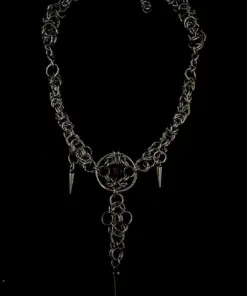
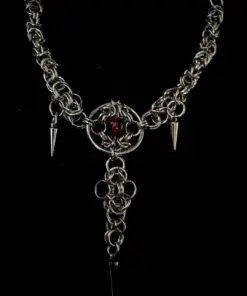
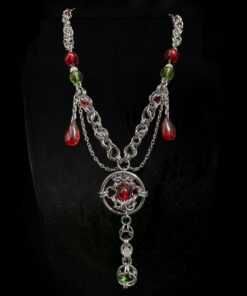
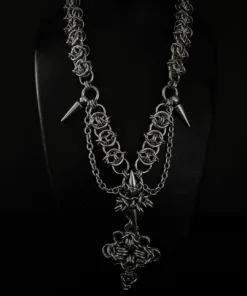
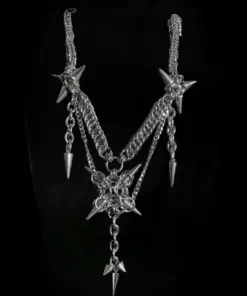
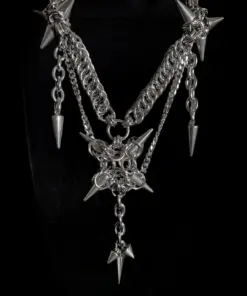
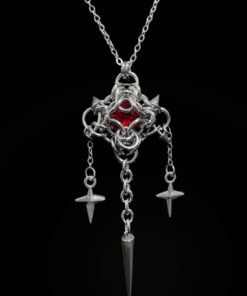
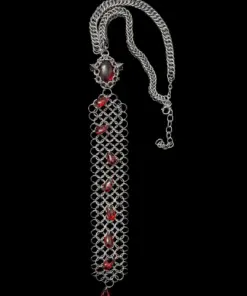
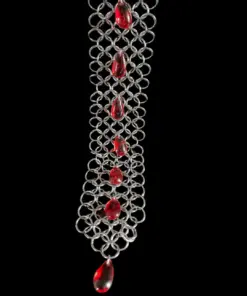
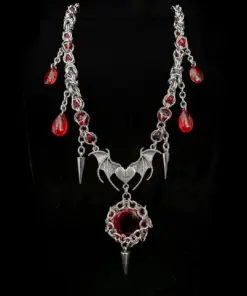
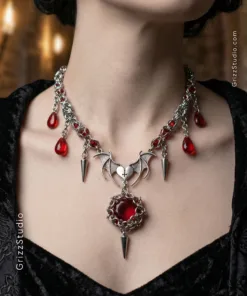
Pieces like our obsidian sigil spike chainmail necklace or gothic chainmail necklace with red crystal drops work beautifully in this combination because they’re built around a focal point. The choker doesn’t compete; it supports.
4 Layering Rules That Keep the Look Balanced
1. Give the necklace enough drop below the choker
This is where most layering attempts fail. If your necklace doesn’t drop far enough below the choker, the two pieces blur together visually. They feel crowded instead of intentional.
A good rule: your necklace should drop at least 2–3 inches below where your choker ends. This creates clear visual separation and gives each piece its own space on your body. For exact measurements and how different drop lengths affect the overall look, check our necklace length guide for layered gothic jewelry.
2. Do not make both pieces equally heavy
Visual weight matters more than physical weight. If both your choker and your necklace are dense, textured, and dark, they’re competing for attention. One should be visually heavier than the other.
A lighter choker with a statement necklace works. A chunky choker with a simpler necklace works. But a chunky choker with a chunky, equally elaborate necklace is overkill—even if both pieces are beautiful separately.
3. Let one piece lead and the other support
In every successful choker-and-necklace combination, one piece is the star and one is the supporting actor. The choker might be the lead (drawing focus to your neck and collarbone), with the necklace playing a supporting role below it. Or the necklace might be the focal point, with the choker serving as a frame.
Decide which piece you want to highlight before you layer. Then choose your second piece to support that choice.
4. Keep earrings and other accessories lighter
This is the finishing rule. If you’re wearing a choker and a necklace, your neck area is already doing a lot of visual work. Don’t add oversized earrings, multiple ear piercings with heavy jewelry, or a statement ring on the same hand.
Scale back your other accessories. Small studs, minimal rings, or no earrings at all work beautifully. You’re creating visual restraint everywhere except your layered necklaces. That restraint is what makes the layering feel intentional and balanced.
For more on this principle, our guide on how to style gothic jewellery without looking overdone breaks down accessory pacing across your whole outfit.
What to Avoid
Avoid pairing two equally dense necklaces
Two chunky chains, two pendants of similar size, two choker-style pieces—these combinations almost always feel too heavy. Unless you’re going for a very specific aesthetic (and you know it), stick to one substantial piece and one simpler piece.
Avoid crowded necklines
If your top or dress already has ruffles, a high neck, a busy pattern at the collarbone, or any other visual detail at the neck, don’t force the layered necklace combo. You’ll end up with visual chaos. In these cases, a single statement necklace (or no necklace at all) is the stronger choice.
Avoid adding oversized earrings at the same time
Your neck is the star. Your earrings should be supporting players. When you layer necklaces, scale back your ear jewelry. Your overall silhouette will read as more intentional, not less.
Avoid layering just because both pieces look good separately
This is the hardest rule to follow, but it’s the most important: just because you own a beautiful choker and a beautiful necklace doesn’t mean they should be worn together. Think about the combination as a single styling move, not as two separate pieces stacked on top of each other.

Best Product Directions for This Styling Move
If you want the safest structured combination
Start here. A fitted choker + a structured mid-length necklace is the foundation of all successful layering.
If you want a richer layered dark-romantic look
For outfits that are genuinely simple (slip dresses, turtlenecks, plain shirts), go richer with your necklace. Your choker stays close-fit; your necklace becomes more elaborate.
If you want a darker symbolic direction
A close-fit choker frames the neck. A longer, symbolic necklace becomes the focal point below it. This creates intention and visual pull.
Quick Layering Selector
Choose a choker + structured necklace if you want the safest all-round combination.
Choose a choker + layered necklace if your outfit is simple and you want richer neckline presence.
Choose a choker + symbolic focal necklace if you want a darker, more intentional look.
Choose one piece only if the top already has a crowded neckline.