Chinese Consumers Are Shopping Smarter: A Shift Beyond Luxury Logos
Jony ·
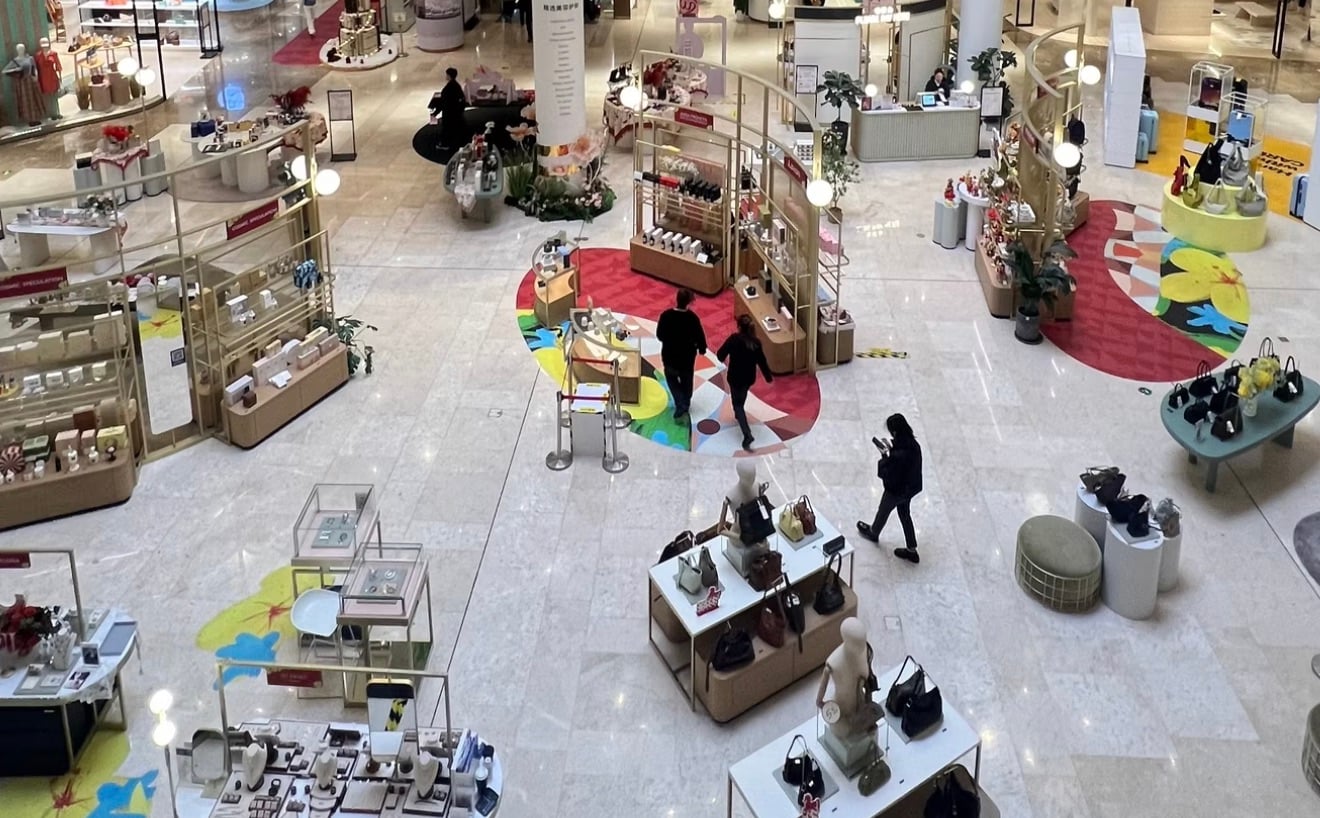
The closure of Galeries Lafayette in Beijing has become a talking point well beyond the retail pages — and for good reason. According to a recent retail report, the shuttering of the French department store is being read as a symbol of a deeper change: Chinese fashion consumers are growing more cautious, more selective and far more digitally driven than they were a decade ago. In one of the world’s most important fashion markets, the way people think about luxury, value and personal style is quietly being rewritten.
It is tempting to file this under “China retail news” and move on. But the behaviour the report describes is not unique to China. It echoes a wider shift visible across the UK, the United States and Europe, where shoppers are increasingly unimpressed by labels alone and more interested in design, meaning, practicality and individuality.
1. Luxury is losing some of its old power
For years, foreign luxury houses leaned heavily on China’s fast-growing middle class. That dependence now looks far less comfortable. The report frames Galeries Lafayette’s Beijing exit as a marker of changing habits, with some shoppers saying plainly that flashy logos simply do not carry the appeal they once did.
The numbers point the same way. Citing figures from Bain & Company, the report notes that China’s luxury market declined by an estimated 3 to 5 percent in 2025 — a softer drop than the sharp 17 to 19 percent contraction recorded the year before, but a contraction nonetheless. Two consecutive years of decline in a market that was, until recently, treated as a guaranteed growth engine is not a blip. It is a trend.
What seems to be happening is not the death of premium spending but a redefinition of it. “Luxury” is detaching from heritage logos and attaching instead to things like original design, craftsmanship, personal expression and pieces that feel distinctive rather than mass-produced. The buyer is not necessarily rejecting expensive products — they are rejecting empty status symbols.
2. Post-pandemic consumers are more rational
The report links the shift to a familiar cluster of pressures: the after-effects of the Covid period, broader economic uncertainty, a weakened property market, stagnant middle-class income growth and high youth unemployment. Consumers quoted in the piece describe themselves as more savings-conscious and more deliberate about where their money goes.
Crucially, this is not a story about people losing interest in fashion. It is a story about people asking harder questions before they buy. Is this piece actually worth the price? Will I really wear it? Does it reflect my own taste? Is there a better option a few taps away online? Spending has become more considered, not less frequent — and brands that cannot answer those questions convincingly are the ones feeling the squeeze.
3. Online shopping has changed the rules
One of the strongest threads running through the report is the sheer power of e-commerce. Chinese consumers now compare prices instantly across platforms such as Taobao, JD.com, RedNote and Douyin, often treating physical stores as showrooms — places to browse and try, but not necessarily to buy.
Again, this is hardly a China-only phenomenon. Shoppers in the UK, US and Europe move just as fluidly between brand websites, marketplaces, TikTok, Instagram and Google Shopping before committing. The implication for brands is significant: a beautiful product is no longer enough on its own. The digital experience around it has to do real work — clear product photography, transparent pricing, honest delivery information, credible trust signals, detail pages that genuinely explain materials and sizing, and a brand story that gives a hesitant buyer the confidence to click “purchase”.
4. Younger consumers want personal taste, not just status
Perhaps the most telling observation in the report concerns younger shoppers. They appear far less attached to the old department-store luxury culture that defined previous generations. Instead, their attention is drawn to pop-ups, stylish everyday clothing, emerging local labels and fashion that helps them express who they are.
That preference — identity over insignia — is reshaping demand. A garment or accessory no longer needs an oversized logo to feel valuable. For a growing share of consumers, the design itself is the message, and the brand’s job is to offer something they can genuinely make their own.
5. What it means for the wider industry
The retreat from logo-led luxury does not leave a vacuum; it creates an opening, particularly for smaller and independent labels. These are the brands often best placed to offer the things large corporations struggle with: a distinct design language, limited or handmade production runs, a stronger emotional connection, a clear cultural identity and more direct, less corporate communication with customers.
In other words, the qualities that once looked like limitations for small brands — modest scale, niche appeal, a refusal to chase mass-market sameness — are increasingly the qualities shoppers say they want. As the status calculus shifts from “who made it” to “does it mean something to me”, the playing field tilts, at least a little, towards originality.
Conclusion
The closure of a single department store in Beijing is, on its own, a footnote. What it represents is not. Behind it sits a broader change in consumer behaviour: shoppers are becoming smarter, more digitally aware and more focused on personal value than on outward signals of wealth.
Luxury is not disappearing. Its meaning is moving. The advantage may belong less and less to obvious logos, and more and more to whoever can offer originality, emotion, craftsmanship and identity. For much of the established luxury sector, that is a warning. For the brands built on exactly those qualities, it reads more like an invitation.