

Handmade gothic jewelry represents more than fashion. It is the intersection of art, craftsmanship, history, and personal expression. In a world dominated by mass-produced accessories, handmade gothic jewelry stands apart through authenticity, emotion, and individuality.
This article explores what defines handmade gothic jewelry, how it is created, and why it holds lasting value beyond fleeting trends.
What Handmade Gothic Jewelry Truly Means
Handmade gothic jewelry is not defined by price or appearance alone. It is defined by process and intention.
When a piece is handmade:
- It begins with an idea, not a template
- It passes through human hands, not machines
- It carries small imperfections that make it real
Those imperfections are not flaws — they are signatures.
In gothic jewelry, this matters more than anywhere else. Gothic aesthetics are rooted in history, emotion, and symbolism. Removing the human element removes the soul.
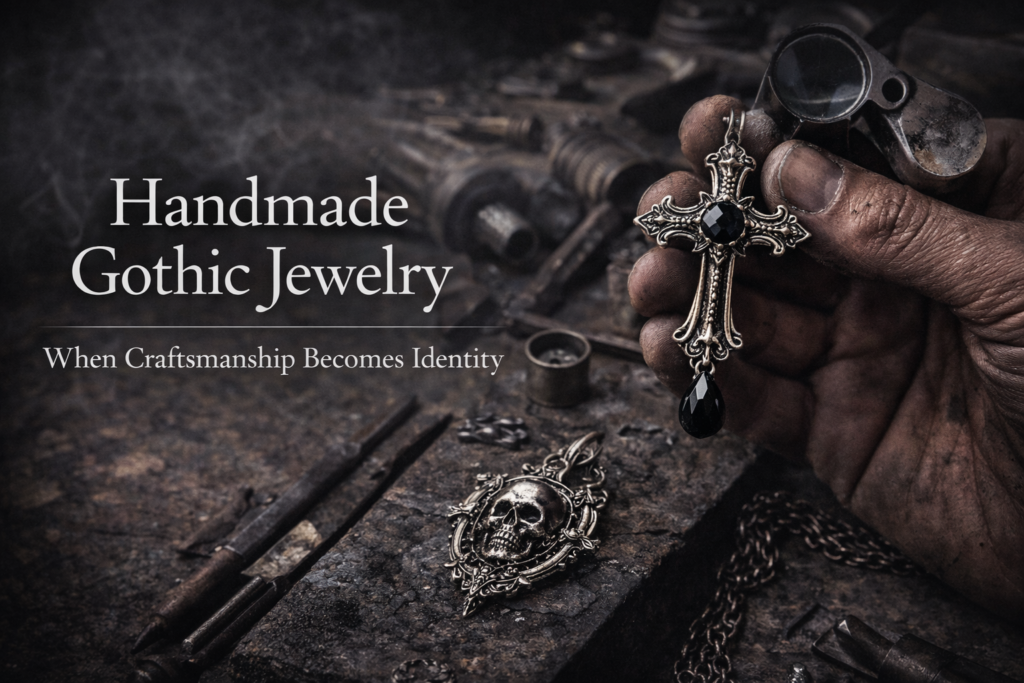
Why Gothic Jewelry Demands to Be Handmade
Gothic jewelry is not meant to be neutral.
Crosses, pendants, chains, dark symbols — they represent belief, protection, rebellion, memory, and strength. These symbols lose meaning when they are produced without care or understanding.
Handcrafting gothic jewelry allows the maker to:
- Control weight and balance
- Shape edges and textures intentionally
- Decide where darkness should feel heavy or elegant
- Respect the symbolism behind each design
This is why handmade gothic jewelry feels different the moment you touch it.
Materials Chosen with Purpose, Not Convenience
In handmade gothic jewelry, materials are chosen deliberately.
Most artisans prefer:
- Silver or silver-toned metals for their depth and aging
- Oxidized finishes that develop character over time
- Dark gemstones that absorb light rather than reflect it
- Raw or slightly imperfect textures that feel ancient
These materials age with the wearer.
They darken, soften, and gain patina — just like stories do.
The Process Behind a Handmade Gothic Piece
Every handmade gothic piece goes through stages that machines cannot replicate:
- Concept & symbolism – deciding what the piece should represent
- Forming & shaping – adjusting proportions by hand
- Detailing – engraving, texturing, refining edges
- Finishing – oxidation, polishing, or controlled roughness
- Final inspection – not for perfection, but for character
This process takes time.
And time is exactly what gives handmade gothic jewelry its value.
Handmade vs Mass-Produced: The Difference You Can Feel
Mass-produced gothic jewelry focuses on speed and uniformity. Handmade gothic jewelry focuses on presence.
With handmade pieces:
- No two items feel exactly the same
- Weight distribution feels intentional
- Details reveal themselves slowly over time
Mass-produced jewelry may look gothic.
Handmade gothic jewelry feels gothic.
Why Handmade Gothic Jewelry Feels Personal
People often say handmade gothic jewelry feels “personal,” even when it isn’t customized.
That’s because:
- It carries human intention
- It was shaped, not stamped
- It invites emotional connection
Many wearers choose handmade gothic jewelry during important moments in life — transitions, self-discovery, or personal rebellion. These pieces become companions, not accessories.
For Men, Women, and Those Beyond Labels
Handmade gothic jewelry does not need strict categories.
- Some pieces feel bold and armored
- Others feel elegant and intimate
- Many exist comfortably between
True gothic craftsmanship allows the wearer to define meaning, not the label.
Caring for Handmade Gothic Jewelry
Caring for handmade gothic jewelry is simple:
- Store it away from moisture
- Clean gently, not aggressively
- Allow patina to develop naturally
Aging is not damage in gothic jewelry — it is transformation.
Final Thoughts
Handmade gothic jewelry exists for those who do not want something temporary.
It is for people who value:
- Craft over convenience
- Meaning over trends
- Identity over mass appeal
When you choose handmade gothic jewelry, you are not just choosing a product.
You are choosing a piece of someone’s time, belief, and skill — and making it part of your own story.
