

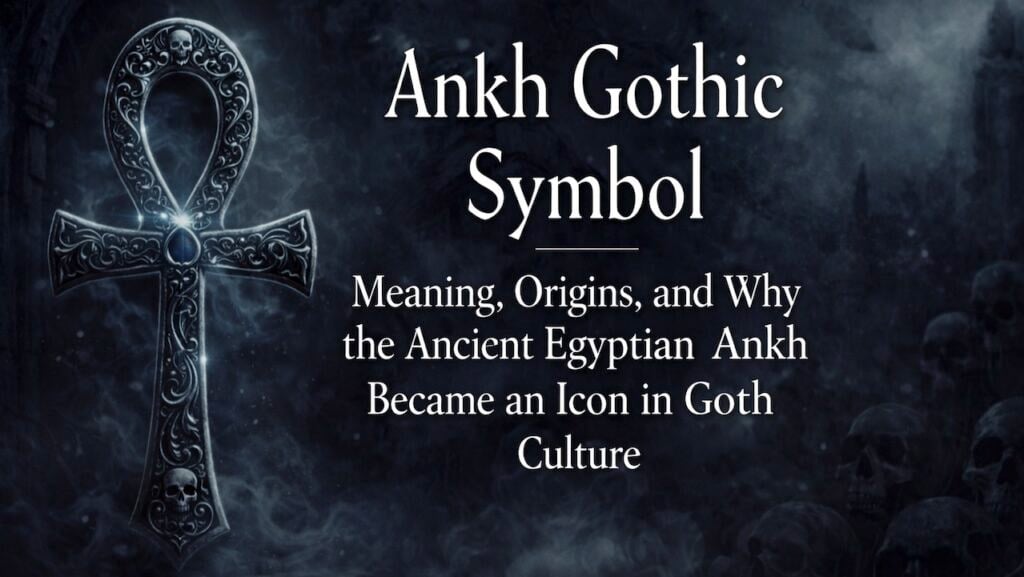
The ankh gothic symbol (☥) is instantly recognisable in alternative fashion, jewellery, and tattoos. What many don’t realise is that this ancient Egyptian hieroglyph – originally meaning “life” – has travelled thousands of years to become a staple of gothic aesthetics. From pharaohs’ tombs to vampire films and modern goth wardrobes, the Egyptian ankh gothic symbol blends eternal life with dark elegance.
In this article we answer the most searched questions: What does the ankh symbol mean? Why do goths wear it? Is it religious or occult? Along the way we explore its journey from ancient Egypt to gothic subculture.
What Is the Ankh Symbol?
The ankh is a cross with a teardrop-shaped loop at the top – often called the “Key of Life” or Egyptian Cross. Its hieroglyphic form (Unicode ☥ or 𓋹) literally spells the word for “life” in ancient Egyptian.
In Egyptian art, gods and goddesses hold the ankh by the loop and offer it to pharaohs’ noses, symbolising the gift of breath and vitality. It appears on temple walls, tomb paintings, amulets, and even mirror cases. Pharaohs carried it as a sign of divine power and national prosperity.
>>> Pentagram and Pentacle Gothic Symbols: Meanings, Differences, and Why They Matter in Gothic Style
What Does the Ankh Symbol Represent Spiritually?
The ankh symbol meaning centres on life and immortality. Ancient Egyptians saw it as both earthly existence and the promise of life after death. Amulets shaped like the ankh were worn for protection and placed in tombs to ensure the soul’s rebirth.
Many interpretations add layers of cosmic balance:
- The loop represents the spiritual realm or the sun.
- The vertical bar stands for the physical world or the path of the sun.
- Together they symbolise the union of heaven and earth, life and death, masculine and feminine energies.
This makes the ankh far more than a simple cross – it is a key to understanding the cycle of existence.
Why Did the Ankh Become a Gothic Symbol?
Goth culture has always drawn from mythology, ancient religions, and themes of mortality versus immortality. The ankh gothic symbol fits perfectly because it celebrates life beyond death – the very idea that fuels gothic romance and vampire lore.
Its modern popularity exploded through pop culture. In the 1983 film The Hunger, starring Catherine Deneuve and David Bowie, vampires use bladed ankh pendants to feed – turning the symbol into an icon of dark, elegant immortality.
Suddenly the Egyptian ankh gothic cross appeared everywhere in goth jewellery, clothing, and club scenes. It offered a sophisticated alternative to skulls or crosses: ancient, mysterious, and unapologetically eternal.
Why Do Goths Wear the Ankh?
This is one of the most common searches about the symbol. Goths don’t wear the ankh to celebrate “happy” life in the mainstream sense. Instead they embrace its deeper meanings:
- Symbol of immortality: The idea of existing forever (or at least embracing the night) resonates with vampire aesthetics and the gothic fascination with the undead.
- Ancient mysticism and occult depth: The ankh adds historical weight and mystery that plain crosses lack.
- Embracing darkness while acknowledging life: As one goth community member put it: “The ankh is a symbol of life after death… Goths have embraced it as embodying the idea [of] recognizing darkness while also finding comfort within it.”
- Personal identity : Many see it as a talisman of spiritual rebirth after difficult times – a quiet rebellion against ordinary existence.
Whether as a subtle necklace or bold statement piece, the ankh gothic symbol lets wearers signal “I understand the beauty in the eternal dark.”
Ankh Meaning in Christianity
Early Coptic Christians in Egypt adapted the ankh into the Crux Ansata (looped cross). The shape was already familiar, and its core message – eternal life – overlapped perfectly with Christian resurrection theology.
Historians believe the ankh directly influenced the Coptic cross still used today. Some early manuscripts even decorate New Testament pages with the looped cross. While not identical to the Latin cross, the symbolic bridge between ancient Egyptian “life” and Christian “eternal life” is undeniable.
>>> Inverted Cross Gothic Symbols: Meaning, History, and Why the Symbol Appears in Goth Style
Ankh Gothic Symbol in Fashion and Tattoos
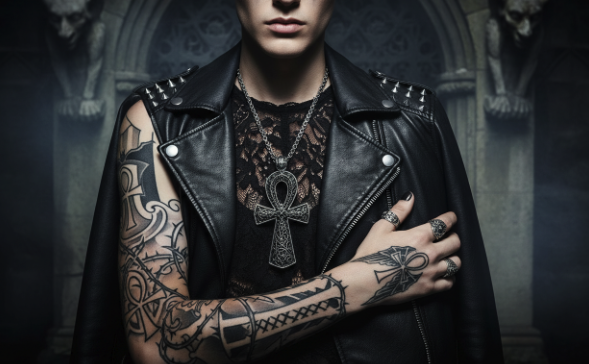
Today the ankh gothic symbol tattoo is one of the most requested designs in alternative tattoo studios. People choose it for:
- Personal rebirth after hardship
- Spiritual protection
- A reminder that life continues beyond the physical
In gothic fashion you’ll find it on:
- Silver or black-metal necklaces
- Statement rings
- Chokers
- Embroidered clothing
Gothic brands love the ankh because it combines elegance, historical mystique, and occult symbolism in one clean shape – perfect for both everyday wear and dramatic evening looks.
Occult Origins of Goth Symbols
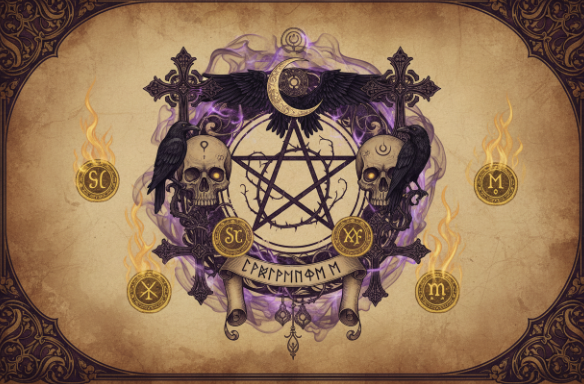
The ankh sits comfortably alongside other classic gothic symbols:
- Pentagram
- Skull
- Raven
- Crescent moon
All explore themes of mortality, mystery, and hidden knowledge. Far from being “just dark,” these symbols express philosophical depth -questioning life, death, and what comes after. The ankh adds an extra layer of ancient authenticity that sets goth culture apart from fleeting trends.
Goth Symbol Meanings Explained: Why the Ankh Still Matters
The ankh gothic symbol bridges three worlds:
- Ancient Egyptian religion
- Christian adaptation
- Modern alternative culture
It reminds us that symbols evolve. What began as a pharaoh’s key to divine life now adorns the necks of people who find beauty in the shadows. In a world obsessed with youth and fleeting trends, the ankh quietly whispers: life – in all its forms – is eternal.
The ankh gothic symbol is far more than decorative jewellery or a tattoo trend. It is a 5,000-year-old hieroglyph that has survived empires, religions, and cultural shifts because its message is universal: life, death, and what lies beyond are all connected.
From Egyptian temples to gothic nightclubs, from gods offering breath to vampires wielding silver blades, the ankh continues to represent immortality, balance, and spiritual depth. That timeless power is exactly why it remains one of the most iconic symbols in gothic culture today.
FAQ – People Also Ask
What does the ankh symbol mean in goth culture? In goth culture the ankh represents eternal life, immortality, and the beauty of existence beyond death – perfectly aligning with vampire aesthetics and the subculture’s fascination with the eternal.
Why do goths wear ankh necklaces? Goths wear ankh necklaces for their ancient mystique, connection to immortality, and elegant dark elegance. The symbol lets them embrace both life and darkness without contradiction.
Is the ankh symbol religious? Originally yes – it was the Egyptian hieroglyph for “life.” It was later adapted by Coptic Christians. Today many wear it purely for aesthetic or spiritual (not strictly religious) reasons.
What does the ☥ symbol mean? ☥ is the Unicode character for the ankh. It means “life” or “eternal life” and carries the same spiritual weight whether in ancient Egypt or modern gothic fashion.
Is the ankh related to the Christian cross? Yes – the Coptic Church transformed the ankh into the Crux Ansata (looped cross), creating a direct visual and symbolic link between ancient Egyptian eternal life and Christian resurrection.
Ankh (☥) Gothic Symbol: Meaning, Origins, and Why the Ancient Egyptian Ankh Became an Icon in Goth Culture
Table of ContentsWhat Is the Ankh Symbol?What Does the Ankh Symbol Represent Spiritually?Why Did the
Mar

Hobbiton Movie Set Review: Is New Zealand’s Famous Shire Experience Really Worth It?
Table of ContentsWhat Is the Ankh Symbol?What Does the Ankh Symbol Represent Spiritually?Why Did the
Mar
World Goth Day: History, Meaning, and How the Global Goth Community Celebrates Goth Day
Table of ContentsWhat Is the Ankh Symbol?What Does the Ankh Symbol Represent Spiritually?Why Did the
Mar

Whitby Goth Weekend (WGW): The Legendary Gothic Festival That Transforms Whitby Each Year
Table of ContentsWhat Is the Ankh Symbol?What Does the Ankh Symbol Represent Spiritually?Why Did the
Mar
Crusader Chainmail Lighter Armour – Now Up to 20% Off | A Distinctive Gothic Gift for Birthdays, Father’s Day, and Custom Brand Orders
Table of ContentsWhat Is the Ankh Symbol?What Does the Ankh Symbol Represent Spiritually?Why Did the
Mar

How to Clean and Care for Stainless Steel Chainmail Jewelry (Without Tarnish Worries)
Table of ContentsWhat Is the Ankh Symbol?What Does the Ankh Symbol Represent Spiritually?Why Did the
Feb

The Ultimate Guide to Bloodcore Aesthetic & How to Wear It (Red/Black, Occult-leaning Style Explained)
Table of ContentsWhat Is the Ankh Symbol?What Does the Ankh Symbol Represent Spiritually?Why Did the
Feb

How to Style a Chainmail Bikini Top for Festival Season 2026 (Outfit Ideas for Parties, Raves & Nights Out)
Table of ContentsWhat Is the Ankh Symbol?What Does the Ankh Symbol Represent Spiritually?Why Did the
Feb
